

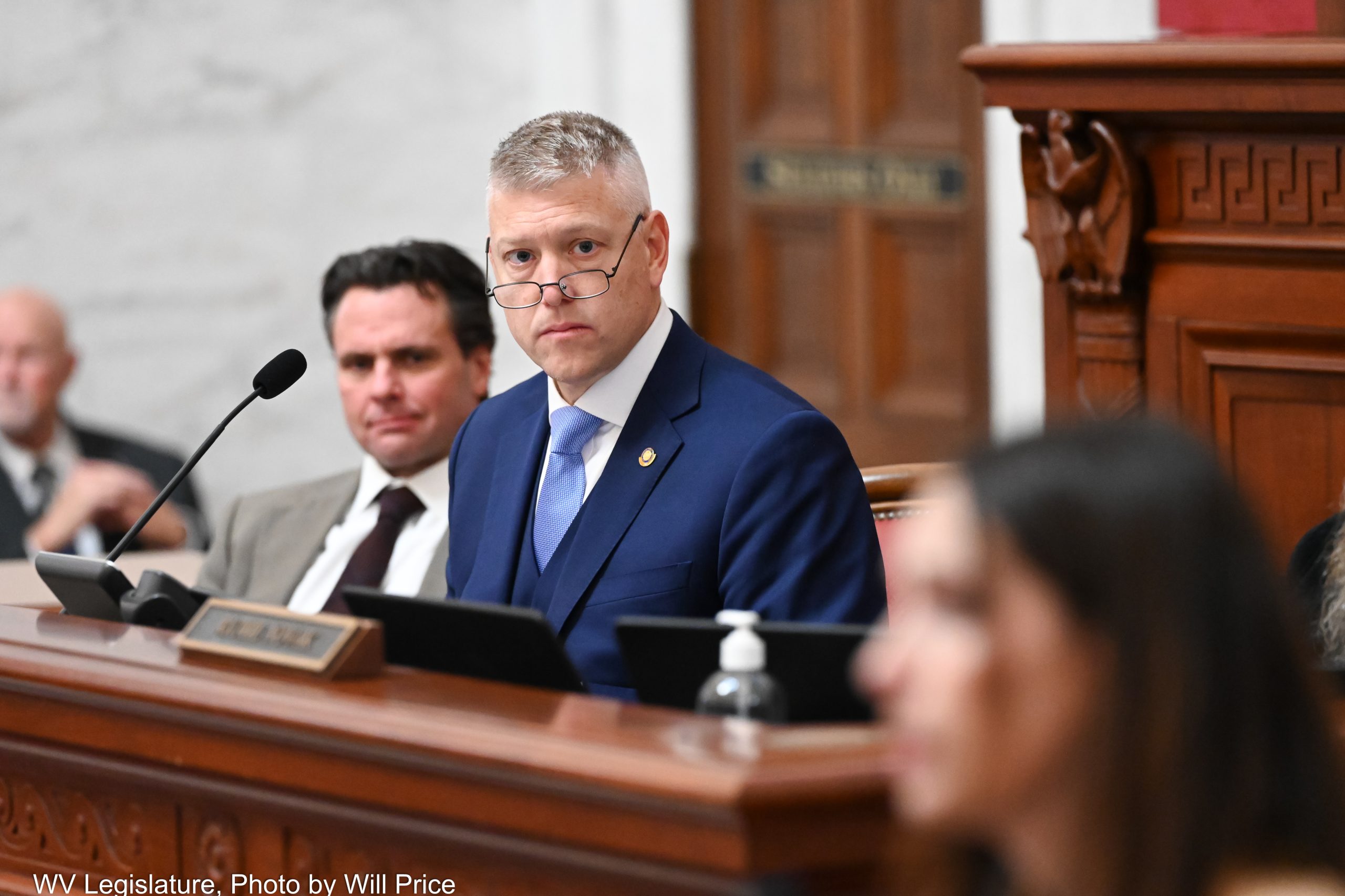
The Joint Standing Committee on the Judiciary met this morning to discuss nuclear power in West Virginia.
First, the committee heard from Nicholas Preservati, director, West Virginia Office of Energy; secretary, West Virginia Department of Commerce; and chairman, West Virginia Public Energy Authority. Preservati addressed the “50 by 50” plan introduced by Governor Patrick Morrisey. This plan focuses on baseload generation in the state, including coal, gas, and nuclear energy.
Preservati said that over the past months, a working team has been assembled for nuclear energy, including industry experts, utility workers, members of the Public Service Commission, trade associations, federal labs from the United States Department of Energy, and members of the legislature.
Furthermore, Preservati said, amidst challenges such as nuclear construction being capital-intensive, supply chain constraints, advanced reactors not yet proven at commercial scale, timeframes, and community engagement, there are positives.
“For a 500-megawatt plant, it creates 4,500 construction jobs and 600 full-time positions,” Preservati said. “To maximize economic development, West Virginia should be deliberately seeking to be easy to do business with. That’s the focus.”
Following Preservati, Charlotte Lane, chairman of the Public Service Commission, said the commission was excited about the opportunity to have nuclear energy in West Virginia.
“As I have told many of you in the past, one of our number one priorities at the Public Service Commission is to keep the lights on in West Virginia,” Lane said.
Lane said the processes are in place in West Virginia to take on a nuclear project and to continue using baseload generation.
Scott Driver, acting general counsel for the West Virginia Department of Environmental Protection, said the state currently lacks a regulatory framework for nuclear power. Driver said the primary authority for regulating nuclear materials, reactor licensing, and radiological safety is exercised by the federal government and the Nuclear Regulatory Commission.
Finally, Toney Stroud, chief legal officer and vice-president of strategic initiatives and corporate relations for Marshall University, said that for West Virginia to move forward with nuclear energy, it must consider the workforce.
Stroud said that a five-state study conducted by the E4 Carolinas found an economic impact relevant to West Virginia.
“It accounts for 154,962 jobs. That’s a tremendous number of jobs. That is direct, indirect, and induced. Direct jobs alone in the five-state region in nuclear energy account for 54,692 jobs,” Stroud said. “It’s just under 90,000 dollars a year is the average wage for those jobs, which is 65.5% higher than the average of other industries in that five-state region.”
According to E4 Carolinas, “The region hosts 25 of the 93 operational nuclear reactors in the U.S. and 13 of the 55 operating nuclear power plants. The 26,287 MW of generation capacity located in Virginia, North Carolina, South Carolina, Tennessee, and Georgia, makes up 37% of utility-scale net electricity generation in the region compared with 19% in the U.S. overall.”
Stroud said the nuclear industry has a significant impact, but West Virginia needs a workforce ready for nuclear.
