

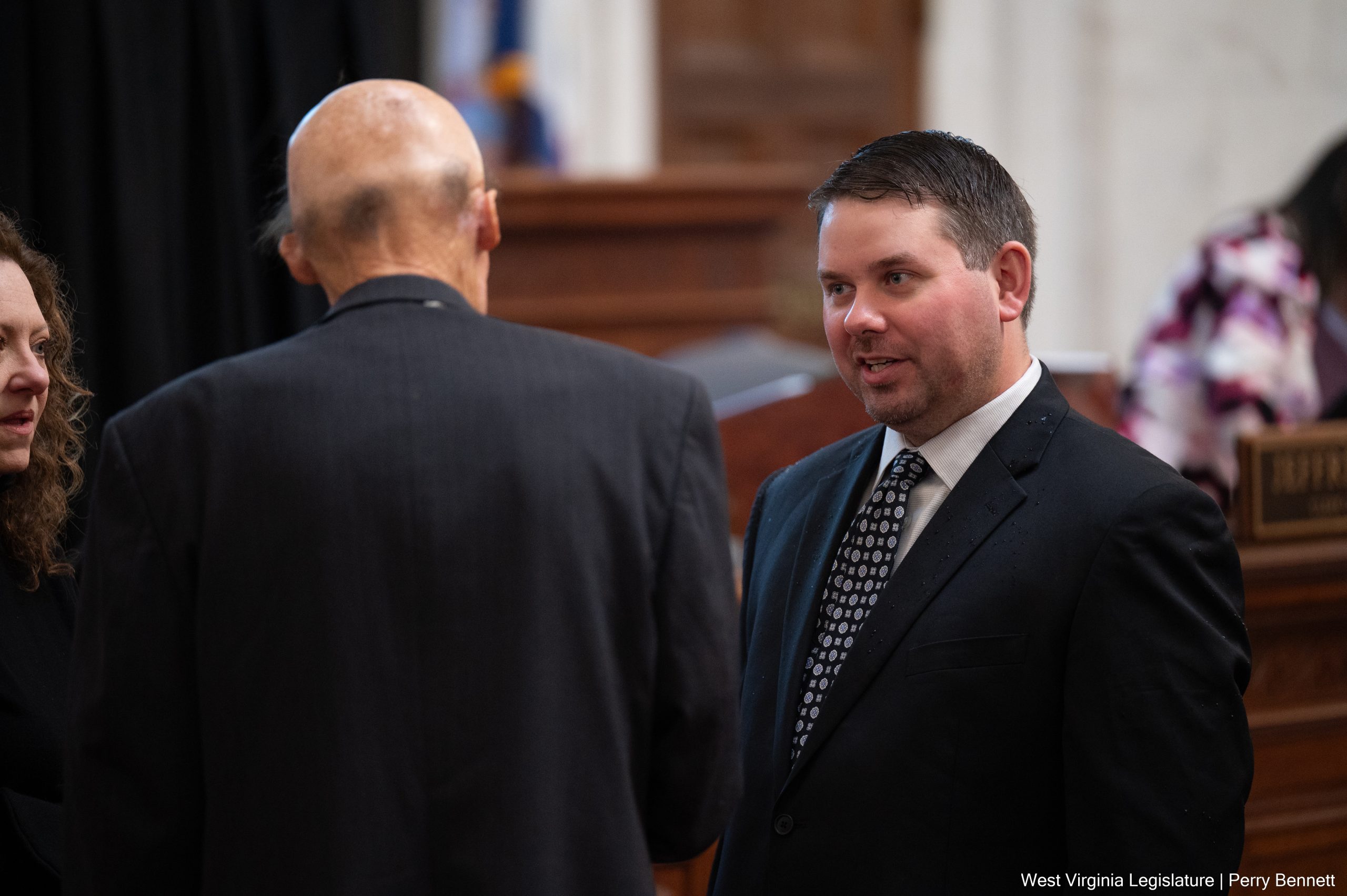
The Joint Committee on Energy and Public Works met this morning to hear updates from representatives on electric transmission expansion.
PJM representatives Lori Lee, manager for Regulatory and Legislative Affairs, and Sami Abdulsalam, director of Transmission Planning, provided updates on potential enhancements across the grid to maintain system reliability and development.
PJM is responsible for 21% of the United States’ GDP and has proposed enhancements for its system over the past several years, including those for West Virginia.
Abdulsalam said existing lines have to carry more energy, leading to congestion, but with new transmission lines, overall efficiency can be improved and the costs of delivering electricity can be reduced.
Over the past 10 years, new transmission lines have provided $1.4 billion in congestion savings and upgrades over the past five years have provided ratepayers with savings of $900 million a year. In addition, the past five years have resulted in $1 billion a year in congestion savings.
PJM concluded their presentation with key points, including that transmission development promotes economic development, proposed transmission developments offer enhanced reliability to the West Virginia transmission system, future load growth will benefit from transmission assets, and allows West Virginia better surplus generation to flow out of the state.
Following PJM, Kamran Ali, Sr. vice-president of Transmission Grid Planning & Engineering for American Electric Power (AEP), spoke about the current developments with the Valley North Project.
The Valley North Project includes 260 miles of new 765-kV transmission line between Putnam County, West Virginia, and Frederick County, Maryland, along with two new substations in Hardy County, West Virginia, and Frederick County, Maryland. The line spans approximately 225 miles in West Virginia, 31 miles in Virginia, and 5 miles in Maryland.
Ali said on Thursday, Jan. 15, the organization will be engaging with stakeholders, local officials, politicians, and businesses to consider ideas and opinions about the project.
In the summer of this year, the project will be holding open public houses to gain feedback from communities. Fall 2026 will be when the proposed route is developed and regulatory information for applications will be gathered.
Ali said the project has a goal to have the least impact possible on communities and landowners.
Abby Reale, Sr. advisor for West Virginia Government Affairs and representative for First Energy, informed the committee about the development of the Gore-Doubs-Goose Creek Improvements Project (IDOUBS).
The IDOUBS project is a 44-mile project starting outside of the Gore Substation in Frederick County, Virginia, that extends east through 17 miles of Frederick County, 15 miles of Jefferson County, West Virginia, and 10 miles through Loudoun County, Virginia.
The project will also be building two new 138 kV lines through the Stonewall Substation in Clearbrook, Virginia, to the proposed Woodside substation nearby. The project will rebuild existing lines and add a 500kV line.
Reale said the organization’s goals through the project will be to enhance transmission within West Virginia and address regional needs.
Finally, Matt Pawlowski, vice-president of development for NextEra Energy Transmission, discussed the future of the MidAtlantic Resiliency Link Project and the goals behind it. Pawlowski said the MARL project is looking to enhance economic benefits, strengthen the electrical grid, and build a new substation.
The MARL project plans on building a 107.5-mile 500-kV transmission line that connects a substation in Pennsylvania to a connection point near Gore, Virginia. The project includes a new 500/138-kV substation in Frederick County, Virginia, and connects a substation on the Maryland side of the West Virginia border.
Pawlowski said West Virginia’s peak electricity demand is expected to rise by 8-12% in the summer and 10-11% in the winter over the next decade. With these increases in mind, Pawlowski said this project is to strengthen the grid, reduce outages and has been working closely with PJM to enhance the economic benefits.
The MARL project is starting this year to file state regulatory application filings. In 2027, they expect to have all state regulatory approvals. Following the approvals, in the fall of 2029, construction is planned to begin and the transmission line will be finished and in service by the end of 2031.
This schedule is subject to change as the project progresses.
