

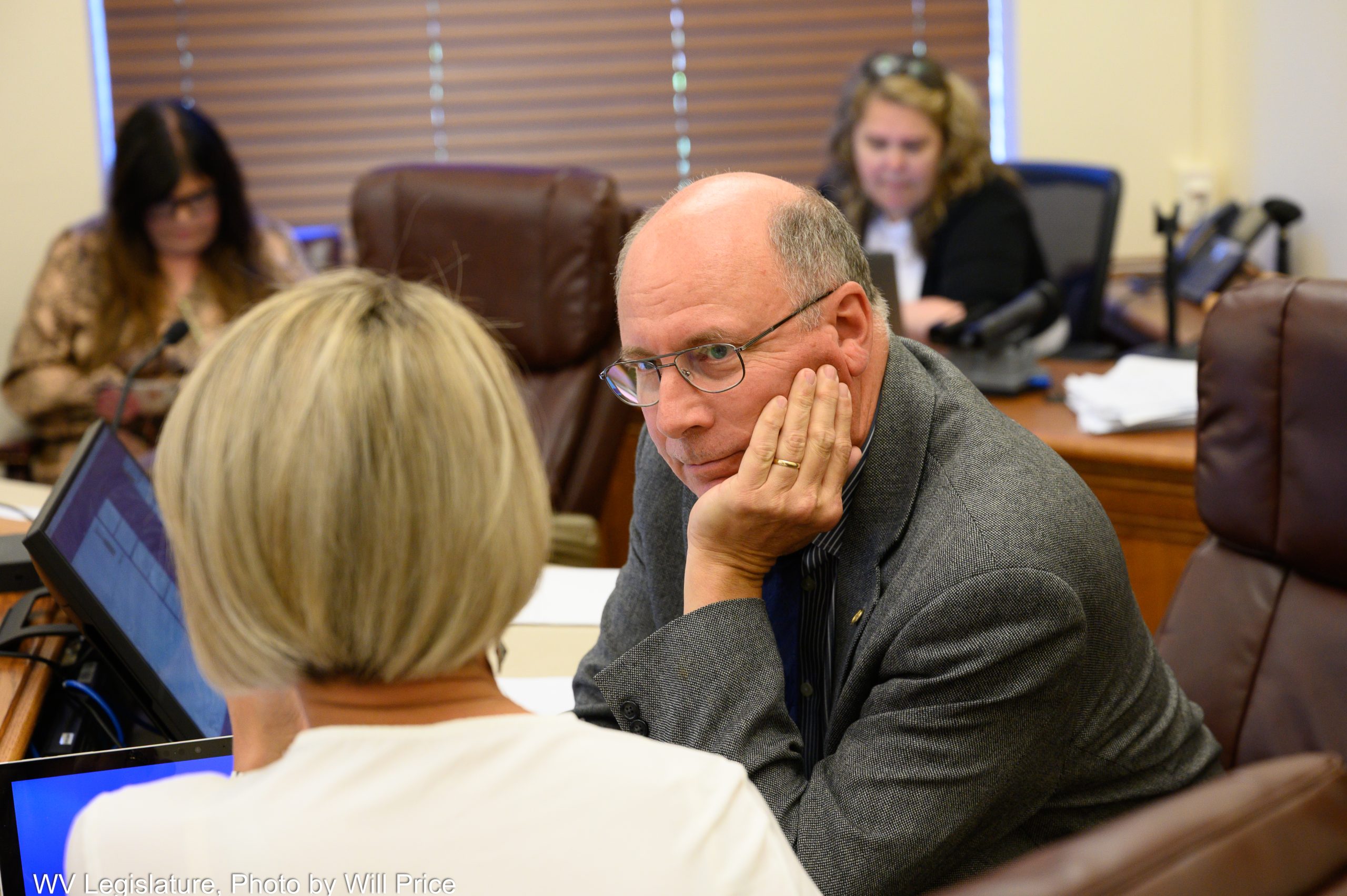
The Legislative Oversight Commission on Education Accountability met this afternoon to hear a report on the Third Grade Success Act and the Beginning-Of-Year Benchmark/Screener Report.
The Third Grade Success Act is a program that provides additional support to students with learning deficiencies through initiative centers surrounding the science of reading, professional learning, early childhood development, writing instruction, literacy, and numeracy support.
“The department continues to ensure every child builds solid reading and math foundations by third grade,” Drew McClanahan, WVDE Legislative and Policy Officer, said
The presenter states that more than 1,120 educators and 200 administrators participate in professional learning. Literacy and numeracy networks launched a multi-tiered system offering coaching support to all districts and classrooms. Professional learning, coaching, and strategy planning are shared across counties to ensure collaborative growth and promote district-wide success
Intensive support is provided through dyslexia training, early intervention and guidance for struggling readers, ECAT training, and classroom support. Nineteen regional mathematics training sessions were provided, with over 600 participants engaging.
The presenter states that Harvard and Stanford did a study where they presented that West Virginia rose from 42nd to 11th nationally in reading growth and from 22nd to 6th nationally in numeracy growth.
We are very optimistic and thankful to this body for the Third Grade Success Act and the support to continue the work,” McClanahan said.
Transitioning from education to healthcare, Amanda McCarty, Senior Director of Health Sciences, briefed legislators on a 2025 Health Sciences and Rural Health Report Card.
The presenter states that West Virginia Health Science professions are competitive nationally and have lower tuition and debt than other states.
The West Virginia nursing board is facing an aging workforce and retention challenges. Workforce and distribution challenges are prevalent in rural areas.
There are three state-funded medical schools in the state of West Virginia. West Virginia enrolls more medical students per capita than any other state. The MCAT scores for each school are above the national average. All three schools are reported to have one of the lowest tuitions in the nation. In-state tuition ranges from $23,000 and $35,000, and out-of-state tuition ranges from 70,000 per year. Medical license pass rates are between 97 and 100 percent. Thirty percent of graduates chose to remain in the state for residency.
The presenter states that rural areas are lacking healthcare access, and medical schools in West Virginia encourage students to stay in the state for residency.
Nationally, more than 138,000 nurses have left the workforce since 2022, and 40 percent intend to leave by 2029 due to age and retirement. Workforce West Virginia estimates 1,500 job openings each year due to growth and replacement needs in the nursing workforce. The nursing workforce in West Virginia has grown 1.3 percent since the pandemic.
Also, Brian Weingart, Senior Director of Financial Aid, presented a Comprehensive Report on WV Financial Aid 2025.
There have been higher FAFSA completion rates this year than in the past 10 years.
The presenter states there will be legislation for online streaming focus groups for students to make the financial aid process easier, to eliminate burdens while maintaining integrity.
Due to the budget reconciliation from the Big Beautiful Bill, student loans will be capped and prorated starting next year, and graduate plus loans will be limited, along with loans for part-time students.
The committee then heard from Sarah Tucker, chancellor of the Higher Education Policy Commission and the Community and Technical College Council, who reported on the Dual Enrollment Pilot Program Report. Dual Enrollment allows high school students to take college-level courses, earning college credits in high school.
Dual Enrollment is now offered to private school students, public school students, and homeschooled students.
Eight thousand students have earned over 72,000 college credits in the past year. This past fall, 8,000 students enrolled. The presenter states that the growth number is in double digits each year.
Students are encouraged to enter pathways that will lead to jobs in the state, such as health science, education, social service, and welding, pathways that will lead to jobs in the state.
The presenter states that 3.6 million is needed due to the growth of the program.
