

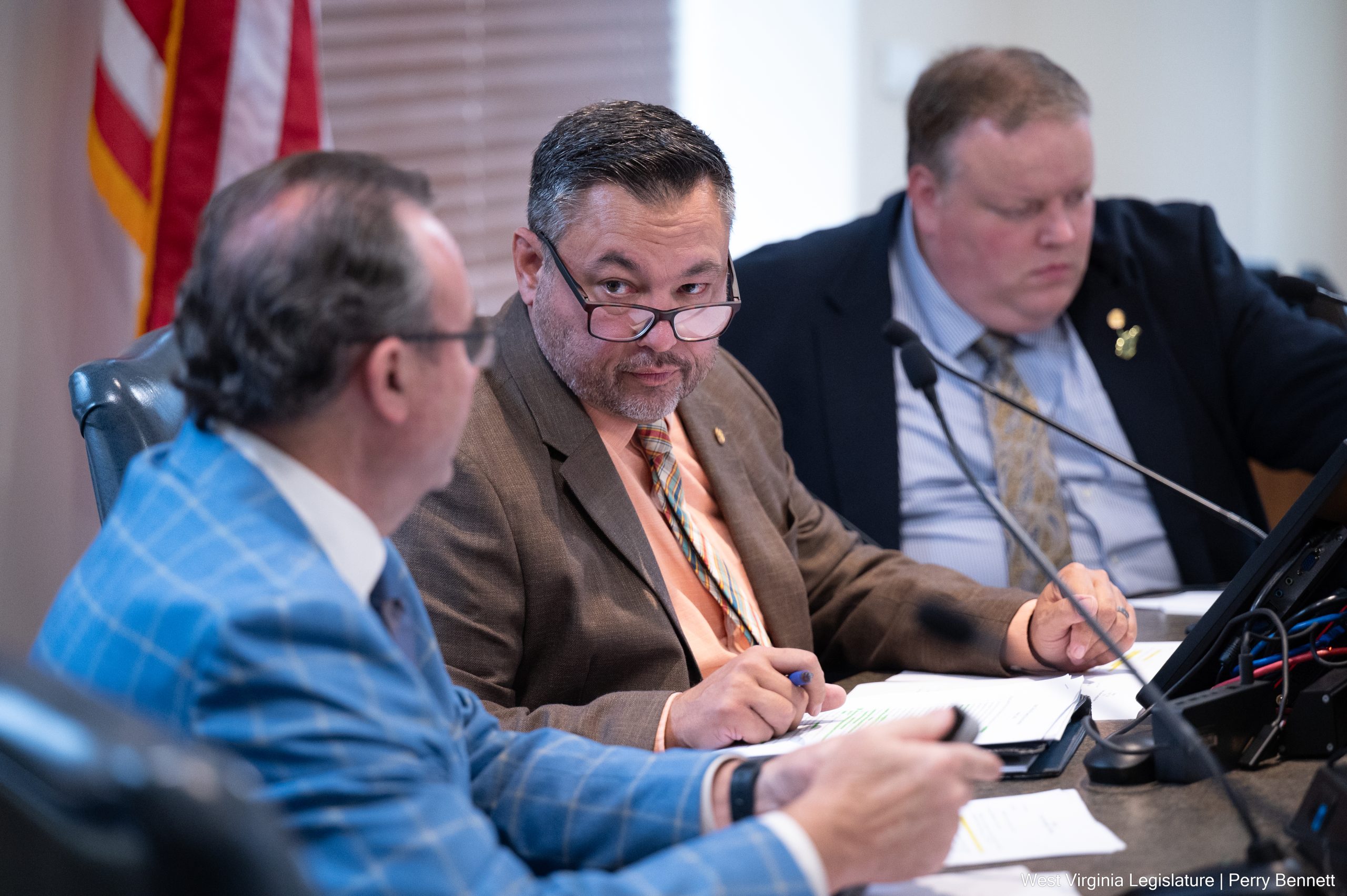
The Joint Committee on Flooding met yesterday to discuss disaster recovery and state emergency management.
Laura Pierce, disaster services specialist for Catholic Charities, spoke to the committee this morning about the pressing need for case management in West Virginia.
Pierce said several nonprofits seek and organically receive funding for long-term case management and recovery after disasters. She said there is currently over half a million dollars available to nonprofits for direct assistance in disaster recovery in West Virginia, but organizations are unable to access it without trained disaster case managers.
Pierce said, historically, the Voluntary Organizations Active in Disasters (VOAD) has provided long-term case management for disaster victims through federal funding. The organization received funding from FEMA 10 years ago.
As of now, VOAD has no available funding for disaster case management for existing events.
Pierce said that as the role of FEMA has shifted, funding has wavered, and nonprofit organizations have had to seek funding themselves.
Catholic Charities has received a grant that will allow it to provide disaster case manager training free for the next two years. Pierce said the lack of disaster case managers has caused stress on the long-term disaster recovery process.
When asked about the biggest issue for families receiving help following a crisis, Pierce said the six months or more after the crisis is the problem. She said families will receive immediate aid but little help afterward due to a lack of disaster case managers.
Pierce said more than 20 counties in the state have experienced disaster events within the recent past.
Pierce said Catholic Charities has covered 100% of households affected by Hurricane Helene; however, of the six recent disasters in West Virginia, three have gone without disaster coverage. Of the 1255 cases reported in West Virginia for Hurricane Helene, Catholic Charities has completed three.
During the McDowell County floods in February 2025, 3,955 households were reported to be affected. 47 million dollars in federal funding. Pierce said the households of McDowell County would likely need $ 20 million to continue supporting the county.
The last three events (go and find specifics) have not received FEMA funding approval for disaster case managers.
Pierce said West Virginia’s Disaster Recovery Trust Fund was originally established in 1990 and then was revamped in 2023. She said that since 2023, this fund has not received any allocation of funds.
Following Pierce, Catherine Clinch, president of Tidal Basin, and Eric Letvin, vice president of resiliency for Tidal Basin, spoke about the future of state emergency management. Clinch said the current federal administration has stressed the state’s role in disaster response.
Clinch said Tidal Basin would like the West Virginia Emergency Management Division to spread out its offices across the state to promote local communication between offices.
Clinch said after speaking with Matthew Blackwood, deputy director of the WVEMD, that they would look at strengthening the continuity of operations program and continuity of government.
Tidal Basin’s key points focused on enhancing training exercises, regional advocacy, funding, and the state being proactive in disaster response. Clinch said FEMA’s role is changing and might not have the same capacity to support the states.
Letvin shared ideas of how West Virginia should move forward with disaster response, such as decreasing the federal role and increasing the state role in disaster response, especially after an increase of the threshold for federal declaration.
The threshold for federal disaster declarations has increased by a factor of 4. According to Letvin, with this new factor increase, Pennsylvania, other than COVID, would not have received a declaration for these disasters since 2011.
