

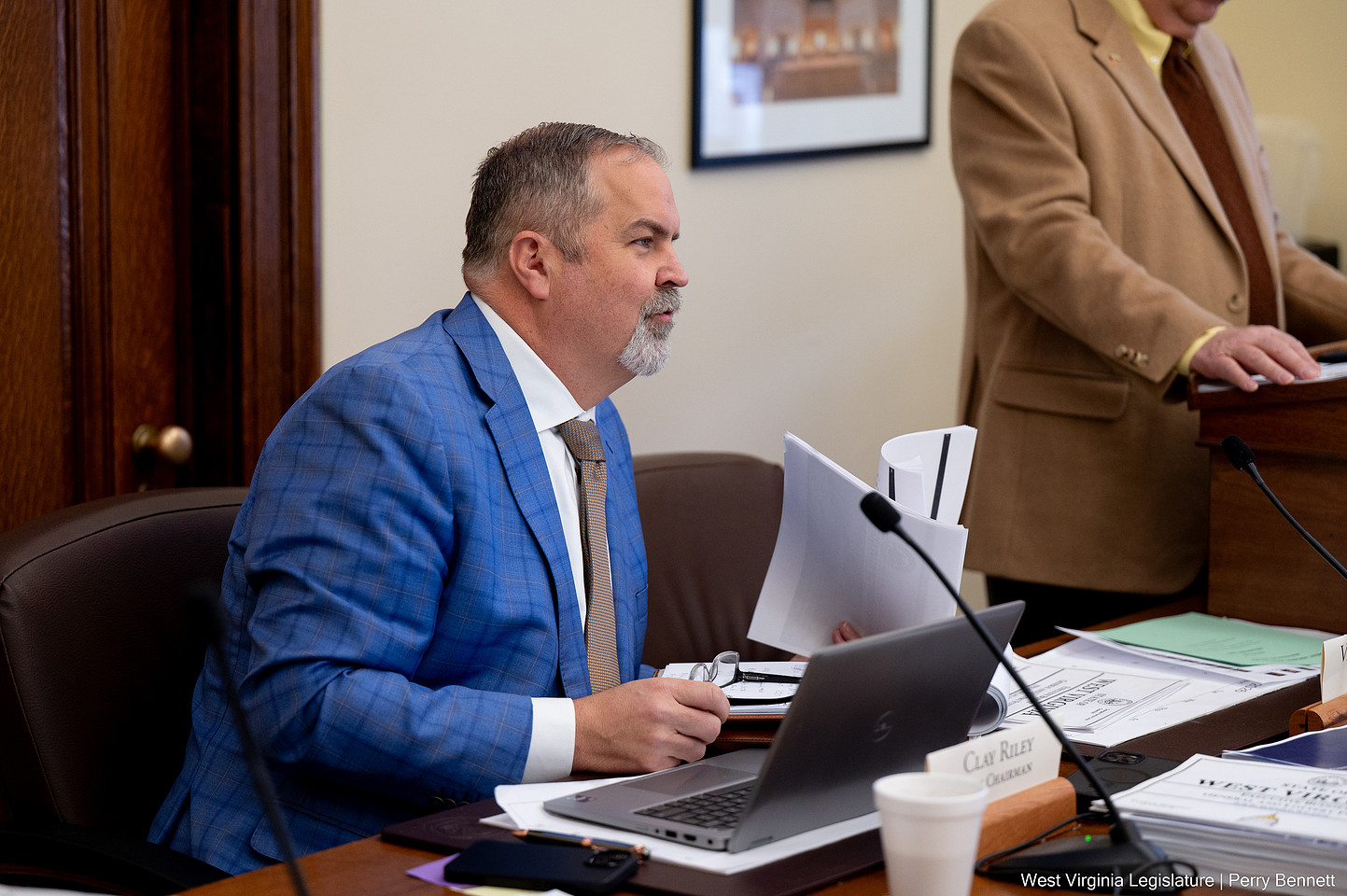
The House Finance Committee met this morning to hear the Governor’s Budget Proposal.
The executive budget was presented by State Budget Director Mike McKown. The Governor’s recommended appropriations relate only to the general revenue fund, which is about 27.76 percent of the total budget.
According to the director, the Public Employees Retirement System (PERS) is in excellent shape and ranks among the strongest pension systems in the country. It is funded at 101.8 percent. The Teachers Retirement System (TRS) is at 85 percent funding. The fund needs $2 billion to be fully funded.
The Rainy-Day funds are at $1.2 billion; both are invested and doing well. They will not be needed to balance the budget. While they are doing well, the funds would only last about 90 days in an emergency. The Personal Income Tax Reserve Fund is about $460 million.
The director said that fiscal year 2026 (FY26) funds are strong, and the state is expected to have a healthy surplus. In the budget, public education, Medicaid, social services, and corrections are all fully funded. The major drivers of the base budget increase are the HOPE scholarship, pay raises, and the PEIA employer contribution increase. These three items account for over 94 percent of the total base increases for FY27, with HOPE increasing by $124.3 million, pay increasing by $78.4 million, and PEIA employer costs increasing by $35.1 million.
The pay raises average 3% for all state employees, regardless of funding source. Because it is an average, some employees will be getting less than 3 percent. To fully fund HOPE, a supplemental of $230,144,341 is needed; this will fund the second half of FY27 and the first half of FY28. Allocations and payments are made this way because when payments are due in August, there isn’t enough cash flow.
The presenter briefly spoke about the sale of the long-term care facilities. The sale will not reduce the appropriations needed to operate the state’s three hospitals. The company that bought the facilities is required to build new facilities.
The State’s portion of SNAP has increased due to federal changes. It used to be a 50/50 split between the State and Federal Funds; it will now be 75 percent state-funded and 25 percent federal-funded.
Next, the director went over the 6-year plan, a planning tool used to analyze future budgets. The plan allows future budget gaps to be caught and balanced by that specific fiscal year. The plan uses basic revenue assumptions and major expenditure drivers for the general revenue, lottery, and excess lottery funds.
The State Budget Director will be back on Monday to answer questions relating to the presented budget.
