

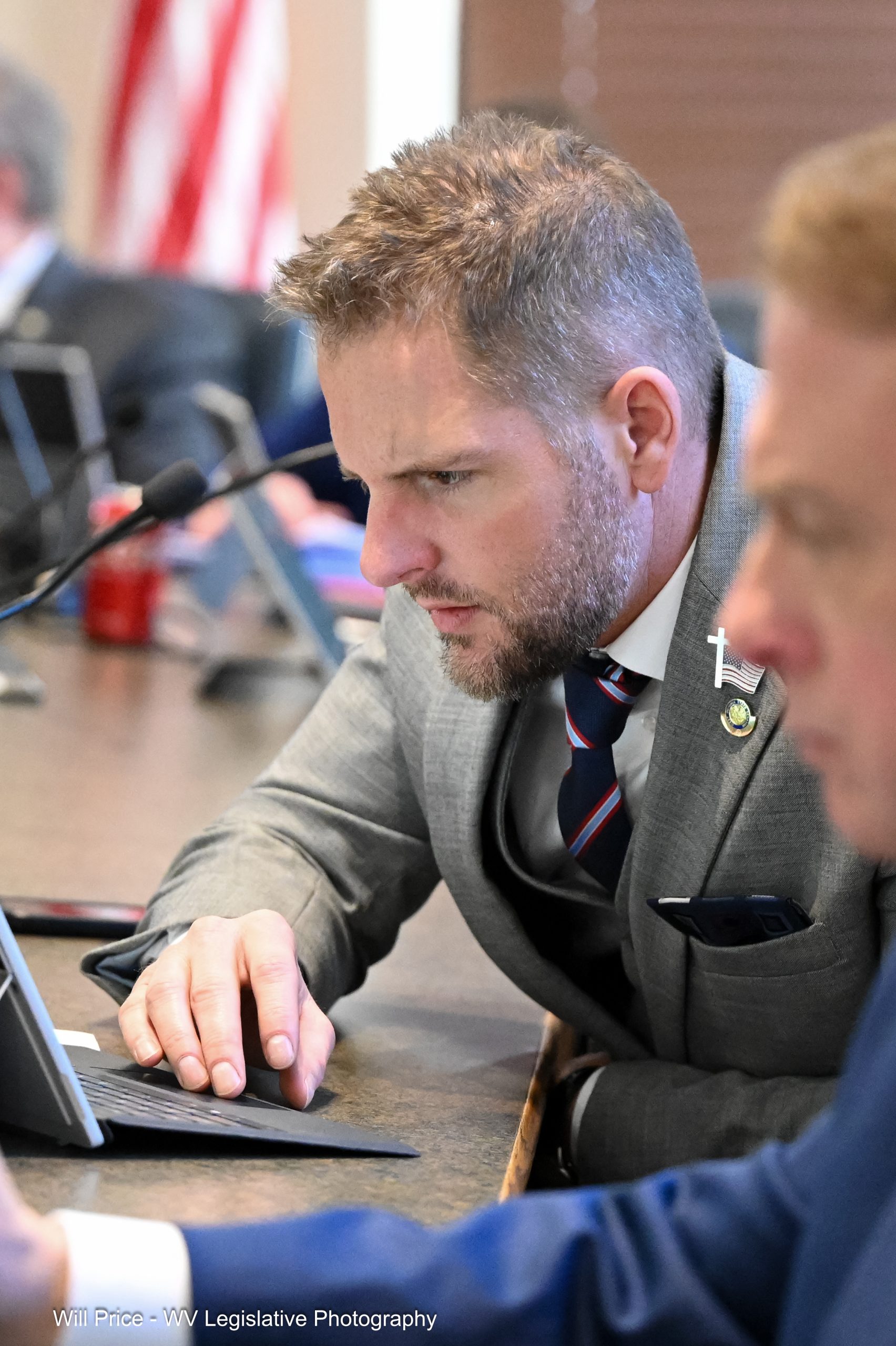
The Senate Judiciary Committee met this afternoon to discuss Senate Bill 84 and Senate Bill 55.
Senate Bill 84 would prohibit law enforcement from placing a camera on private land without obtaining consent from whoever owns the land or a search warrant. This bill does not prohibit law enforcement from placing a camera in an area where they have a lawful right to be.
For this section, “private land” means posted land, cultivated land, or fenced land. Specific definitions for each can be found in §61-3B-1.
In the discussion of the bill, Senators engaged in debate over concerns with the language of the bill, the open fields doctrine, and specifications on what qualifies as a surveillance camera. Other concerns included what is considered a “placed” camera, drone footage, body cams, and other possible conflicts with the bill and the lawful right of officers.
The committee came to an agreement to lay the bill over to Thursday for ample time for agencies and other interested parties to avoid potential unintended consequences of the legislation.
Senate Bill 55 would amend code §61-5-17a to include home incarceration supervisors and social service workers. Under this bill, anyone who knowingly, willfully, and forcibly obstructs or hinders either home incarceration supervisors or social service workers will be guilty of a felony and will be imprisoned for 15 years to life, upon conviction. This is in addition to those already listed in the existing code.
Upon following the debate over the bill, Senator Ryan Weld (R – Brooke, 01) successfully amended the bill to raise the minimum penalty from 15 years to 20 and to include language regarding parole eligibility.
The amended bill passed and will be advanced to the full Senate.
