

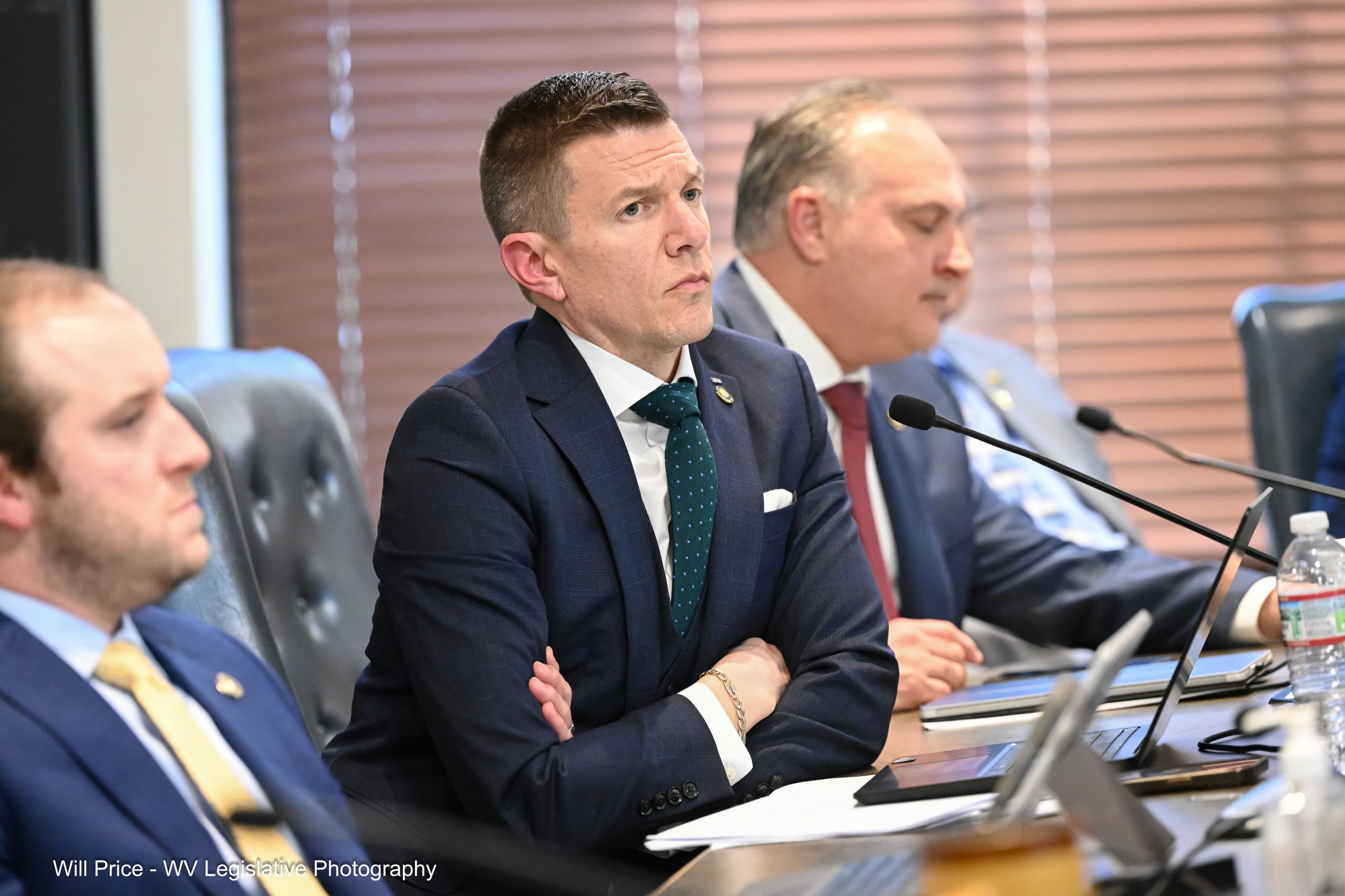
The Senate Judiciary Committee met this afternoon and advanced three bills dealing with illegal immigration, telecommunication devices, and Social Services.
Senate Bill 615 would require individuals with an illegal immigration status to be turned over to Immigration and Customs Enforcement (ICE) and be deported.
If the same individual is present in the state under an illegal immigration status for a second time, they would be guilty of a felony offense and would be incarcerated in a state penitentiary for 3-5 years, and following their release, be sent to ICE for deportation.
Law enforcement can suspect an individual is in the United States under an illegal immigration status only if law enforcement is detaining them for a separate legal issue and chooses to report the individual to ICE.
Separate legal issues include, but aren’t limited to:
* Speeding
* Broken headlight, taillight, brake light, or turn signal
* Expired registration or inspection
* Checkpoint stops (DUI or license checkpoints)
* Illegal turn or U – turn
The bill was reported to the full Senate with a recommendation of passage.
Senate Bill 543 would require the Bureau of Social Services to prepare and file its complete policy manual as a legislative rule and be made available for public scrutiny.
The policies include governing child protective services, foster care, youth services, licensing, casework standards, and other operational or programmatic guidance used by the bureau.
The bill was reported to the full Senate with a recommendation of passage.
Senate Bill 440 would make transporting telecommunication devices into a state correctional facility a felony.
If an individual attempts to deliver anything into a state correctional facility to aid or facilitate another individual’s escape, they would be guilty of a felony and would be sentenced to a minimum of 10 years in prison.
Delegate David Green (R – McDowell, 036) testified to the body in support of the bill, pointing out the ongoing attempts to transport telecommunications in McDowell County correctional facilities using devices such as drones.
A Chief Deputy from McDowell County testified that he personally engaged with approximately 45 offenders from various places, such as Florida and Mexico, who have attempted to transport contraband such as cellphones in correctional facilities in West Virginia.
The bill was reported to the full Senate with a recommendation of passage.
