

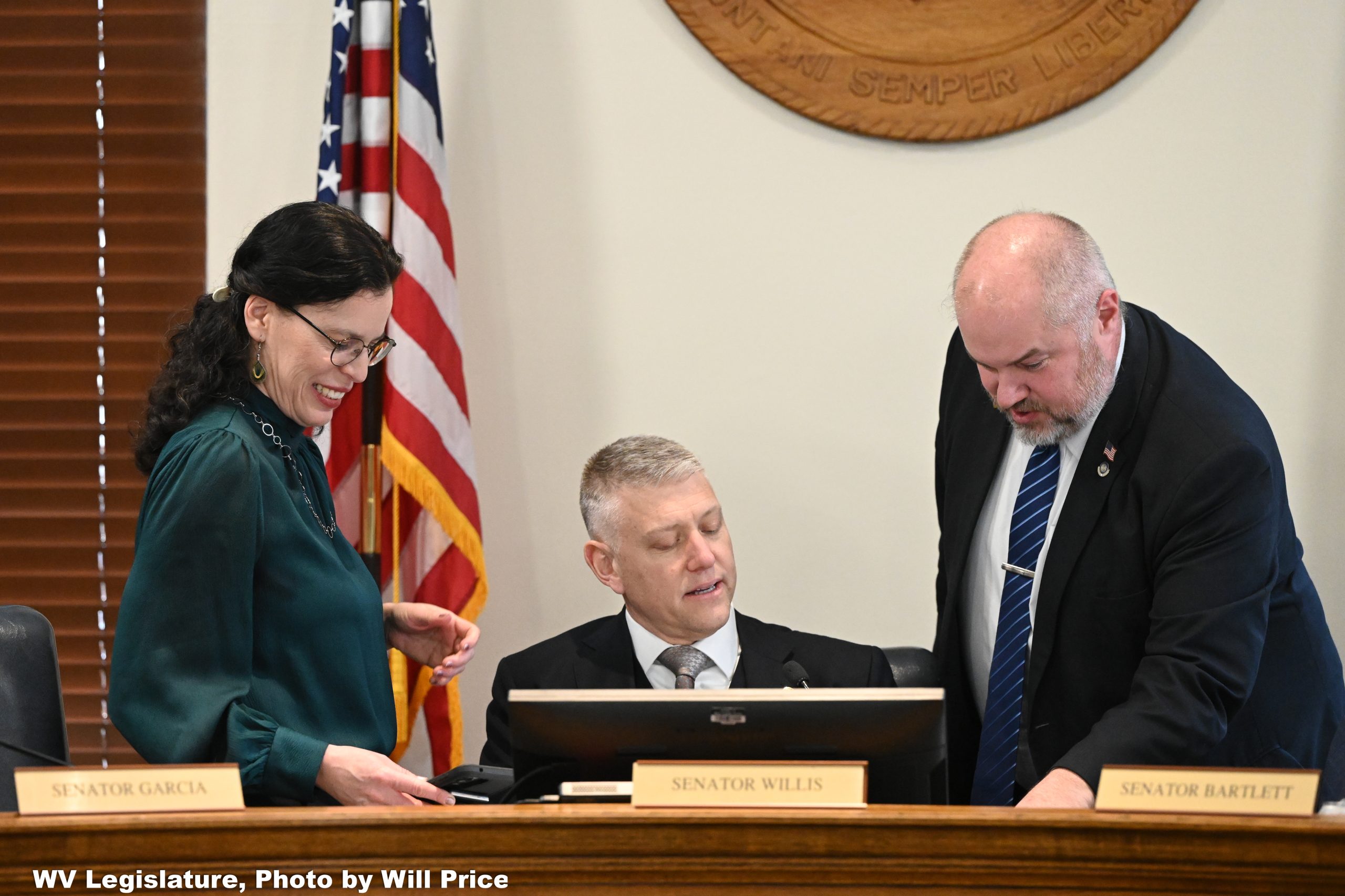
The Senate Judiciary Committee met this afternoon and advanced four bills on the Protect Our Children at the Bus Stop Act, voting ballots, property and funds, and voter registration.
Senate Bill 705 would make it a crime to misuse property or funds that were lawfully obtained under an agreement, converting them for personal use in violation of the agreement.
Any person who misuses funds or other property valued in an amount less than $2,500 would be guilty of a misdemeanor and, upon conviction, would be be sentenced to up to a year in jail and fined up to $1,000.
Any person who commits the crime concerning funds or other property of $2,500 or more would be guilty of a felony and, upon conviction, would be sentenced to 1-10 years in prison and fined up to $2,500.
The bill was reported to the full Senate.
Senate Bill 59 clarifies residency requirements for voter registration.
The bill would require voters to be physically present in their state, county, or municipality with the intention to remain there, where they register and vote.
The bill defines a “legal resident” as a person who is domiciled in the state, county, or municipality in which he or she offers to vote, which includes both physical residency (or presence) in the state, county, or municipality and an intent to remain in the state, county, or municipality.
Facts that would demonstrate the domicile of a person in the state, county, or municipality include, but are not limited to:
- The physical character of the person’s residence
- The amount of time a person has spent in the state, county, or municipality
- Whether the person intends to return permanently to another residence outside of the state, county, or municipality in the future
- Whether the person obtains a license to operate a vehicle in the state
The bill was reported to the full Senate.
Senate Bill 558 would establish the Protect Our Children at the Bus Stop Act.
This bill would require drivers to stop when a school bus is displaying activated stop-arm signals and red warning lights when picking up or dropping off students. This would apply on public highways and similar roadways unless the vehicle is on a separate roadway, such as opposite sides of a divided highway.
The state’s existing criminal penalties would remain the same under this bill if a violation takes place; repeated violations would have an increased fine, along with potential jail time of up to six months and a mandatory driver’s license suspension of 60 days for a first offense, 180 days for a second, and one year for a third or subsequent conviction.
A third aggravated offense within ten years would be a felony, punishable by 1 to 5 years in prison and fines of at least $5,000.
Stop-Arm cameras mounted on school buses would be required to issue civil violations when a driver illegally passes a bus displaying activated stop-arm signals and red warning lights.
The bill was reported to the full Senate.
Senate Bill 905 would provide voters with the ability to identify and verify their ballot cast in a statewide election held in West Virginia.
Counties would be required to preserve and submit ballot images, a unique ballot number and a voluntarily affix or unique mark of their choice for later identification of their ballot to ensure identification of their ballot.
Electronic voting systems would be required to capture images of each ballot, and the Secretary of State must publish them online within 24 hours, organized by county and precinct.
The intent of the bill is to ensure that the individual’s ballot is consistent with what they initially placed on it.
After much discussion and some confusion on the part of several Senators as to whether the bill actually strengthens election integrity, the legislation was placed into a subcommittee for additional vetting.
