

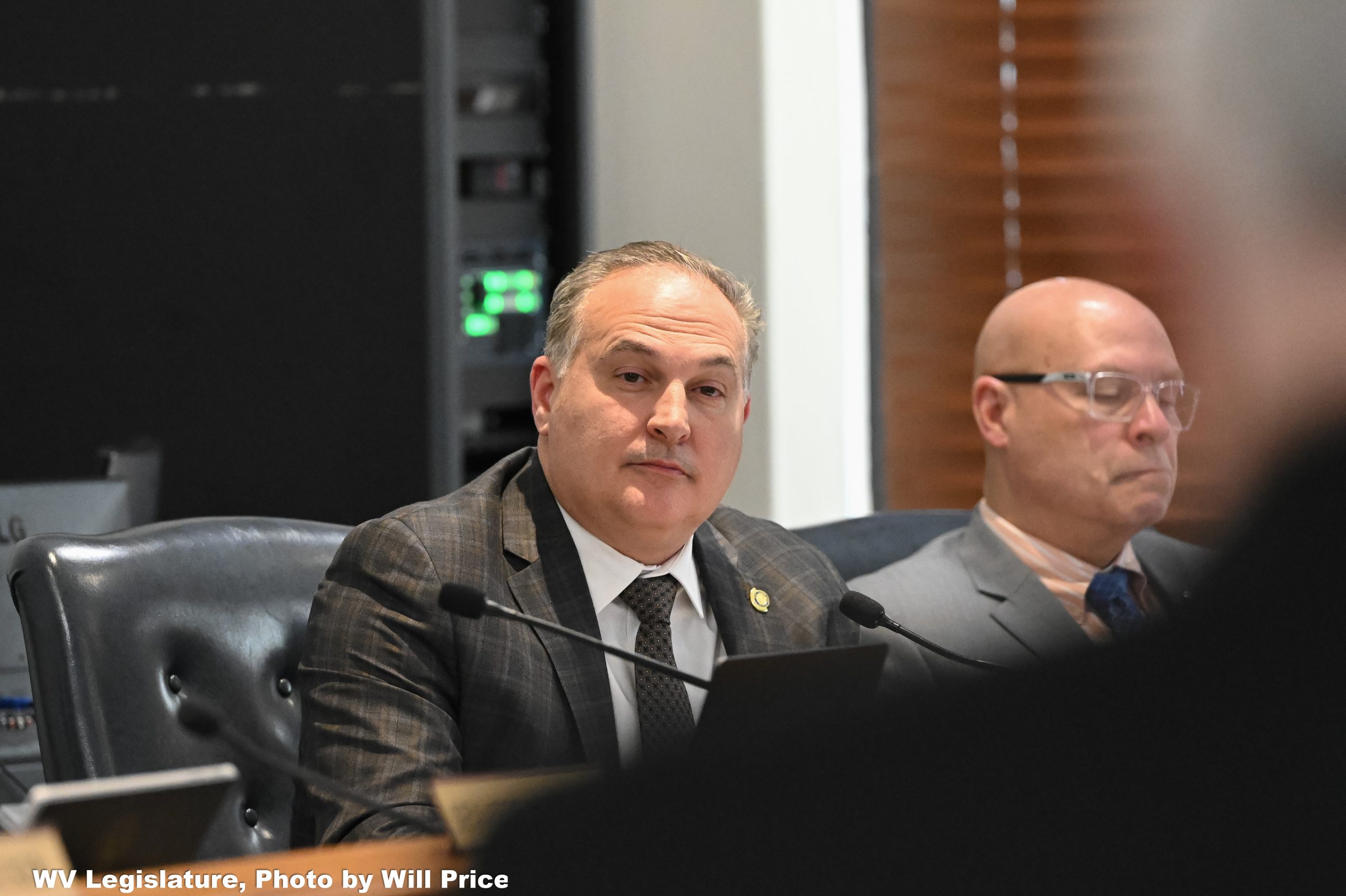
The Senate Judiciary Committee met on Tuesday afternoon and advanced three bills and adopted two Senate Joint Resolutions.
Senate Joint Resolution 21 would propose a constitutional amendment creating a “Taxpayers Bill of Rights” in West Virginia.
The amendment would limit state government spending increases to the rate of population growth plus inflation.
Senator Ryan W. Weld (R – Brooke, 01) highlighted concerns that West Virginia’s reliance on severance taxes could create budget challenges if revenues drop and raised questions about economic conditions in the coming fiscal year.
Senator Brian Helton (R – Fayette, 09) highlighted that the amendment aims to create more predictable budgeting and encourage long-term fiscal responsibility, while giving voters a direct role in shaping state spending.
Former Senate Finance chairman Eric Tarr (R-Putnam, 04) was also against the joint resolution, highlighting the fact that it handcuffs future legislators with no budget flexibility for critical needs. He also mentioned the potential negative impact on the state’s Rainy Day Fund, which is critical for the state’s bond rating. Tarr called it easy to vote for ideologically but noted that responsible fiscally conservative budgeting is more nuanced.
The resolution was reported to the full Senate with a recommendation of adoption, first being sent to the committee on Finance.
Senate Bill 901 would create a Truancy Pretrial Diversion Program that allows parents, guardians, and custodians to address school attendance problems before facing criminal penalties.
Judges can delay sentencing to give families time to correct the truancy, and the Department of Human Services may provide home-based family preservation services when courts are involved.
The bill intends to address the root causes of truancy and keep families together rather than punishing them immediately.
Senator Ryan W. Weld (R – Brooke, 01 proposed an amendment adding language in the bill stating, “In August prior to the beginning of the school year,” and adding “or board of education” after the word “school”.
This amendment aims to give schools and boards time to prepare and plan before students return, ensuring smoother implementation at the start of the year.
The amendment was adopted.
The bill, as amended, was reported to the full Senate with a recommendation of passage, first being sent to the committee on Finance.
Senate Bill 541 would require circuit courts in child abuse and neglect cases to make detailed written findings of fact and conclusions of law at every major stage of the case.
Judges would be required to explain whether the Department made reasonable efforts to preserve or reunify families, why removal was necessary, and how permanent decisions are supported.
The bill also would increase oversight of guardians ad litem and appointed attorneys by requiring courts to confirm they met training and professional standards.
The bill was reported to the full Senate with a recommendation of passage.
House Bill 4022 would require child protective services workers to be allocated and stationed by county based on population, referrals, and average caseload.
The bill allows adjustments based on immediate county needs but prevents staffing levels from dropping below the January 1, 2023, allocation.
The bill requires the bureau to submit an annual report to the Legislative Oversight Commission on Health and Human Resources Accountability detailing staffing allocations and any changes lasting more than three weeks, along with explanations.
The bill was reported to the full Senate with a recommendation of passage.
Senate Joint Resolution 8 would propose a constitutional amendment to change term limit rules for county sheriffs in West Virginia.
The resolution would allow someone appointed to fill a sheriff’s term with less than two years remaining to still run for and serve two full consecutive elected terms afterward.
The resolution was reported to the full Senate with a recommendation of adoption, first being sent to the committee on Finance.
