

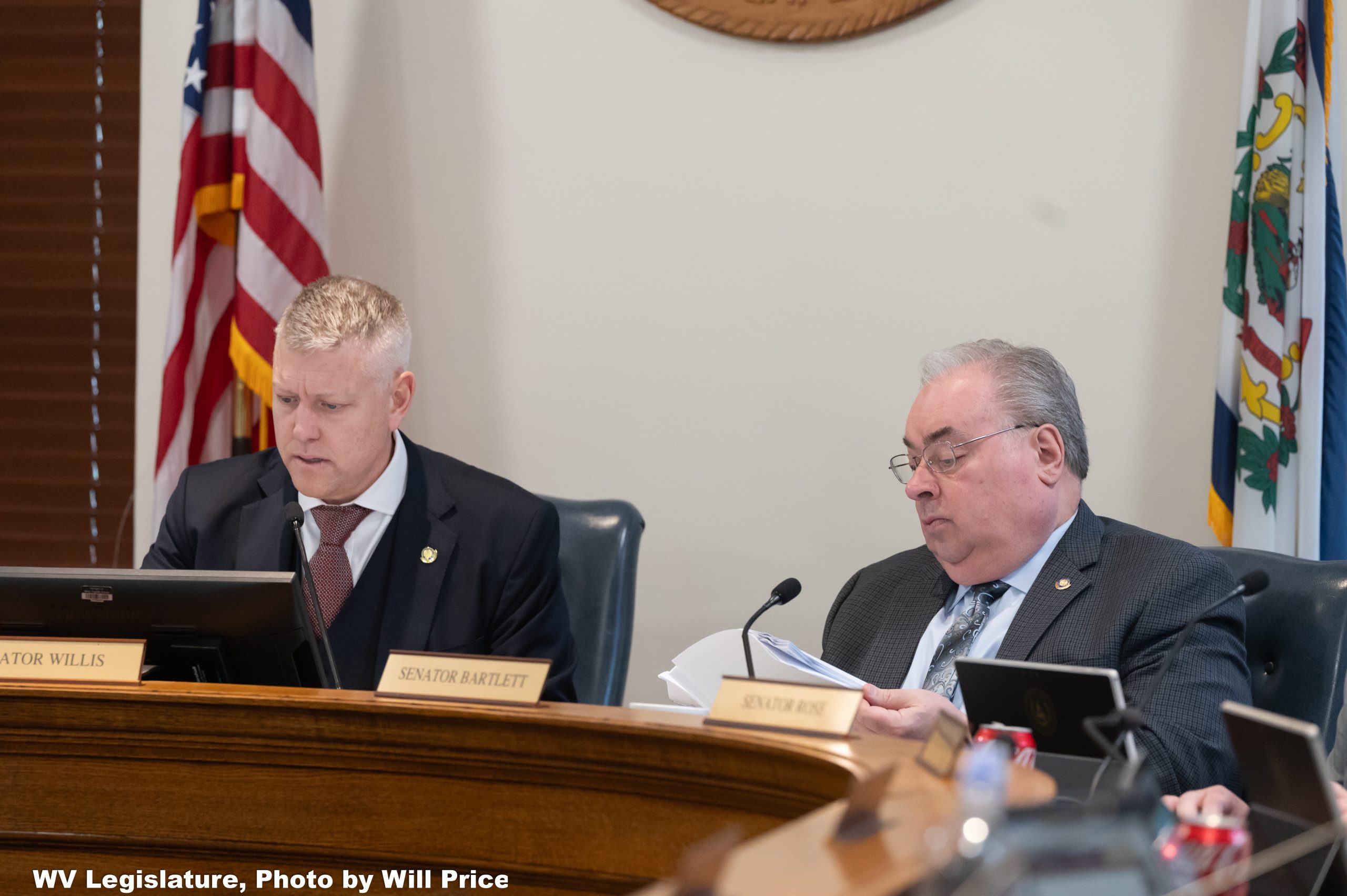
The Senate Judiciary Committee met this afternoon and advanced several bills on firearms, polling locations, and child torture laws.
Senate Bill 986 would create a new criminal offense for child torture in West Virginia.
The bill defines child torture as a course of conduct that causes severe physical or emotional harm to a child under a caregiver’s supervision. Acts covered in the bill include inflicting extreme pain, depriving a child of necessities, subjecting a child to unsafe conditions or extreme temperatures, and other conduct that places a child at risk of serious injury.
Under the bill, anyone found guilty of child torture would face felony penalties, ranging from 1-5 years in prison if no bodily injury occurs, and 2-10 years if the child suffers bodily injury.
The bill was reported to the full Senate with a recommendation of passage.
Senate Bill 481 would require precincts to be reported independently and update state law by changing the term “precinct” to “polling location.”
The bill would set standards for election boards, including poll clerks and election commissioners, and clarify mapping and reporting requirements for counties and the Secretary of State to support federal and state redistricting.
Senate Bill 1071 would establish the Public Defense and Provisions Act and establish a new state Office of Public Defense within the West Virginia State Police.
The office would be authorized to acquire and transfer machine guns to qualified residents who pass a background check. The firearms would be similar to those used by law enforcement or the military.
The state and its employees would not be liable for the actions of individuals who legally obtain these machine guns.
The bill sets rules for record-keeping, transfer fees, and the operation of the office.
The bill was reported to the full Senate with a recommendation of passage.
Senate Bill 963 would require a full court hearing before someone can be barred from having guns under a protective order. The hearing must include the respondent, their lawyer, and clear evidence that they pose an immediate danger.
The bill allows the respondent an automatic appeal if their firearms are restricted. All other parts of the protective order, such as banning abuse, harassment, stalking, or threats, would stay in effect.
The gun restrictions may only be applied when the court finds convincing evidence of immediate danger to the petitioner and cannot be used for punitive purposes.
A witness testified in opposition to the bill, expressing concern for those in domestic violence situations, specifically the petitioner. She noted that a large share of women in the U.S. are killed by current or former partners, highlighting the risks involved when firearms are restricted under protective orders.
Following a discussion, the bill was reported to the full Senate with a recommendation of passage.
Senate Bill 686 would allow coal operators to mine land if 75 percent or more, agree. Owners who do not agree would still get paid their fair share, and operators are protected from legal trouble if the mining is done legally. The bill also safeguards miners and surface land rights.
If some owners can’t be found, the money owed to them goes into a special state fund managed by the Treasurer. The fund pays claims, and after seven years, surface owners can claim future rights, nut not past payments, so mining can continue smoothly while protecting missing owners.
The bill was reported to the full Senate with a recommendation of passage.
Senate Bill 182 would allow municipalities to expand their boundaries through a process called “minor boundary adjustment,” which is a streamlined method for annexation. Under this bill, a municipality can apply to the county commission for permission to annex territory, provided the annexation does not increase the total municipal boundary by more than 105 percent or the current area by more than 120 percent.
The legislation also introduces specific conditions for annexing streets or highways, allowing for annexation of a street or highway along with at least one property owner (freeholder), or a street or highway alone if it’s essential for emergency services and no freeholder is involved.
The application process requires detailed information, including consent from affected residents and businesses, a map of the territory, and a plan for providing public services. The county commission would review the application, considering factors like contiguity, impact on services, and the overall best interest of the county, before making a decision, with provisions for public hearings and appeals to the circuit court.
The bill was reported to the full Senate with a recommendation of passage.
