

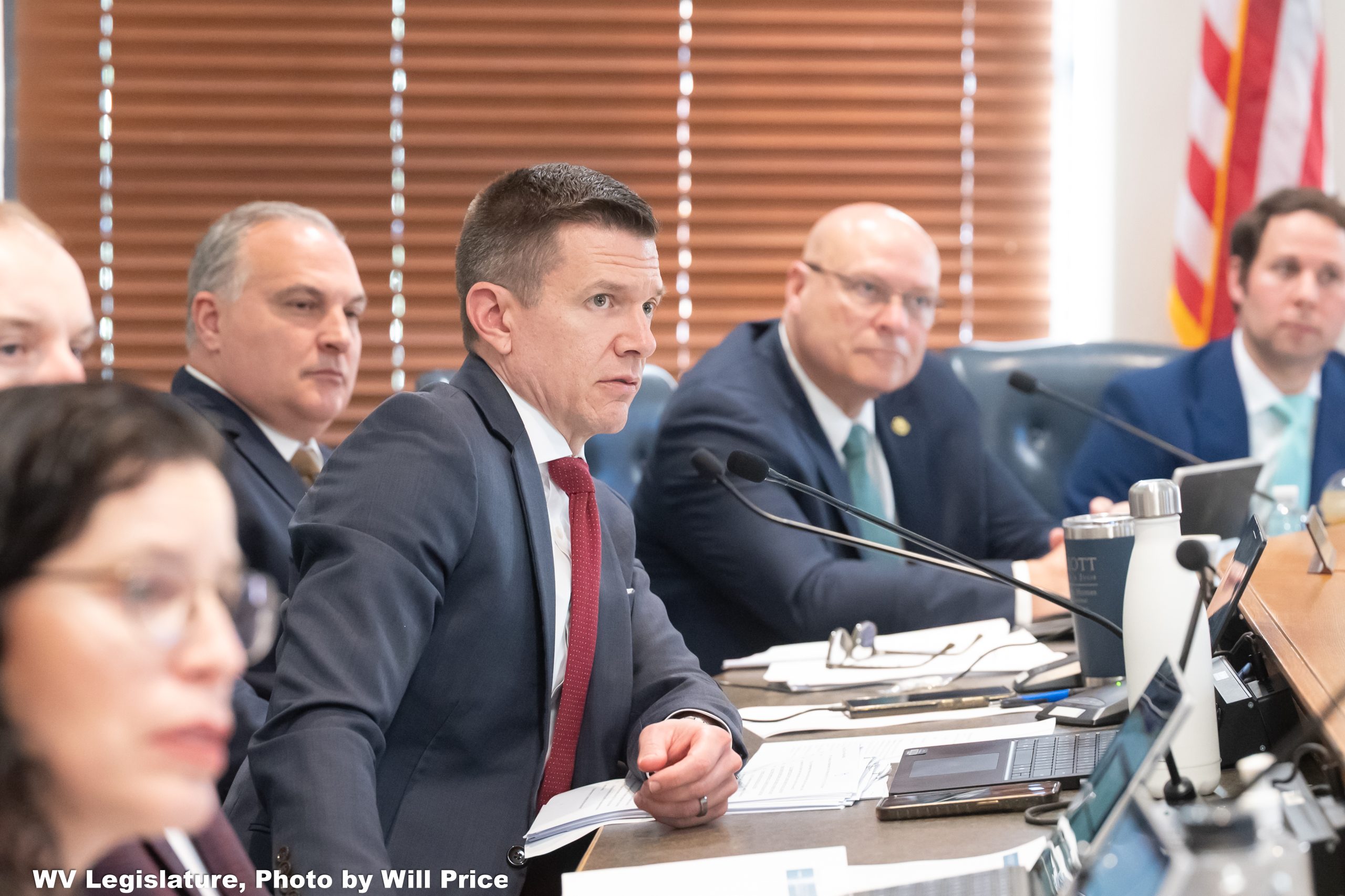
The Senate Judiciary Committee met and advanced several bills regarding child welfare, mental health determinations for firearms, military protective orders, and defendants’ residency status.
The bill updates the requirements for petitions filed in circuit court by individuals who were previously involuntarily committed or adjudicated as mentally defective and are prohibited from possessing firearms under federal law.
The bill was reported to the full Senate with a recommendation of passage.
House Bill 4366 would clarify how military protective orders related to interpersonal or domestic violence can be recognized and used in West Virginia courts.
The bill defines a military protection order as a protection order issued pursuant to 10 U.S.C. § 1567, as amended from time to time, by a commanding officer in the armed forces of the United States or the West Virginia National Guard or the National Guard of any other state against a person under such officer’s command.
The bill clarifies that law enforcement officers may notify the agency that entered a military protection order into the National Crime Information Center if there is probable cause to believe the order has been violated.
The bill was reported to the full Senate with a recommendation of passage.
House Bill 4606 would require courts to consider a defendant’s residency status when determining bail or conditions of pretrial release.
The bill required judicial officers to consider whether a person charged with a crime is a resident of West Virginia or the United States, along with their community ties and potential risk of flight, when deciding whether to release the individual, set bail, or impose conditions of release.
Magistrates may not release a defendant charged with a felony on their own recognizance and maintain limits on cash bail in misdemeanor cases.
Senator Joey Garcia (D – Marion, 13) proposed an amendment that would strike language in the bill that states “Provided, That pursuant to §62-1C-4 of this code, a magistrate may not release a defendant charged with a felony offense on his or her own recognizance.”
The amendment was rejected.
“I’ve had specific cases for people that didn’t need to go to jail, people whose cases had been dismissed, and this might get somebody killed some day because that’s what happens when people go to jail, unfortunately,” stated Senator Joey Garcia (D – Marion, 13).
He raised concerns about the bill removing the Magistrate’s authority to craft each case to the person they are looking at, such as the person’s residency and reliability to make it to court.
The bill was reported to the full Senate with a recommendation of passage.
House Bill 5684 would develop a new program for child protection commissioners in West Virginia.
The program, created at the request of the Supreme Court of Appeals, would establish a new type of judicial officer to handle child welfare cases more efficiently and ensure accountability in the courts.
Child protection commissioners must be licensed attorneys with experience or training in juvenile law. They could be assigned to multiple circuits, conduct hearings, monitor cases, manage discovery, and make recommendations to circuit judges on matters like custody, visitation, and child support.
The program would also allow for retired judges and justices to serve in this capacity, receiving per diem compensation while continuing to draw retirement benefits, helping address shortages of qualified child welfare professionals.
“We’ve got to do something,” stated Senator Fuller. He expressed that having a set of judges to focus on child welfare cases will significantly help address these issues in the state.
Senator Eric J. Tarr (R – Putnam, 04) proposed an amendment that the administrative director of the Supreme Court will create identifiable, measurable outcomes to be improved for the pilot program, that those measures shall have a baseline preimplantation upon annual reporting to the committee on Government and Finance, and shall include costs and projected costs.
The amendment is intended to protect the intent of where the funds are being spent and to ensure that they are being used to benefit the children through the program.
The amendment was adopted.
The bill, as amended, was reported to the full Senate with a recommendation of passage.
