

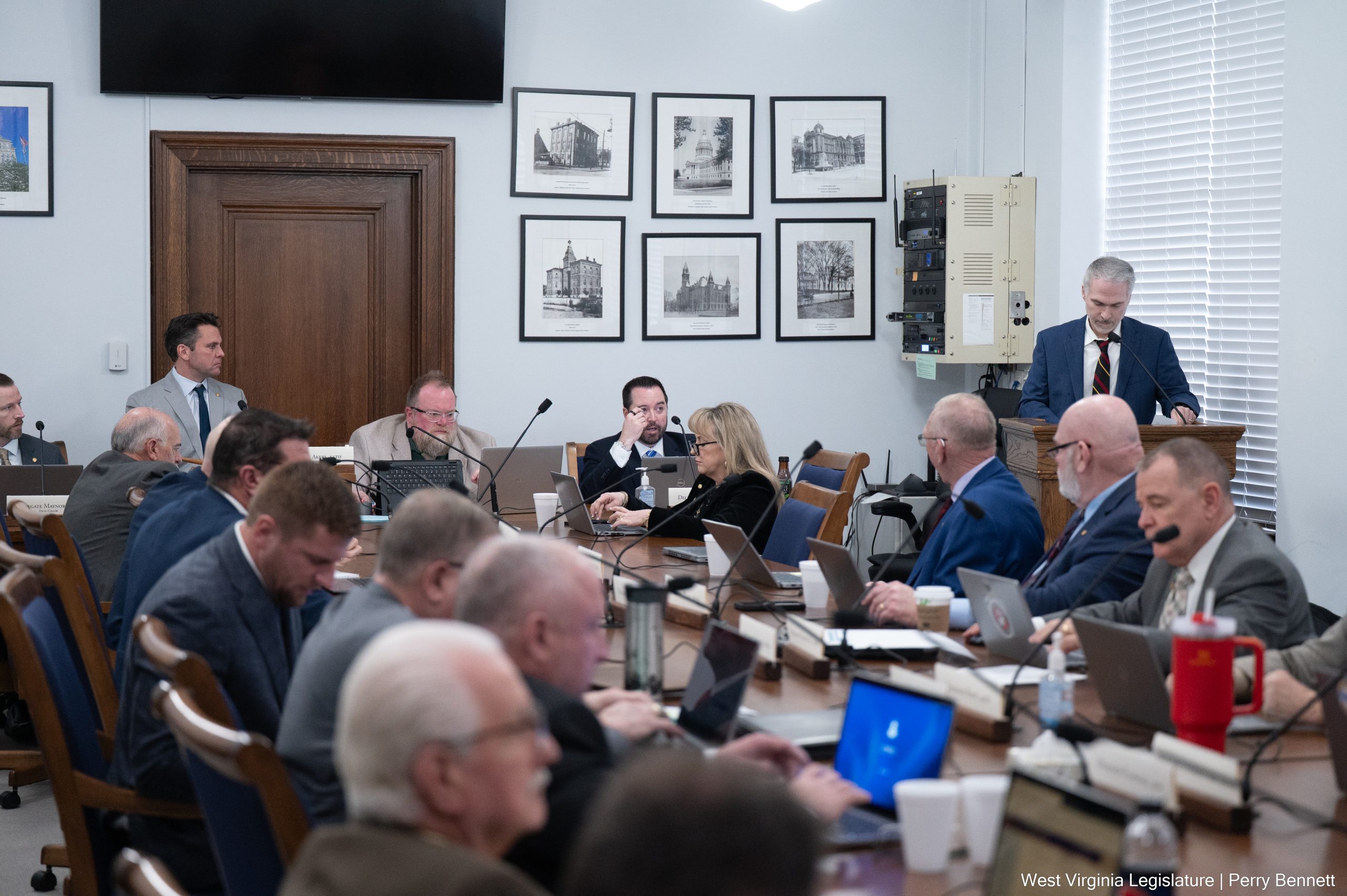
The House Judiciary Committee met this afternoon.
Senate Bill 54 would create criminal penalties for abuse or neglect of incapacitated adults. Under this bill, any caregiver who abuses or neglects an incapacitated adult, which creates a risk of serious bodily injury or death to the incapacitated adult, is guilty of a felony and, upon conviction thereof, shall be fined at least $1,000 but no more than $3,000, or imprisoned for one to five years, or both fined and imprisoned. This bill was reported to the floor.
Senate Bill 506 would allow counties to lease their wireless towers to any entity as long as they are doing so safely. This bill was reported to the floor.
Senate Bill 900 would make any jail, state correctional facility, juvenile detention center, or federal correctional facility in West Virginia a “targeted facility.” This would prohibit the flying of drones above the facilities. This bill was reported to the floor.
Senate Bill 1008 would change the procedures for how asbestos and silica litigation is handled. These enhancements provide more ability to the judicial system to manage the litigation. This bill was reported to the floor.
Senate Bill 928 would add new code that would allow for separate licensing and manufacturing of “low-proof spirit alcohol products.” Low-proof spirit alcohol products mean any alcoholic liquor beverage drink, other than wine, beer, or nonintoxicating beer, containing 1.5% ABV or more, but not more than 15.5 % ABV, mixed with drinkable water, fruit juices, flavoring, or coloring materials, other alcoholic or non-alcoholic beverages or other ingredients in a solution, which are packaged in containers up to 25 fluid ounces. This bill was advanced to markup and discussion.
Senate Bill 937 would establish a community-based child welfare system, also known as Kyneddi’s Law. This bill would establish a pilot program in Berkeley, Jefferson, Summers, Raleigh, Fayette, and Monroe counties, which would privatize the system, resulting in case management, services, and court-related functions being managed by a contracted provider. This bill was advanced to markup and discussion.
Senate Bill 59 would change voter eligibility and residency requirements for West Virginia. Some of these changes include defining “legal resident” as a person who resides in the state, county, or municipality in which he or she offers to vote, and has an intent to remain in the state, county, or municipality indefinitely. This bill was advanced to markup and discussion.
Senate Bill 182 would allow counties the ability to make more than one minor boundary adjustment every two years. This bill was advanced to markup and discussion.
Senate Bill 200 would increase criminal penalties and fines for assault on government officials, law enforcement officers, and police animals. This bill was advanced to markup and discussion.
Senate Bill 440 would prohibit the delivery of items to help someone escape from federal correctional facilities, in addition to the existing entities spelled out in code. This bill also adds telecommunication devices, such as a phone, as an item that could aid escape. This bill also increases the crime penalty for transporting a phone or other telecommunication device into a jail. This bill was advanced to markup and discussion.
Senate Bill 481 would change the code pertaining to voting precincts to allow for machines to be used for multiple precincts that are located close together. The purpose of this bill is to decrease lines at polling locations. This bill was advanced to markup and discussion.
Senate Bill 531 would establish the First Amendment Preservation Act. This act would prohibit state agencies or any kind of organization receiving state funding from entering into a contract or agreement with a media reliability bias monitor. A media reliability bias monitor is any private entity why is rating news organizations on some kind of criteria, whether it be political leanings, misinformation, or disinformation, etc. An example provided in committee was an organization such as NewsGuard. This bill was advanced to markup and discussion.
Senate Bill 723 would clarify that law enforcement in the state can cooperate with law enforcement in bordering states. This bill was advanced to markup and discussion.
Senate Bill 800 would clarify and change several sections of state policy regarding jury service. Some of these changes include administrative directors being appointed to handled remove names of people who have previously served on jury duty, create a list to be provided to their county clerk of which jurors are to be chosen from, and remove the “jury box.” This bill was advanced to markup and discussion.
