

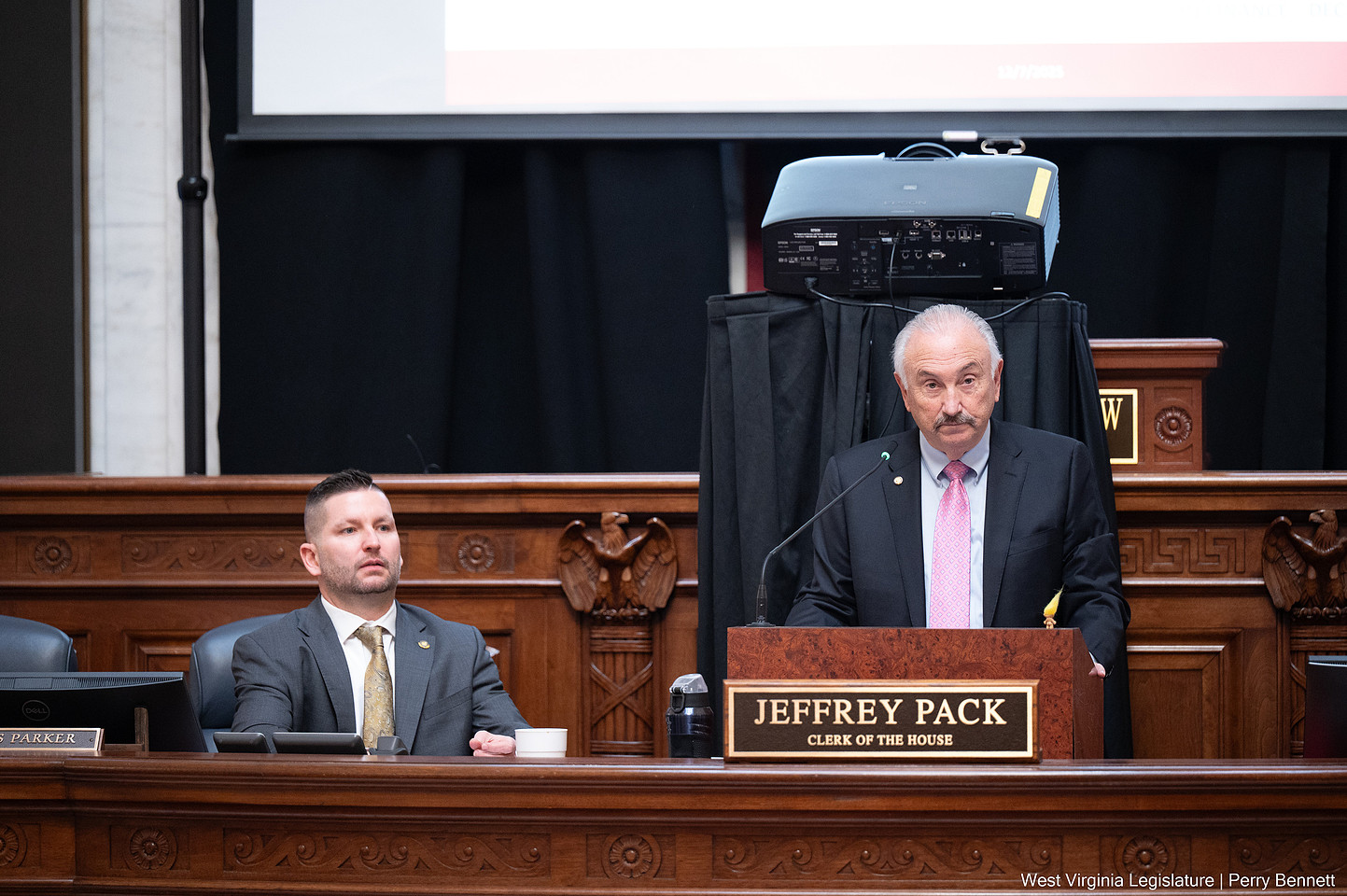
The Joint Committee on Finance met this morning.
The committee first heard from the Department of Revenue about the current FY26 budget. In the first six months, $2.74 billion in revenue has been collected, with the largest collections being personal income taxes and consumer sales taxes. As of December, the revenue is $1.2 million above the estimate. Personal income tax revenue is $1.07 billion, and $ 9.7 million in sales tax has been collected. December was a good month for corporate income taxes, with total income tax payments of $155.2 million. State road collections are $158.2 million, with $43.6 million from the motor fuel tax. The sales tax on motor vehicles is $26.7 million. The total road fund is $1.04 billion.
Next, the committee heard about ideas for WV’s Medicaid Program. The West Virginia Association of Health Plans released a white paper in November 2025 evaluating the program with a focus on price, process, and policy. The issues outlined included duplicative vendor contracts and fragmented administration, outdated reimbursement methods, rising behavioral health costs, and limited data.
Five policy proposals were provided to the committee. First, transitioning long-term services and support to manage care. According to the presenter, the benefits include integrated care for dual-eligible (Medicaid and Medicare) patients, reinvesting savings into home and community support, and incentivizing quality-based provider payments. The second proposal is to establish a statewide telehealth access framework. The third proposal is to reform Medicaid pricing and payment methods, as they are currently fragmented and inconsistent. Proposal four is to reform the CCBHB reimbursement, as the current model has seen a $1.24 million-per-month increase. The fifth proposal is a commission or independent review of state pharmacy benefits.
These proposals aim to optimize services and reduce budgetary strain. Additionally, the goal is to promote transparency. According to the presenter, the modernization of Medicaid would be grounded in collaboration, evidence, and fiscal responsibility.
The final presenter from the West Virginia Health Care Association stated that managed care is not the best option for long-term care and that reliance on MCOs should be re-examined. The state has implemented a new Medicaid reimbursement payment model for long-term care, which began in October 2024. This patient-driven payment model aligns with the patient and services. This model has cut provider rates and shifted the business model. The presenter mentioned that the state has a program that uses Medicaid to allow nursing home residents to pay for home care services. It’s called Take Me Home WV.
