Saturday, August 1, 2026
Home Blog Page 152

House Passes Tourism Bill, Adjourns Special Session

The West Virginia House of Delegates adjourned the Second Extraordinary Session of 2019 after it passed a bill that would extend tourism tax credits.

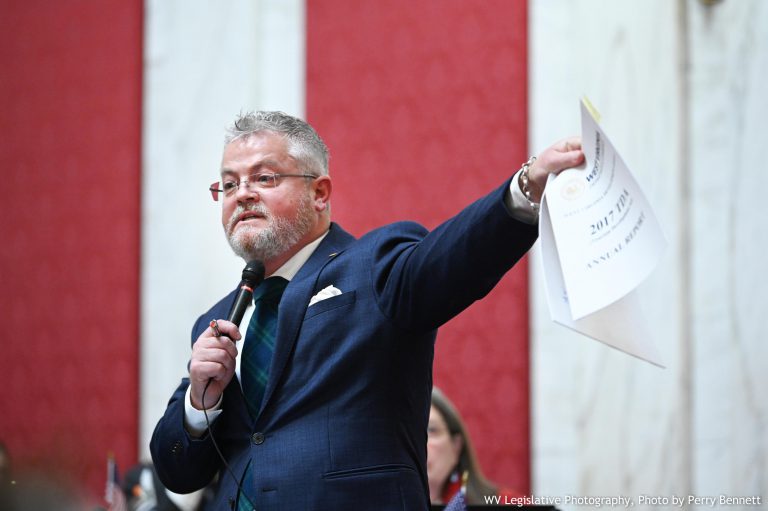
In Monday’s floor session, the House took up Senate Bill 2001, which was left on second reading from last month after a motion to suspend the constitutional rules requiring bills be read on three separate days failed. This bill would extend tourism development tax credits from December 31 of this year to December 31, 2025.

Delegate Mick Bates, D-Raleigh, initially offered four amendments. The first amendment would have required those receiving tax credits to comply with existing reporting requirements, required other companies owned by those receiving tax credits to be within compliance, and provided that a company owned by statewide elected or appointed officials would not be eligible for this tax credit.

The amendment was ruled not germane and Bates withdrew his other amendments.

Legislative audit: CPS Faces High Turnover, Vacancy Rates

0

In 2018, Child Protective Services met its required initial contact timeframe for abuse and neglect cases half of the time, a legislative audit report found.

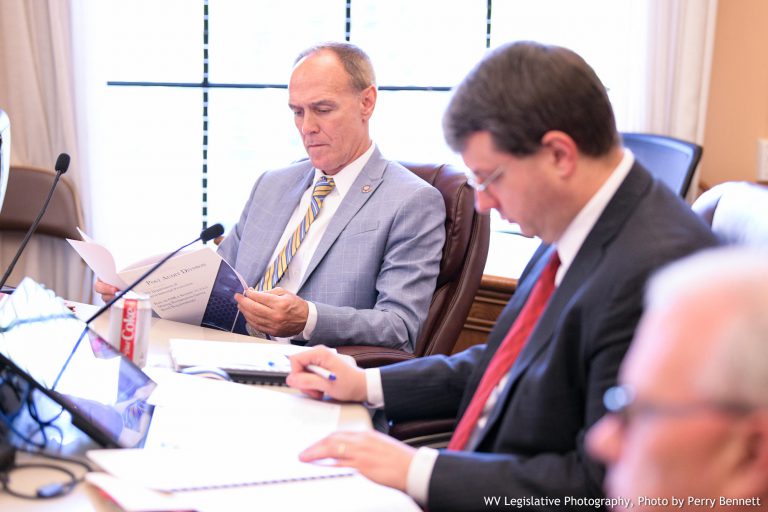
In Tuesday’s Post Audits Subcommittee meeting, Melissa Bishop, assistant director of the Post Audit Division, explained some of the reasons for not meeting the statutory timeframe for face-to-face contact with an alleged child victim, were out of CPS staff’s control.

Some of these reasons included not being able to track down a family because of information was missing or incorrect, the family was not home when CPS workers visited, or the family refused to meet with CPS workers.

However, Bishop said the primary cause was high turnover and vacancy rates for those who respond to abuse and neglect cases.

CPS offices are divided into 28 districts in four regions. Turnover rates have slightly improved from 2017 to 2019. However, in Region 3 – which encompasses counties in the Eastern Panhandle and extends to Lewis and Braxton counties – turnover rates increased from 30% to 37%. Bishop said this turnover rate could be attributed to losing staff to higher paid positions across state lines.

When an employee leaves CPS, they participate in an exit survey. In those exit surveys, employees cited wages, caseloads and stress, as the top reasons they left. Bishop said the Bureau for Children and Families has added 48 new positions to reduce caseload, added two and five-year 5% pay increases, and added a $1,500 increase for those with the highest caseloads.

However, these efforts have not corrected the issue, Bishop said.

Compared to the five surrounding states, West Virginia differs on educational licensure requirements and has lower salaries. Bishop noted West Virginia’s starting salary is the second lowest in the region. Pennsylvania and Virginia have comparable salaries; however, licensure is not required.

Bishop said the amount of overtime worked by CPS workers continues to increase. It has increased 40% since 2015. She said there have been efforts to reduce overtime including the creation of a Crisis Team to deal with backlogs. However, due to the nature of CPS work, all overtime cannot be eliminated.

The report additionally found that CPS does not record intake calls and call case information is dependent on notes taken from the calls.

The audit also found CPS does not perform criminal background checks for workers after they have been hired. Bishop said the practice of completing criminal background checks happens for foster parents but not CPS workers.

The audit made several recommendations. These included developing processes to ensure required response times are met, for CPS to report back to the Post Audits Committee in six months, for the Bureau for Children and Families to update its retention plan, for the bureau to increase recruitment and retention strategies, to record intake calls and store in encrypted files for quality or training purposes, and to provide regular background checks for those who currently work for CPS.

DHHR associate general counsel Cammie Chapman, said the Bureau for Children and Families is working with federal partners on a program improvement plan, which the bureau hopes to have in place by the end of this year.

Chapman said the Committee for the Bureau of Children and Families recently updated its goals and is compiling data to determine potential recruiting and retention efforts, intending to collect data on successes and strategies.

She said the $31,000 starting salary is a significant increase from a few years ago, accounting 5% raises passed by the Legislature. Chapman said the goal is to create a career ladder to help with the recruiting and retention issues.

She said there are significant costs for ongoing storage for intake calls. For background checks, she said the bureau needs a more formalized license in personnel files and to make sure there is sufficient record keeping.

Brianna Walker, an auditor with the Post Audit Division, also addressed the Post Audits Subcommittee Tuesday afternoon. A legislative audit report found that the current process for state contractors does not address local taxes.

After a contract is signed, it is up to the contractor and sub-contractor to notify a municipality of work performed in that area. Walker said there is no oversight to make sure that is done.

The audit recommended all state spending units, including those exempt from purchasing, give formal written notice to municipalities of work done in an area, and to consider establishing surety bond requirements for contracts exceeding $1 million.


Senate Adjourns Special Session Sine Die

The Senate met briefly Tuesday afternoon before adjourning the second extraordinary session of 2019 Sine Die.

The Senate convened shortly after Noon, quickly adopting procedural resolutions to notify the House of Delegates and the Governor that the body has completed its work in the special session.

Senate Bill 2001, which would extend tourism development tax credits from December 31, 2019 to December 31, 2025, remains on second reading in the House of Delegates. The House has the option to pass this bill in its current form in December, but cannot amend it, given the Senate has adjourned the session sine die.

Revenue Secretary Says No Concrete Plans on Budget Cuts for FY 20

0

Revenue Secretary Dave Hardy told legislators Monday that there are no concrete plans on what type of budget cut, if any, should be made for the 2020 fiscal year.

Hardy addressed members of the Joint Standing Committee on Finance Monday. Hardy addressed 2019 fiscal year numbers along with the first five months of the 2020 fiscal year.

Hardy said the state finished the 2019 fiscal year with “record-breaking revenues” and revenue growth of 11-12%. However, he said he was disappointed in July because revenue was $33 million below estimate. Revenue collections fell short of estimates by about $16 million in August. Hardy said the state reported about $21 million above revenue estimates for September and was $3.2 million below for October.

“Turning a state budget around is like turning an aircraft carrier,” Hardy said. “You have to go slow.”

Hardy said the governor asked the Department of Revenue to consider making $100 million in cuts from General Revenue. This would be $100 million out of a total General Revenue of $4.7 billion.

However, Hardy said there is no definite plan of what type of budget cut, if any, needs to be made at this time.

“Right now, nothing specific is being proposed,” Hardy said. “But we will continue to monitor finances very carefully.”

November numbers could appear shorter than normal because collections fall on the 27th, right before the holidays, Deputy Revenue Secretary Mark Muchow said.

Muchow said coal and natural gas are both down with revenue squeezed by a significant drop in international exports and by low domestic energy prices. However, he said local governments are still benefitting from the upturn several years ago for severance tax collections. He attributed the local effect to timing.


House Passes Road Bond Bill and Expungement Bill

The West Virginia House of Delegates completed legislation on two bills Monday evening.

One bill, Senate Bill 2002, would expunge a conviction of a traffic control violation for a person who has a commercial driver’s license permit or a person who operated a commercial motor vehicle at the time of the offense. The bill would expunge any conviction for driving under the influence. Senate Bill 2002 completed legislation.

The House also took up for immediate consideration Senate Bill 2003, which would dedicate $25 million in spending authority to debt service for general obligation bonds for Roads to Prosperity. Some delegates expressed concern that the bill would take money out of maintenance projects, since the spending authority was shifted from maintenance to debt service. Senate Bill 2003 also completed legislation.

The House also took up for immediate consideration Senate Bill 2001, which would extend tourism development tax credits from December 31, 2019 to December 31, 2025. A motion to suspend the constitutional rules requiring that bills be read on three separate days failed. Senate Bill 2001 is on second reading.

The House is adjourned until the House Speaker calls delegates back into session.


Senate Passes Three Bills, Confirms Nominees, During Evening Session

The Senate passed all three bills on the special session agenda and confirmed all of Governor Justice’s executive nominations during a floor session Monday evening.

Senate Bill 2001 extends the period for eligible projects to request tax credits under the West Virginia Tourism Development Act to December 31, 2025.

Senate Bill 2002 limits the ability to expunge DUI offenses to those in which expungement complies with federal law.

Senate Bill 2003 would approve spending authority for debt service payments for the second and third rounds of general obligation bonds for West Virginia road work.

These bills now head to the House of Delegates for consideration.

Also on Monday evening, the Senate confirmed 28 executive nominations from Gov. Jim Justice to various boards and commissions.

The Senate has adjourned until tomorrow, Nov. 19 at Noon.


Road Bond, Tourism Tax Credit Bills Advanced to House Floor

0

In its Monday afternoon meeting, the House Finance Committee advanced two bills to the House floor.

One bill, House Bill 213, would dedicate $25 million in spending authority to debt service for general obligation bonds for Roads to Prosperity. The other bill, House Bill 211, would extend tourism development tax credits from December 31, 2019 to December 31, 2025.

Delegates questioned Transportation Secretary Byrd White in whether transferring spending authority would affect any current maintenance projects. White said it would not. If passed, the bill would transfer $25 million in spending authority from maintenance to debt service. This $25 million, he said, is not earmarked for any project. This would not delay or cancel any maintenance projects, he said.

The Department is going to market for the second and third round of GO bonds, approved by voters in 2017.

Lawmakers were told that this bill must be passed Monday night in order to prepare for a conversation between state officials and financial officials.

House Finance advanced House Bill 213 to the floor without amendment.

The committee also advanced House Bill 211, dealing with tourism development tax credits, Monday afternoon. These tax credits, which have been in existence since 2004, are available for certain tourism development projects that meet qualifications.

These requirements are that businesses would have to invest at least $1 million in the state, be open at least 100 days a year, have 20% of visitors come from out of state, and have no more than half of a project as lodging. The credit is based on how much a company invests. If the company succeeds in growing the sales tax base, it could recuperate 25% of the investment, which is a credit against the sales tax, or 35%, if the project borders a state or national park or an abandoned mine land.

Credits were set to expire December 31, 2019. This bill would extend the credits until December 31, 2025.

Tourism Commissioner Chelsea Ruby said this bill is something they hoped to see introduced during next year’s regular session. However, the Development Office saw renewed interest in tourism development and received questions from investors whether these credits would be available.

Ruby said there are six projects in the works. The amount of applications for these tax credits have increased. Ruby said since 2005, 16 applications have been received with six of those received this year. Ruby said before this year, the Development Office had not received an application since 2016.

“The influx came from when we started investing in tourism,” Ruby said. “Tourism traveler spending is up 9.9%. As this has happened, there is a renewed interest in investors. This is why this has happened suddenly and this is why we’re getting interest now.”

The committee rejected an amendment which would have changed the extension from 2025 to December 31, 2020. House Bill 211 was advanced without amendment to the House floor.

Senate Convenes Second Special Session of 2019

The Senate met briefly at Noon on Monday to convene the Second Special Session of 2019. Three bills, which will first be considered in the House of Delegates, are listed on the Governor’s Call.

The Senate committee on confirmations is meeting at 3 p.m. in room 208W, and confirmations to the full Senate has been made a special order of business for today at 4 p.m.

The Senate is in recess until 4 p.m.

House convenes Second Extraordinary Session

The West Virginia House of Delegates met Monday, convening the Second Extraordinary Session of 2019, referring three bills to committee.

Gov. Jim Justice called the special session last week, listing three bills on the call, found here.

Two bills were referred to House Finance, which is meeting at 1 p.m. Monday – House Bill 211, relating to the Tourism Development Act; and House Bill 213, supplementing, amending, decreasing and increasing items of the existing appropriations from the State Road Fund.

One bill – House Bill 212, relating to expungement of DUI offenses – was referred to House Judiciary, which is also meeting at 1 p.m. Monday.

The House will reconvene at 7 p.m.


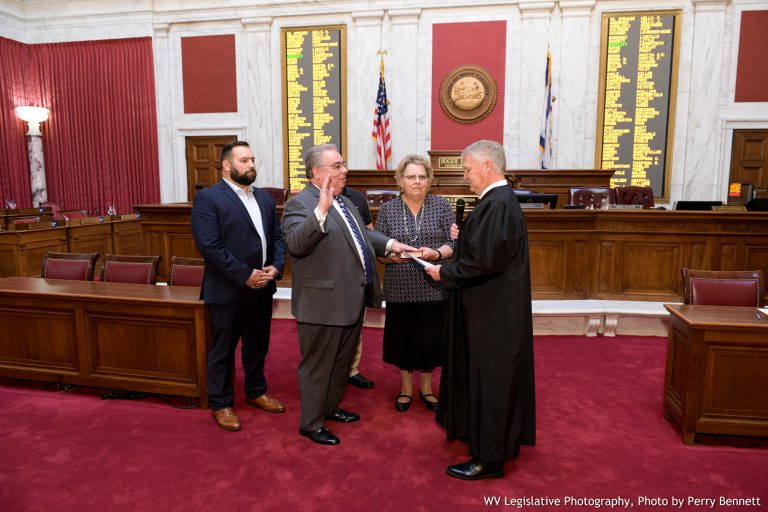
T. Kevan Bartlett Takes Oath of Office

Delegate T. Kevan Bartlett took the oath of office in a Monday afternoon ceremony in the House of Delegates chamber.

West Virginia Supreme Court Justice Tim Armstead administered the oath of office. Bartlett, of Sissonville, serves in the 39th district, which covers part of Kanawha County.

Gov. Jim Justice appointed Bartlett last week to fill the vacancy created by the passing of Delegate Sharon Malcolm.