Wednesday, June 24, 2026
Home Blog Page 21

Senate Energy Advances Bills on Coal Mining and Utility Rates

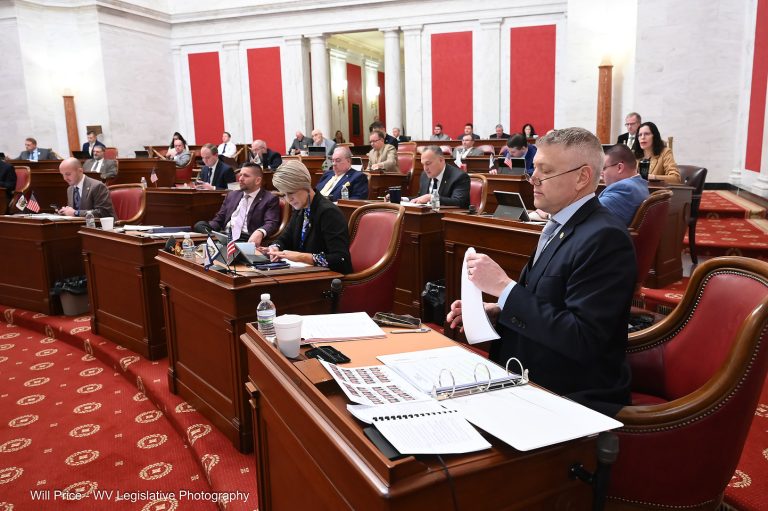
The Senate Energy Industry and Mining Committee met Monday afternoon and advanced four bills relating to coal mining, electricity utility rates, public water systems, and the Creating Natural Resources Anti-Commandeering Act.

Senate Bill 48 relates to the powers and duties of the Public Service Commission.

The bill would grant commissioners the power to enforce, establish, and change tariffs, rates, joint rates, tolls, and schedules for all public utilities. This bill is intended to prevent electricity utility rates from being increased during the winter.

The legislation was reported to the full Senate with the recommendation of passage, but first reported to the committee on Finance.

Senate Bill 586 relates to modifying requirements for public water systems.

The bill would prohibit the Secretary of the Department of Health from promulgating rules that would cause public water systems or businesses to have backflow preventers.

Low-hazard backflow prevention assemblies may not be inspected more frequently than once in three years by the Secretary of the Department of Health.

The bill was reported to the full Senate with the recommendation of passage.

Senate Bill 685 would implement the Creating Natural Resources Anti- Commandeering Act.

This bill would prohibit agencies in the state of West Virginia and political subdivisions from knowingly and willingly participating in the enforcement of any federal act relating to coal, oil, gas, timber, or other extractive resources that do not exist under current law.

According to the bill’s legislation, it’s intended to protect West Virginia employees, including law enforcement officers, from being directed to violate their oaths of office and rights affirmed under the Tenth Amendment.

The bill was reported to the full Senate with a recommendation of passage, first being reported to the committee on Judiciary.

Senate Bill 686 would provide exceptions to waste and trespassing for certain coal estates to encourage safe and efficient mining, extraction, and production of coal.

The bill would require tenants in common and joint tenants to be liable for their cotenants, jointly or severally, for damages.

The bill was reported to the full Senate with a recommendation of passage, first being reported to the committee on Judiciary.

Senate Passes Illegal Ballots Bill

The Senate met this morning, introducing bills 696-715, adopting resolutions 14, 23, and 24, and passing seven bills, including one that prohibits the acceptance of an absentee ballot that does not comply with West Virginia State requirements.

Senate Bill 61 would require that any person who knowingly and intentionally counts and includes an absentee ballot that does not comply with the bill’s legislation shall be guilty of a felony.

The standards under which a ballot would not count in an election, according to the bill, include:

* If the individual’s registration record is not accessible during the time of the election.
* If the individual’s poll book signature doesn’t correspond with their registration record.
* If the individual fails to present a valid identification document.

If an individual cast a ballot in the incorrect precinct, the ballot cast may not be counted for that election. Voters with a disability whose polling location is not accessible can use a different precinct and have their ballot counted.

Senate Bill 233 would require an individual to hold a current valid license issued by the Commissioner of Labor to administer a psychophysiological detection of deception examination, lie detector, or other similar examinations utilizing mechanical or electronic measures to evaluate truthfulness using physiological reactions.

The licensed individual must be at least 21 years of age, a U.S. Citizen, has not been convicted of a felony, has not been honorably discharged or released from an armed service of the United States, and have met any other qualifications necessary.

Senate Bill 506 would require the county commissioner of each county to authorize the lease, rent, or permit the usage of county-owned wireless towers.

County commissions may not impose a charge to local entities to use the tower space of they are a public safety operation, including 911, law enforcement management, ambulance, rescue, and firefighters.

These bills passed the full Senate and were reported to the House of Delegates for further consideration.

Afternoon Meetings:

Transportation and Infrastructure at 1 p.m. in Room 451M

Workforce at 1 p.m. in Room 208W

Pensions at 2 p.m. in Room 451M

Energy, Industry and Mining at 2 p.m. in Room 208W

Finance at 3 p.m. in Room 451M

Judiciary at 3 p.m. in Room 208W

Morning Meetings for Feb. 3:

Government Organization at 9:30 a.m. in Room 208W

Education at 9:30 a.m. in Room 451M

The Senate has adjourned until tomorrow, Feb. 3, at 11 a.m.

House Judiciary and Subcommittees Discuss Several Bills

The House Judiciary Committee and its subcommittees heard and discussed several bills this morning.

Judiciary

House Bill 4382 would require collection agencies to provide 30 days’ notice by mail before wage garnishments.

House Bill 4552 would clarify what correctional officers of the Division of Corrections and Rehabilitation can do in their facilities.

House Bill 4570 would allow a landlord to serve an eviction notice by posting it on the front door, secure it, and take a photograph of it to show that it was posted.

House Bill 4625 would change the definitions of excise tax on property transfers to add and clarify exemptions.

House Bill 4522 would ban foreign spending on state ballot issues.

House Bill 4601 would expand the West Virginia State Police Unit for Child Abuse and Neglect Investigations. This bill would increase the number of members in the unit and would have offices located within the Department of Human Services offices.

House Bill 4603 would create a diversion process to allow parents who are having their children removed from their home to be placed with a family member under guardianship. This process is only available to select child abuse and neglect cases. Cases that are not available to this process include, but are not limited to, those where a parent has subjected a child to abandonment, torture, and chronic abuse.

House Bill 4755 would create enhanced sentencing for offenders of aggravated vehicular homicide, driving under the influence causing serious bodily injury, and third offense driving under the influence. This sentencing applies to offenders who have been previously convicted.

Courts

House Bill 4468 would require any court or state records that contain identifying information of a victim or an arrest remain confidential. This bill would require the name and address in a criminal complaint be confidential.

House Bill 4893 would increase the penalties for contempt of court.

House Bill 4466 would make the influence of narcotics in public fall under the same penalties as public intoxication of alcohol.

Homeland Security

House Bill 4179 would create a felony charge for individuals who assault police officers or police dogs.

House Bill 4345 would establish a protocol for preserving records and evidence in missing persons cases that are unresolved after one year by making them digital and being housed at the West Virginia Fusion Center.

Legal Services

House Bill 4053 would establish the Blue Envelope Program. The Blue Envelope program would assist communication between law enforcement officers and individuals with autism, dementia, or intellectual and developmental disabilities during a motor vehicle-related interaction.

This envelope would include documentation such as, but not limited to, a driver’s essential documents, a driver’s license, vehicle registration, and an emergency contact card.

House Bill 4600 would require absentee ballots mailed in to be received by 8:00 p.m. on the day of the election to be counted.

House Sends Three Bills to Senate

The West Virginia House of Delegates advanced House Bills 4036, 4138, and 4366 to the Senate.

House Bill 4036 would increase criminal penalties for unlawful use of handicap parking spaces for mobility-impaired people.

House Bill 4138 would ensure that the current crimes of “sexual extortion” and “aggravated sexual extortion” are offenses that require registration as a sex offender.

House Bill 4366 would make military protection orders be considered as evidence of need for an emergency protective order or personal safety order.

Bills introduced can be found here.

Resolutions introduced can be found here.

Committee Meetings, Today February 2

Committee Meetings, Tuesday February 3

The House is adjourned until 11:00 a.m. Tuesday, February 3, 2026.

House Judiciary Heard Four Bills

The House Judiciary Committee and its subcommittees heard about several bills this morning.

House Bill 4606 would allow judicial officers, when determining bail, to use residency status. In the bill, this is described as including, but not limited to, if they are a resident of the state, they have ties to the community, or if they are a flight risk.

House Bill 4552 would clarify what correctional officers of the Division of Corrections and Rehabilitation can do in their facilities.

House Bill 4570 would allow whoever is serving the eviction notice to post it on the front door, secure it, and take a photograph of it to show that it was posted

House Bill 4625 would change the definitions of excise tax on property transfers to add and clarify exemptions.

Courts

House Bill 4603 would create a diversion process to allow parents who are having their children removed from their home to be placed with a family member under guardianship. This process is only available to select child abuse and neglect cases. Cases that are not available to this process include, but are not limited to, those where a parent has subjected a child to abandonment, torture, and chronic abuse.

House Bill 4755 would create enhanced sentencing for offenders of aggravated vehicular homicide, driving under the influence causing serious bodily injury, and third offense driving under the influence. This sentencing applies to offenders who have been previously convicted.

House Bill 4893 would increase the penalties for contempt of court in a magistrates’ court.

Homeland Security

House Bill 4522 would ban foreign spending on state ballot issues.

House Bill 4345 would establish a protocol for preserving records and evidence in missing persons cases that are unresolved after one year by making them digital and being housed at the West Virginia Fusion Center.

Legal Services

House Bill 4601 would expand the West Virginia State Police Unit for Child Abuse and Neglect Investigations. This bill would increase the number of members in the unit and would have offices located within the Department of Human Services offices.

House Bill 4053 would establish the blue envelope program. The Blue Envelope program would assist communication between law enforcement officers and individuals with autism, dementia, or intellectual and developmental disabilities during a motor vehicle-related interaction.

This envelope would include documentation such as, but not limited to, a driver’s essential documents, a driver’s license, vehicle registration, and an emergency contact card.

House Bill 4600 would require absentee ballots mailed in to be received by 8:00 p.m. on the day of the election to be counted.


House Government Administration Advances Two Bills

The subcommittee on Government Administration met to discuss House Bills 4088, 4148, 4580, 4483, 4492, and 4550.

House Bill 4088 would change the licensure for certified public accountants. This bill would offer three different pathways. Two of these pathways include those who have been a part of post-bachelor degree programs, and one to expand the certification to those with only a bachelor’s degree. This bill was reported to the committee on Government Organization.

If a person seeking to become a certified public accountant decides to only get their bachelor’s degree, they would need to have two years of work experience to apply for their certification.

House Bill 4148 would require proof of legal citizenship in real estate license applications. This bill was reported to the committee on Government Organization.

House Bill 4580 would establish a pilot program that allows CPS workers to use a mobile device during their investigations and be able to access the department’s case management system.

House Bill 4483 would make changes to the licensing process for funeral services. This would make changes to the apprenticeship and update the standards for funeral service workers’ continuing education.

Under this bill, an apprentice funeral service licensee will only be required one year of apprenticeship rather than two. A funeral licensee will be able to take an examination and/or complete Board-selected targeted modules rather than a fixed number of hours. This bill will also extend an emeritus license from two years to four years.

House Bill 4492 would increase the maximum amount of broker deposits to $500

House Bill 4550 would require that, any time the state is involved in eminent domain, it must provide an appraisal to the landowner.

House Advances House Bill 4415 to Senate

The West Virginia House of Delegates advanced House Bill 4415 to the Senate.

House Bill 4415 would provide clarification that state law enforcement officers would be able to arrest individuals attempting to smuggle contraband into federal facilities.

Bills introduced can be found here.

Resolutions introduced can be found here.

Committee Meetings, Today January 30

Committee Meetings, Monday February 2

The House is adjourned until 11:00 a.m. Monday, February 2, 2026.

Senate Passes Bill to Exempt Military Records From Public Release

The Senate passed a bill that would protect certain military records from public release during a very brief floor session Friday morning.

Senate Bill 208 amends West Virginia law to create specific exemptions from public disclosure for specifically outlined military records. These exemptions apply to information that is classified to protect national or state security, vulnerability assessments and response plans for terrorist acts, communication codes, and deployment plans of military and homeland security entities.

The legislation also exempts specific intelligence and investigative records related to terrorism shared between various law enforcement and military agencies, as well as sensitive military information that, if disclosed, could threaten public safety, endanger military personnel, or benefit an adversary. This includes details on deployment, operational plans, tactics, rules of engagement, critical infrastructure security, and personnel and equipment information for the National Guard, armed forces, or Department of Defense.

The bill now heads to the House of Delegates for consideration.

Also on Friday, seven bills were read a second time, all advancing to the passage stage on Monday without amendment. Seven other bills were read a first time. Those bills can be found here.

The Senate is adjourned until Monday, Feb. 2, at 11 a.m.

Senate Judiciary Discusses Bill on Social Services Policy Manual

The Senate Judiciary Committee met this afternoon to discuss a bill on Social Services Policy Manual being reported to the legislature and advancing two bills on the Department of Health and financial exploitation.

Senate Bill 210 would require the Department of Health, Human Services, Health Facilities, and the Office of the Inspector General, along with their bureaus, offices, and programs, to submit plans and performance reports to the appropriate Commission.

Commission is defined in the bill as the Legislative Oversight Commission on Health and Human Resources Accountability. All definitions in the bill can be found in code §16-29E-3.

During the discussion, Alex J. Mayer, Cabinet Secretary of the West Virginia Department of Human Services, raised concerns about the bill, such as additional staff needing to be hired, along with the bill already addressing needs that are currently being addressed, such as certain plans and performances already being reported.

Senator Eric J. Tarr (R – Putman, 04) suggested that the bill requires reports to be more organized and consumable for the legislative body, and states that the bill requires a reorganization process of reports, not an increase in staff.

The bill was reported to the full Senate with a recommendation of passage.

Senate Bill 543 would require the Bureau of Social Services to prepare and file its complete policy manual as a legislative rule.

The policy manual includes, but is not limited to, all policies governing child protective services, foster care, youth services, licensing, casework standards, and other operational or programmatic guidance used by the bureau.

During the discussion, supporters of the bill in the body expressed that if the policy manual rules are submitted to the legislature, then the rules will be made open for public scrutiny and comments, which will lead to accountability and transparency within the agency.

After discussion The Chair of the committee, Tom Willis (R – Berkeley, 15), laid the bill over to Monday for further consideration.

Senate Bill 617 would provide banking protections for eligible adults from financial exploitation.

The bill would permit depository institutions to delay, refuse, or prevent certain activities and financial transactions when an employer suspects financial exploitation of an elder person or incapacitated person.

A representative from the American Association of Retired Persons (AARP) in West Virginia stated that approximately 140,000 complaints of financial exploitation have been made from individuals over the age of 60, a significant increase from the year 2023.

Sen. Tarr proposed an amendment to reintroduce immunity within the bill with the intent of restoring protection.

Division was called, and the amendment failed.

The bill was reported to the floor with a recommendation of passage, first being reported to the committee on Finance.


House HHR Heard Five Bills

The House Health and Human Resources Committee heard about five bills this evening.

House Bill 4375 would require the Bureau of Social Services file their manual for Social Services as a legislative rule. This would make the West Virginia Legislature in charge of rule making policy for the Bureau of Social Services.

House Bill 4599 would modify the West Virginia Clearance for Access: Registry and Employment Screening Act (“WV Cares”) to allow for variances to travel with employees and remove unnecessary offenses from the list.

House Bill 4767 would require the Bureau of Medical Services to file its policy manual as a legislative rule. This would make the West Virginia Legislature in charge of rule making policy for the Bureau of Medical Services.

House Bill 4853 would require hospitals to design protocols for trauma informed care for events such as miscarriage, abuse, neglect, and other traumatic events. This bill would also include establishing a protocol referred to as the “Butterfly Protocol” for patients who have experienced a miscarriage.

House Bill 4810 would require transparency of dental insurance products. The bill would require annual reporting of the medical loss ratio with the Insurance Commissioner. The bill would also explain the ways a dental carrier may pay a dental provider. The bill would require a premium reduction to be issued to the carrier when the MLR is not met.