

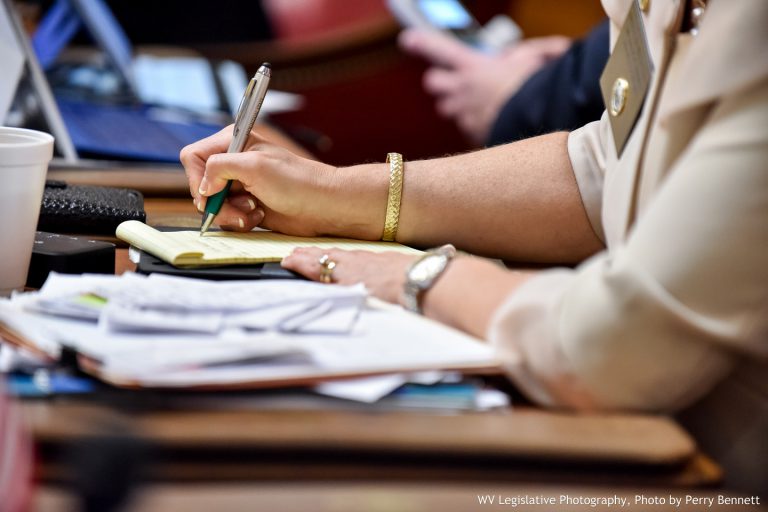
While some citizens might believe that the daily House and Senate floor sessions are where the majority of the action happens in the Legislature, the reality is that these floor sessions deal with legislation on its way through an exhaustive and comprehensive committee process.
Committees are the true engines of the Legislature that drive the lawmaking process and allow legislation to be passed in as timely a manner as possible. The committee process is the basic structure by which lawmakers discuss, debate, research, amend, and in some cases, originate legislation. Any lawmaker can draft and introduce a bill but the committees are where the details get hashed out and where the ideas in the bill come to life.
If it were not for committees, there would be no such thing as a part-time Legislature. It would be virtually impossible for House and Senate members to accurately and efficiently pore over the minutiae in every bill while scrutinizing the details and hearing advice from experts in a 60-day time frame.
 Fortunately, the workload in both the House of Delegates and the State Senate is divided among several subunits, focused on specific topics relative to its area of expertise, called standing committees. For example, members of the House Standing Committee on the Judiciary look over legislation relating to civil and criminal proceedings, while the Senate Standing Committee on Finance addresses bills generally relating to taxes, revenue and budgetary concerns.
After a bill is introduced on the floor, it is assigned to one or more committees for further study. These committees can recommend the bill for passage, sending it on to the next committee assignment or back to the floor for a vote, or the committee can choose not to take up the bill, effectively killing it.
In addition to the basic function of studying and developing legislation, committees also operate as symposiums of ideas, welcoming knowledgeable advice from experts on the topic of study and listening to concerns from the public. During session, committee leadership invites experts, advocates, concerned stakeholders and citizens alike to address the committee and discuss issues in-depth. This component of the committee process allows lawmakers to hear statistics, expert explanations, and personal testimony relating to an issue, as well as to gauge how those that would be most affected feel about proposed legislation.
Already this session, Finance and Economic Development Committees have heard testimony with regard to the cracker plant bill and how tax incentives from within that bill would make West Virginia a very viable competitor to land a cracker plant. In the past month, the Senate Standing Committee on the Judiciary has heard ample expert testimony from State Police troopers while trying to decide whether to make a ban on texting while driving a primary or secondary offense.
Often times, particularly when proposed legislation receives a lot of media attention or has become a polarizing issue with the public, committees will hold public hearings. These hearings allow concerned members of the public to voice their concerns and publicly support or oppose the legislation in question.
As legislation moves through the committee and legislative processes, the House and Senate may find themselves at loggerheads, unable to reach an agreement on every provision considered in a piece of legislation. When neither body will recede or retract its provisions to a bill, the legislation is referred to a conference committee. Conference committees are appointed by both the Senate President and the House Speaker and are comprised of members from both bodies, with an equal number from each. These committees are formed to resolve the differences between the House and Senate versions of a bill. If a compromise is reached, each body will either pass or reject the conference committee bill. If they are unable to reach a compromise, the bill dies.
All committee meetings and public hearings are open to the public. For more information on attending or participating in committee meetings or public hearings, contact your local lawmaker, committee chairs, or visit the 80th Legislature on the web.
 At the start of today’s session, the House honored Spencer resident, Drew Miller, who ran from Long Beach, California to Spencer, West Virginia to raise money and awareness for the
  During today’s floor session six bills passed in the Senate. Among those bills was
  Senate Bill 165 was read on the House floor today, which would prohibit correctional officers from engaging in sexual acts with prisoners who are incarcerated, or on parole or probation.
 Two bills were passed in the House today including
  In this afternoon’s floor session the Senate passed six bills and introduced 11. The Senate also adopted
 At the start of today’s session, Delegate Armstead welcomed Congresswoman Shelley Moore Capito to the the floor. Following that, the House went on to regular business and passed two bills.