Sunday, April 5, 2026
Home Blog Page 33

INTERIM REPORT: LOCEA

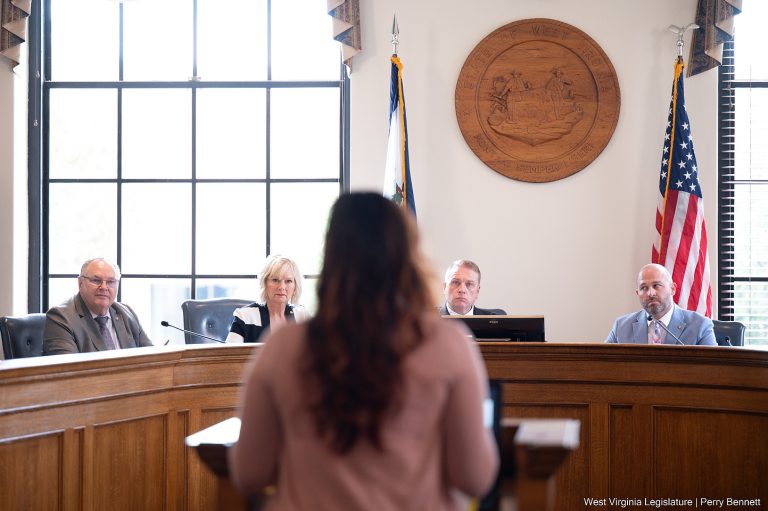
The Legislative Oversight Commission on Education Accountability (LOCEA) met this afternoon. First, the School Year 2024-2025 Critical Need and Shortage Report was presented by Dr. Sonya White, Deputy Superintendent of the West Virginia Department of Education. Critical needs counties are counties that employ retired teachers for 120 or more days as substitutes. In 2024-2025, there were 3 fewer counties in critical need of teachers and 1 fewer county for bus drivers. Additionally, 67 fewer retired teachers were needed, but five more bus drivers were needed. The area with the most critical need is special needs teachers, with 79 needed. The next area of critical need is PreK through elementary.

Next, the Annual County Board of Education Accountability Report was provided. Counties with accountability issues fall into three categories: 1. on watch, where the county sets a structure for improvement and the state department of education monitors; 2. on support, where the state department of education addresses the plan and monitors closely to provide technical support; and 3. intensive, where county must report to state department of education quarterly on improvements. Specialists offer technical support and are in each county monthly. Nearly half of WV counties met accountability requirements. Math and English language scores are still lower. There has been a reduction in chronic absenteeism. Transportation effectiveness is low in several counties. Ohio and Hampshire counties are the only ones not needing support.

The State Department of Education has concerns with federal funding cuts, as it will affect education programs. Members had several requests for various reports, including teachers’ attendance, county board effectiveness, post-graduation outcomes, and how absences due to county transportation issues affect student absenteeism.

Interim Report: Joint Committee on Insurance and PEIA

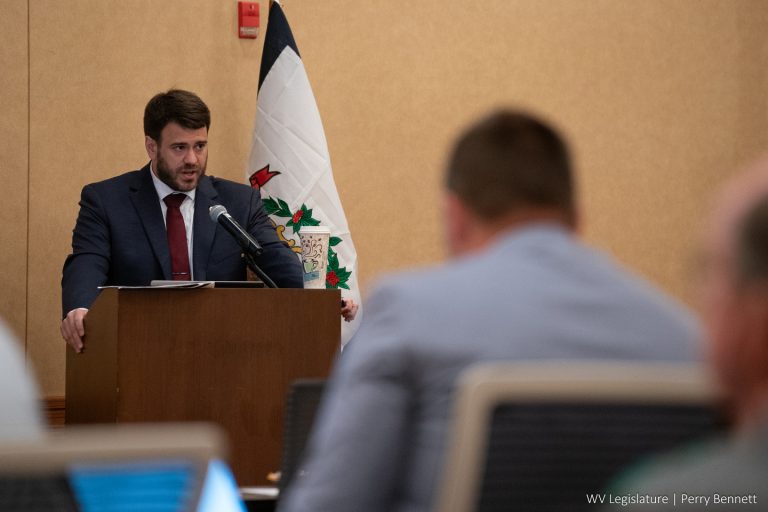
The Joint Standing Committee on Insurance and PEIA met Tuesday afternoon during legislative interim meetings at the Capitol to receive a report from Ben Lewis, managing director of Strategy and Innovation for BDO USA, regarding possible cost savings for the Public Employees Insurance Agency (PEIA).

The firm was commissioned by the Legislature to conduct a study to evaluate the current state of PEIA, using financial analysis comparing the program to other states and to provide recommendations to the Legislature.

Lewis gave lawmakers an extensive list of choices that could improve the finances of the Public Employees Insurance Agency, including possibilities like removing city and county employees from eligibility, ending the spousal option and bolstering fraud detection capabilities.

According to Lewis, the potential result could be annual savings of about $55 million. That accounts for roughly 5 percent of PEIA’s total annual cost of around a billion dollars.

Lewis stated that generally, plan participants appear to be satisfied with the benefits offered by the PEIA, including the relatively low premiums and out of pocket maximums when compared to the private sector.

The report concluded that PEIA’s recent and anticipated annual premium increases of about 14 percent are justified given that costs were frozen for people in the program between 2018 and 2022.

The top reason given for increasing expenses was prescription drug coverage. That’s primarily driven by specialty drugs, especially medications like Ozempic and other similar brands that are prescribed for diabetes and popular for weight loss, according to Lewis.

The report offered lawmakers nine options for keeping PEIA cost increases at bay. They report’s options with estimated potential savings are as follows:

  1. Improvement of Wellness Programs: Doubling investment in wellness programs and targeting chronic conditions could lead to net savings of $1.7 million by increasing participation and reducing claims.
  2. Eliminating Spousal Surcharge Participants: Removing policyholders whose spouses have employer-sponsored insurance but opt for PEIA coverage could result in an expense reduction of $15 million.
  3. Improved Anti-Fraud Protection: Implementing large anti-fraud team coupled with anti-fraud software could save between $17-$27 million annually through fraud recoveries.
  4. Reduction of non-state (county and city) employee members: This could decrease the number of policies by more than 15,000. This would have $1 million in net savings, but local governments would need a full year to begin seeking requests for proposals from private health insurance companies to replace PEIA coverage.
  5. Importing Prescription Drugs: The possibility of importing additional drugs from Canada is estimated to generate $5.3 million in annual savings.
  6. Supplemental Drug Coverage: Partnering with discount programs like GoodRx and Cost Plus Drugs could save PEIA between $1.1-$3.3 million a year by offering member discounts outside traditional coverage.
  7. Specialty Drugs: Hiring staff  to focus on more efficiency for specialty prescription drug use through site-of-care management and annual market checks could save roughly $8 million a year.
  8. Incentivizing more use of High-Deductible Health Plans and Health Savings Accounts: Additional people to making modest PEIA contributions for such accounts could save between a half million and $1.6 million annually by creating more consumer-driven healthcare choices.
  9. Family Income Rate Tiering: Adjusting premium levels based on total household income (including income from outside PEIA employment) could increase premium revenue by an estimated $20 million, promoting fairer cost sharing.


Interim Report: Joint Standing Committee on Education

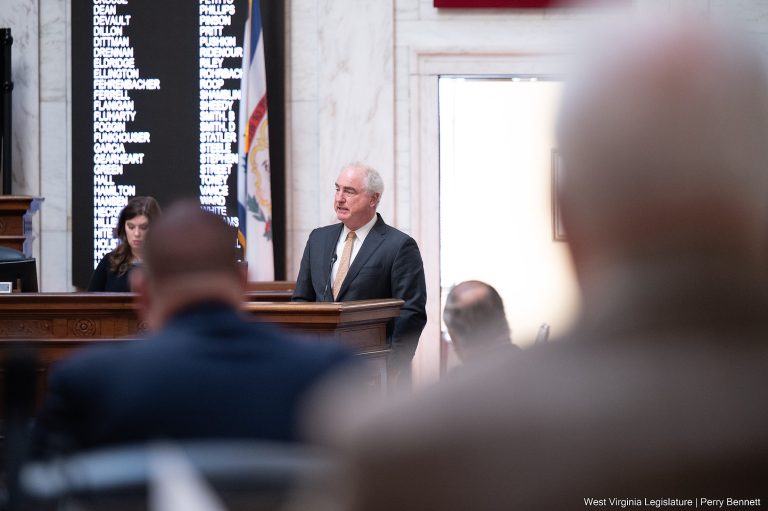
State Higher Education Chancellor Dr. Sarah Armstrong Tucker appeared before the Joint Standing Committee on Education Monday evening to present research her team has conducted on why West Virginia students are not attending higher education institutions at a higher rate.

According to Tucker, the current college-going rate in the state is 47.4 percent. This includes students attending two-year and four-year institutions, public or private, in-state or out-of-state. She said this figure needs to dramatically improve if the state’s workforce participation numbers are ever going to improve.

Tucker gave the committee some conclusions after analyzing their High School Opinion Survey, which is used to gauge student’s thoughts and experiences in the college decision-making process.

“Every two years we survey all of the high school seniors in the state of West Virginia and we ask them questions about how they’re making decisions about their future, what’s important to you, what do you think you want to do after high school, how did you make that decision, who helped you make that decision,” Tucker said.

Tucker said the top answer in the latest survey regarding whether or not to attend college was affordability.

She said that this prompted them to look at tuition in the state. The average tuition for a four-year college is $9,000 and for a two-year college is $4,800. This, in turn, got them looking at financial aid and the student aid index.

Tucker believes students have a tough time determining financial aid eligibility. They also don’t know enough about the application process, requirements, and how financial aid awards are distributed.

“What I’m hearing from the students is this process is way too complicated, it’s too hard, and they don’t understand it,” Tucker said.

Tucker was optimistic, noting that those are structural problems that can be fixed by simplifying the process and educating the students and parents.

“I think that if we can work together, to help streamline some of these processes, some of these rules, some of these requirements we can make it easier for our students to see themselves as college students in West Virginia,” Tucker said.

Interim Report: Oversight Commission on HHR Accountability

West Virginia’s secretary for human services, Alex Mayer, addressed members of the Oversight Commission on Health and Human Resources Accountability during interim legislative meetings Monday afternoon at the Capitol.

Mayer emphasized his agency’s continued focus on child welfare needs and the staffing required to meet those needs.

West Virginia’s current child welfare dashboard shows 6,000 current children in the system.

Mayer said one area of heavy focus is the on the state’s foster care children that are housed in hotels. Currently 18 children are in that situation in West Virginia.

“These children are not remaining in hotels because we don’t have enough beds, because we don’t have enough foster parents. It has to do with the complexities and the challenges that these children are facing,” Mayer said.

Mayer noted his agency has been working tirelessly with providers to better understand the needs of foster care children and the ways  the agency can help boost their capacity and their ability to support these kids.

He mentioned that sometimes the issues and the needs of the children are so complex they need to go out of state to get proper care. Mayer said that currently West Virginia has around 600 children in out of state placements.

West Virginia has long had issues recruiting and retaining Child Protective Services workers. Mayer reported progress on that front, telling the committee that the state’s most recent vacancy rate in those jobs was at just 8.3 percent.

The state’s child welfare issues have long been interwoven with the drug addiction problem. Mayer emphasized that the state’s drug overdose numbers are down for the fourth consecutive month and are approaching levels of a decade ago.

Interim Report: Joint Committee on Finance

State Revenue Secretary Eric Nelson described a moving target and balancing act as state officials begin to devise next fiscal year’s budget. Nelson was speaking before the Legislature’s Joint Committee on Finance during September interim meetings on Monday morning at the Capitol.

Nelson highlighted a number of variables that are likely to create a challenging budgeting process, including the increased costs associated with PEIA and as much as a $200 million cost increase for the HOPE Scholarship program next year.

He told lawmakers the fiscal year 2027 budgeting process is already underway.

“All of the agencies have submitted their initial budgets to the Budget Office as of Sept. 1,” Nelson said. “As is normal, our process begins here in September. The budget teams puts this together, then we will roll into having budget presentations in person by the agencies in October. That product will be put together in November and December and be presented to you all in early January.”

Director of the State Budget Office, Mike Mckown, had positive news, telling lawmakers that the state has around $2 billion in its various reserve accounts. He noted that the state’s various Rainy Day Funds grew by about 7.3 percent over the last fiscal year.

The Income Tax Reserve Fund, which was established to safeguard against the lost revenues from reductions to the personal income tax, has a balance of more than $460 million, according to Mckown.

Interim Report: Joint Committee on Children and Families

The Joint Committee on Children and Families met Sunday afternoon during September legislative interim meetings, receiving updates on mechanisms intended to hold child placement agencies accountable and provide better communication between state government and foster families.

Members received a report from Kendra Boley Rogers, the deputy commissioner for policy and programs at the Department of Human Services, on performance-based contracting for child placement agencies.

The performance measures include items the state is measured against during its federal review process by the Administration for Children and Families’ Child and Family Services Review through the U.S. Department of Health and Human Services.

Other measures include tracking recruitment and retention of foster parents by the child placement agency, as well as the length of time a family has provided foster care.

Brandon Lewis, DoHS Chief of Technology and Information, provided lawmakers an update on the state child welfare electronic portal.

Lewis described the Communication and Operations Mobile Engagement Tool, or C.O.M.E.T., that officially went online at the beginning of the month, first in Randolph County.

C.O.M.E.T. is intended to provide information regarding appointments, visitations, travel and other services available to a foster child, as well as information regarding court hearings and meetings with guardians ad litem and multidisciplinary teams. Health records for the foster child and other information is also available.

According to Lewis, C.O.M.E.T. will be rolled out to Mason, Monongalia, Wirt,  and Putnam counties next, with a gradual statewide rollout planned over the next three months.

Bill Bell Takes Oath of Office

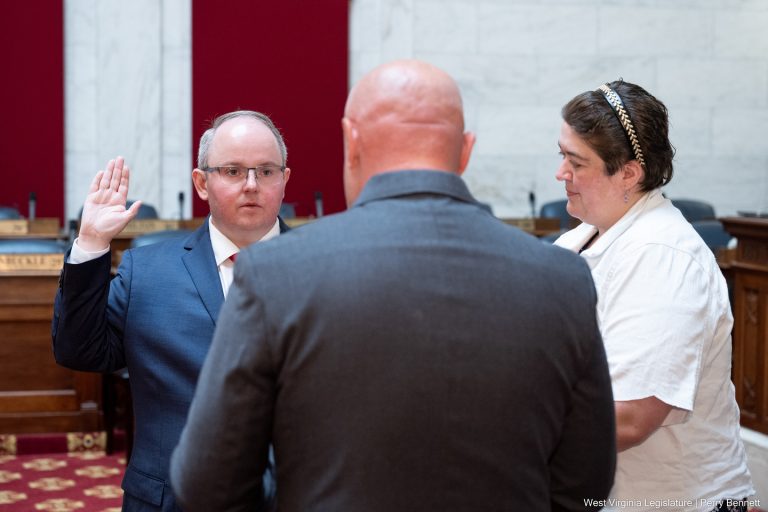
This afternoon, Delegate Bill Bell was sworn in as a member of the House of Delegates. Bell was appointed to fill the vacant seat of David Kelly, who was appointed as the Commissioner of the West Virginia Division of Corrections and Rehabilitation. Clerk Pack administered the oath of office.

Bell, a teacher, accepted the appointment to make the lives of his students and community better. “My students are why I’m here,” Bell said.

Delegate Bell represents the 8th District, which includes Doddridge County and parts of Wetzel and Tyler County.

Delegate Bill’s fiancé, Samantha, was in attendance for the swearing-in ceremony, along with Speaker Hanshaw and Majority Leader McGeehan.

Interim Report: Joint Committee on Finance

Lawmakers heard a report Monday morning regarding fiscal year 2025 budget matters from Peter Shirley, deputy secretary for the state Department of Revenue, during the second day of June interim meetings at Stonewall Resort State Park in Lewis County.

As of the end of May, fiscal year-to-date tax collections for the general revenue budget of $4.9 billion were 5 percent more than the $4.7 billion revenue estimate, leaving West Virginia with $236.9 million in surplus tax collections before fiscal year 2025 ends on June 30. Much of that surplus has already been appropriated.

Shirley said the state anticipates some significant budget pressures in the coming years, including increased costs associated with the Public Employees Insurance Agency (PEIA) and monetary support for the Hope Scholarship program, which aids students seeking education outside the public school system.

Shirley told lawmakers that state financial officials anticipate a $49 million cost increase for PEIA for fiscal year 2027 and a $56 million increase for fiscal year 2028.

“PEIA is obviously something that there’s a lot of discussions regarding a lot of work being done to try and think about the long term future of how we how we stabilize PEIA,” Shirley said.

The cost of the Hope Scholarship is expected to eventually balloon to as much as $300 million annually. The cost of the program in the proposed fiscal year 2026 budget is $110 million, up from $45 million in the current fiscal year. Shirley said the cost is likely to go up up by an additional $190 million in fiscal year 2027.

The scholarship amount for each student is expected to be $5,267.38 for the 2025-2026 school year. Shirley said the cost to the state is a mathematical problem of how many students opt in to the program for the coming year.

“Hopefully, we’ll be able to refine those numbers in the not-too-distant future now that we’ll soon know what the actual enrollment, at least to receive a full-year scholarship, will be going forward,” Shirley said.

Changes at the federal level also are likely to affect state finances, according to Shirley. Those include proposed changes to the federal tax code as well as changes to provider taxes and changes to Medicaid and the Supplemental Nutrition Assistance Program.

Interim Report: Joint Judiciary Committee

The Joint Judiciary Committee heard a presentation from the Department of Commerce on state vs. local broadband preemption. Preemption is the ability of one party to purchase a service before another.

The federal government has preemption over most things, but the state can modify and change powers granted by general law. West Virginia does not have a law that would prevent or preempt local government ownership of networks; general revenue could be used to purchase networks. There are several federal programs for broadband expansion. The Office of Broadband views itself as a tool for the private sector to use in assistance but not as a competitor to the public sector.

West Virginia Code Chapter 31G – Broadband Enhancement and Expansion Policies was discussed briefly. The state has preemption laws pertaining to installation.

Alabama, Montana, Pennsylvania, South Carolina, and Texas with regulations and/or fees. Some states have removed preemption laws to allow for broadband expansion.

The Department of Commerce is neutral on the subject.

Interim Report: Joint Committee on Education

The Joint Committee on Education attended a presentation today at West Virginia Wesleyan for the start of June’s Traveling Interim Meetings. The presentation was about the Allied Health Programs the school offers.

Wesleyan enrolled 1,055 students in Fall 2024 from 32 states and 24 countries. Fifty-three of the 55 counties are represented in the student population. In the nursing program, 97 percent of the students are West Virginians, 86 percent of counseling students are West Virginians, and 37 percent of athletic training students are West Virginians.

The presenters stated that nursing, biology, exercise science, business, and criminal justice are Wesleyan’s top five undergraduate majors.

Wesleyan offers a Bachelor of Science in Nursing. The school is beginning a licensed practical nurse to a Bachelor of Science in Nursing in the Fall of 2025. More insurance providers want four-year nurses working with patients. The program is a hybrid course with online studies, hands-on labs at the previous Alderson-Broaddus Campus, now Battler’s Knob, and clinicals at area hospitals. Thirty LPNs have contacted the program before applications have opened. The announcement will come tomorrow. The LPN to BSN program is meant to help meet the increasing need for nurses in the state.

The school is partnering with Bethany College in 2026 to provide a BSN program through a virtual live stream. In 2025, the school will begin its school nurse certification program to allow registered nurses to get a certification to practice in public schools. Wesleyan offers a Master of Science in Nursing, which is a BSN to MSN program, and a Master of Science in Nursing for Family Nurse Practitioners. Additionally, the school offers a Doctorate in Nurse Practice.

Wesleyan was awarded the WVHEPC Nursing Workforce Expansion Grant. In year one, $1 million was awarded to update equipment, hire administration, retain staff, and help students with funding. In year two, $1.3 million was awarded and used to develop the LPN to BSN program. In year three, $1.5 million was awarded to implement the LPN to BSN program, which included new simulation equipment at Battler’s Knob, faculty training, and online support for pre-nursing students.

The Physician’s Assistant Program works to deliver healthcare to rural communities, as these areas may be isolated, have an aging population, have transportation difficulties, finance issues, and a shortage of physicians. Wesleyan wants to meet the state’s physician’s assistant needs. There are five physician’s assistant programs in the state; however, there are currently none between Morgantown and Charleston. Nationally, 21,000 P.A. applications are not accepted due to capacity limits.

West Virginia is ranked as one of the highest states with chronic diseases and spends more per capita than the national average. P.A.s can make quality healthcare more accessible and affordable.

The Master of Arts in Counseling provides five eight-week sessions per year. The program has full and part-time options with small cohorts. The specializations offered for the M.A. in Counseling are Clinical Mental Health Counseling and Addiction Counseling. It’s a hybrid model with online courses and on-campus weekend-long residency experiences in August. Wesleyan is working to start an Addiction Counseling Certificate, which will help train more individuals to battle addiction in the state. Currently, the state does not have a license for Addiction Counseling. The recommended ratio for counseling providers to substance use patients is 100 providers to 1,000 patients or a 1:10 ratio. Currently, West Virginia’s ratio is 1:796. No one program can do this alone, so the hope is other schools will begin to offer similar programs. The City of Buckhannon is voting in a couple of weeks to decide if some opioid abatement funds will be used for scholarships for students in the M.A. in Addiction Counseling.

The school offers two pathways to earning a Master of Arts in Athletic Training. The first is a five-year dual program with a B.S. in Exercise Science and an M.A. in Athletic Training. The second is the two-year Master’s Program in Athletic Training. The program offers hands-on training labs and requires 1,000 clinical hours. Athletic trainers are in demand in high schools and colleges.

Another Wesleyan program is the Executive Master of the Art for Business Administration, which began in 2024 and is tailored to working professionals. It is an online program with limited residences. The program offers four concentrations: healthcare administration, leadership, non-profit management, and HR management.

The meeting concluded with a driving tour of Wesleyan and a tour of the labs at Battler’s Knob.