
Wednesday, July 29, 2026
Home Blog Page 76

Interim Report: Joint Standing Committee on Insurance and PEIA

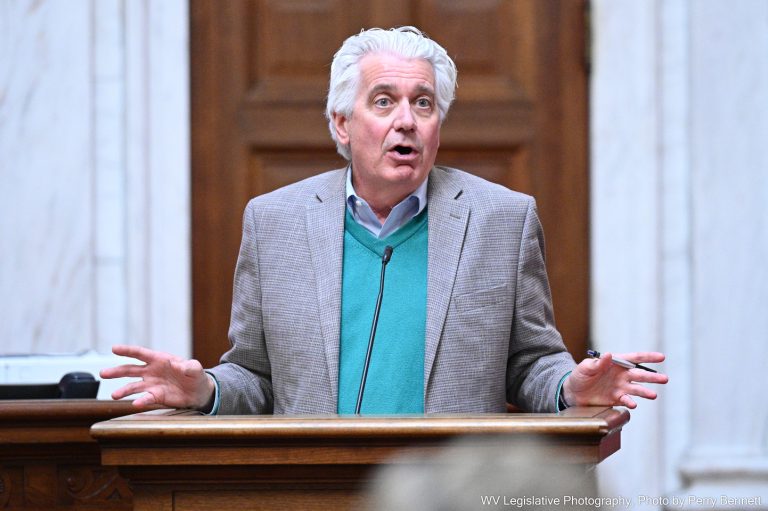
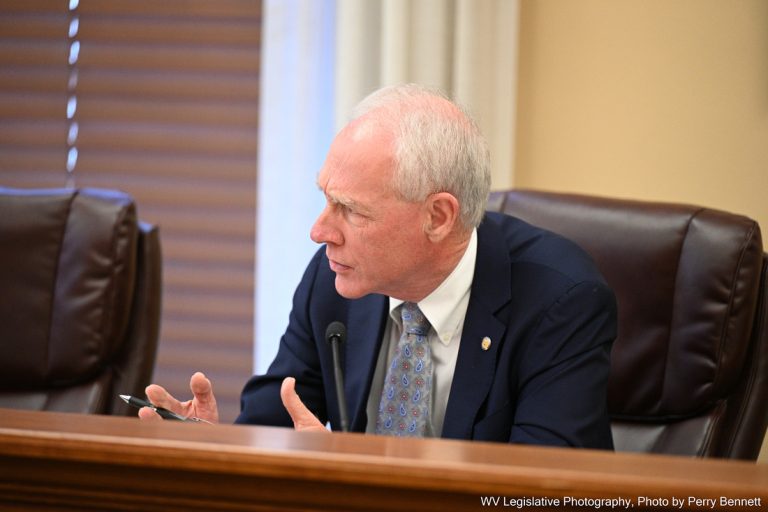
On Sunday afternoon, the Joint Standing Committee on Insurance and PEIA listened to testimony from Matt Walker, Executive Director of the Independent Pharmacy Association of West Virginia, regarding the state’s Pharmacy Benefit Management program and independent pharmacy reimbursements.

The Legislature is in Huntington on the campus of Marshall University through Tuesday for May interim meetings.

The West Virginia Independent Pharmacy Association was formed in 2016 to provide a unified voice for independent pharmacies in public policy discussions. The organization represents more than 100 community pharmacies across the state.

Currently PEIA uses a pharmacy benefit management program, Express Scripts Inc., to process prescription drug claims. Walker emphasized it is important for PEIA to use a PMB program to process the large number of claims, but that the manner in which it has been used has caused frustration for pharmacists and pharmacy owners around the state.

According to Walker, pharmacies are reimbursed by PEIA well below the costs of purchasing the prescription drugs at 95 percent of brand drugs. While pharmacy reimbursements for generic drugs allow pharmacies to make a small profit, those profits are often negated due to the losses from ordering brand name prescription drugs.

Walker warned lawmakers of possible future pharmacy access issues for those insured by PEIA, noting that Kroger has already left Express Scripts, meaning they no longer accept PEIA to fill prescriptions. Walker said many smaller pharmacies are also considering dropping PEIA due to the financial difficulties the program creates.

Walker recommended PEIA consider a model used by West Virginia’s Medicaid program using the National Average Drug Acquisition Cost (NADOC) plus $10.49 reimbursement system. NADOC is a national survey showing what pharmacies are paying for prescription drugs.
Interim Report: LOCHHRA

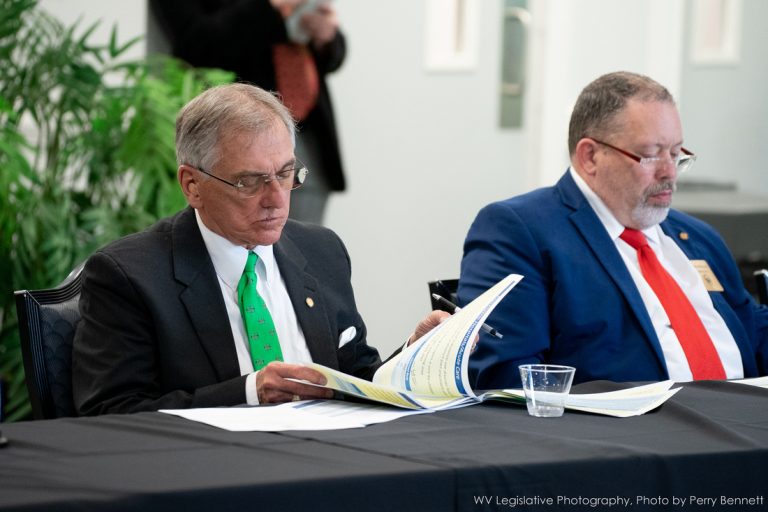
The Legislative Oversight Commission on Health and Human Resources heard a presentation on care in mental health facilities on Sunday, May 7th.

The DHHR has implemented the 988 Suicide and Crisis Lifeline. By dialing 988, individuals connected to crisis counselors with the National Suicide Prevention Lifeline. The department has implemented mobile crisis services for children statewide.

The department has expanded its Assertive Community Treatment (ACT), which provides several community-based rehabilitative mental health services for adults with a history of frequent psychiatric hospitalization. This program allows individuals to get the services they need while living in the community of their choosing.

The presenter provided a list of treatment services available. Currently, there are five Psychiatric Hospitals (Acute Care), with two of the facilities offering services to children. There are 705 beds within these five hospitals, of which 52 beds are for children.

Three Psychiatric Residential Treatment Facilities are in the state. These are full-time secure facilities for individuals who need around-the-clock care.

A Crisis Stabilization Facility for children is under development in Elkins, WV. There are 677 licensed and unlicensed group homes. Forensic Group Homes are being discussed. These homes are for individuals who are unable to stand trial or are found not guilty due to mental illness and are considered a danger to themselves or society.

The State has 30 substances use disorder facilities with 1,581 beds and 109 Recovery Support Residences with 1,519 beds.

The department does face workforce shortages in most facilities, which is delaying statewide adult mobile crisis services, ACT in the eastern panhandle, additional acute care beds for children, crisis stabilization for children, forensic group homes, and adolescent SUD treatment. The shortage also makes it difficult to appropriately place individuals with IDD and mental health dragonesses.

The department is also creating a plan for IDD patients at Sharpe and Bateman Hospitals. The plan is in its research phase as the agency is visiting the hospitals and studying how they work in addition to gaining a better understanding of IDDs. They hope to facilitate a better discharge process for individuals.

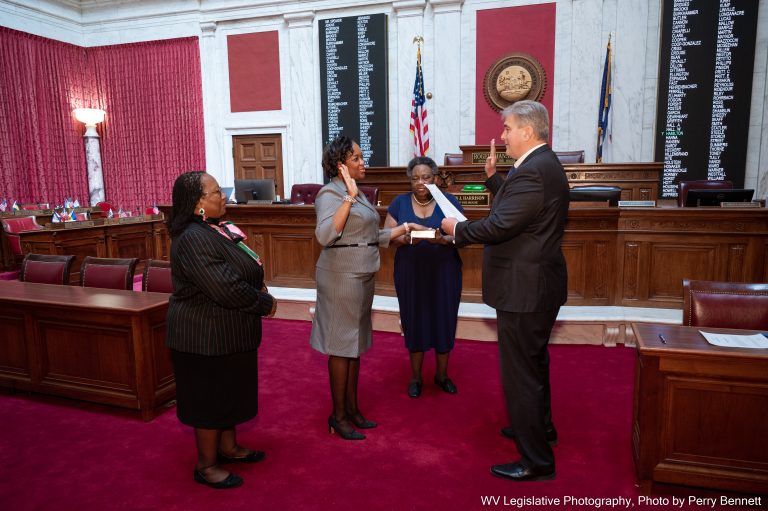
Anitra Hamilton Takes the Oath of Office

During a ceremony in the House of Delegates Chamber this afternoon, Anitra Hamilton took her oath of office, becoming the Delegate from the 81st Delegate District in Monongalia County. Delegate Hamilton replaces former Delegate Danielle Walker who recently resigned. Delegate Hamilton (D-Monongalia) was appointed to the position by Governor Justice on April 26th, 2023. Her committee assignments, office assignment and other information will be announced at a later date and published on the website.

Standing with her in the front of the House Chamber were her mother Francis Anthony and Barbara Littles, as well as Leo and Regina Riley nearby, and they were joined by several other friends and well wishers as she took her oath.

Administering the oath of office was the Clerk of the House of Delegates, Steve Harrison.

Interim Report: Joint Committee on VFD and EMS

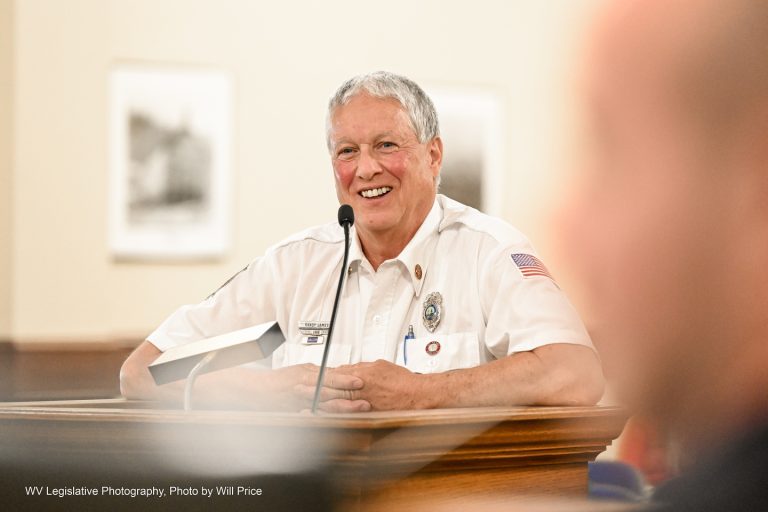
Fire Chiefs Association President Randy James told lawmakers during an April interim meeting Tuesday that the lack of funding for West Virginia’s volunteer fire departments and emergency medical services has reached a crisis level.

James pointed out that volunteer fire departments have not been given a line-item budget increase since 2005 and emergency medical services have never had one, all while the departments are facing skyrocketing operation costs, along with a precipitous decline in retention and recruitment.

James mentioned that 15 EMS squads have closed their doors since the beginning of 2022 alone. While volunteer fire departments are more reluctant to close, with the lack of state funding, retention and recruitment is a challenge, particularly because of the fundraising commitments that come with the job.

James emphasized that these departments need state funding so volunteers can spend their time training, maintaining equipment and facilities, and responding to calls, not serving hot dogs or organizing raffles.

James mentioned a lack of morale among VFD and EMS personnel when a bill that would have split $12 million between the state’s fire department’s and emergency medical services failed late in the 2023 session.

While lawmakers agree that fire and medical services are in dire need of the funding, they struggle to find consensus on a source of that money, with some favoring increasing a surcharge on fire and casualty insurance policies, and others preferring to use lottery funds.

James told lawmakers that volunteer fire departments and EMS personnel combined their lobbying efforts for funding this year and they are committed to doing that in the future.

Senator Bill Hamilton (R-Upshur, 11) mentioned that if something is not done soon, volunteer fire departments will inevitably close their doors, resulting in steep increases in homeowners insurance rates in those communities.

Hamilton and other lawmakers said they are determined to solve this problem by securing the funding for these vital services at some point in 2023.

Interim Report: LOCRJCFA

The Legislative Oversight Committee on Regional Jails and Correctional Facilities Authority met this afternoon.

The committee heard from the Division of Correction and Rehabilitation regarding employee recruitment, retention, vacancy rates, and the status of the juvenile population.

At least eight prisons have a vacancy rate of 40 percent or more. The National Guard is still assisting. This has led to guard members seeking full-time work within the prisons. Maintenance continues to be an issue at various facilities. Recruitment is continuing and improving. The Division has been encouraging facilities to be proactive when interest is expressed by individuals who stop by requesting information. The Division is changing the application process to make it less intimidating.

The juvenile centers have about 325 individuals in the population. There are 76 kids in the aftercare program, which is like adult parole. This program allows kids to receive assistance finding housing, obtaining licenses, and job assistance. Juvenile centers must adhere to children’s nutrition requirements and food is prepared on the premises.

The committee heard a brief overview of House Bill 3552 (2023 RS). The bill amends per diem jail costs. This bill established a tiered system for local governments to pay per diem charges for the incarceration of individuals in regional jails. Per diem rates are set at $54.48, subject to changes as required by the State Budget Office. Under this tiered system, local governments will be allotted inmate days calculated by the total number of residents multiplied by .52. For each inmate incarcerated up to 80% of those allotted days, the local government will pay 80% of the per diem charge. For the incarceration of individuals between 80% and 100% of the allotted days, the local government will pay 100% of the established per diem rate. For the incarceration of individuals over 100% of the allotted days, the local government will pay 120% of the per diem rate. The bill also authorizes counties to seek reimbursement through a memorandum of understanding from certain municipalities for up to one day of incarceration of inmates arrested by the municipality on county charges. The intent of the bill is to reduce the fiscal burden on counties and the effective date is June 9th.

Interim Report: Joint Committee on Health

The Joint Committee on Health met today.

The Committee heard about Lauren’s Wish, which is a 28-bed substance use disorder program. The program opened in November of 2022 and is open 24/7. The program fulfills the gap between hospital ER and treatment facility. It’s a place for patients to go for the days before their treatment begins. The program works to reduce harm.

The Committee also heard an update from the Office of Medical Cannabis. Thus far 21,000 medical cannabis ID cards have been approved. There are 48 dispensaries are opened and have made $40 million in total sales. There are 131 registered physicians able to certify that a patient has one of the serious medical conditions that allow for medical cannabis. A physician does not prescribe medical cannabis. Some of the medical conditions are cancer, HIV, ALS, MS Parkinson, Epilepsies, sickle cell, PTSD, and chronic pain. Caregivers are assigned to minors and individuals who cannot get to the dispensaries for themselves. Background checks are completed on all caregivers. An interactive map is available for patients to locate dispensaries. Patients can only carry a 3-day supply on them. Edibles are not legal for sale in WV.

Interim Report: Transportation Accountability

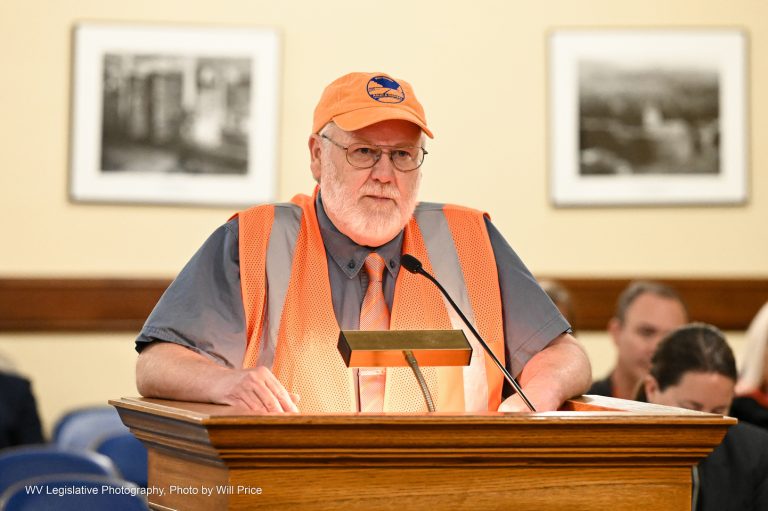
Transportation Secretary Jimmy Wriston outlined an emphasis on highway and road worker safety during Monday’s meeting of the Joint Legislative Oversight Commission on Department of Transportation Accountability.

“Just to go out there and set standard, minimal requirements in these work zones is not good enough, Wriston said. “Our goal is zero fatalities in our work zones. This is the most important thing we will ever do and it’s absolutely my number one priority.”

Wriston described the establishment of a Work Zone Safety Committee to produce an action plan. He later described working with magistrates to assure the enforcement of steeper fines for speeding in work zones.

Wriston also emphasized that West Virginia Division of Highways (WVDOH) is committed to patching every pothole in the state by Memorial Day as part of an aggressive spring repair blitz. Maintenance crews in nearly two dozen counties across more than half of the WVDOH districts have already taken advantage of a few asphalt plants opening early to get a jump start on patching potholes.

Wriston informed the committee that maintenance crews can’t make permanent hot asphalt repairs during the winter, when temperatures are often under 40 degrees Fahrenheit. Temperatures have to be 40 degrees or above for hot asphalt to stick properly.

Pothole milling and filling is just one part of a multifaceted plan to keep West Virginia’s roads in the best condition possible according to Wriston. WVDOH has a dedicated core maintenance plan that includes keeping ditches clear to stop water from pooling beside roadways, cutting trees and branches that overhang roads to allow sunlight to dry wet roads, and proper pothole filling – milling out a nice square hole, removing all dirt and debris, putting down a sticky layer of tack to make asphalt stick better, and rolling out new, hot asphalt.

A proper patch on a pothole will last for years, meaning there will be fewer potholes to patch next year and the years thereafter.

“We’re going to have a great year paving,” Wriston said. “We’re going to do a lot of bridge work. We’re going to have another banner year in West Virginia with infrastructure.”

Interim Report: Joint Committee on Education

The Joint Committee on Education met Tuesday morning.

The Committee was provided an update on CTEs. There are 121 high schools, 22 CTECs, and 7 multi-centers offering CTE courses in the state. Pilot programs are in place for dual-credit nursing pathways.

The Committee also heard about Plasma Games which is a 3-D learning platform that integrates chemistry learning standards. The creator designed the game because the US ranks 25th in science in the world. China alone graduates 20 times more engineers per year than the US. Chemistry-related jobs are at the top of job growth lists. In manufacturing, 95 percent of jobs are chemistry related. The top five highest-paying college majors are chemistry-based, yet less than 44 percent of students major in chemistry. The platform motivates and engages students to learn chemistry. It’s school friendly and allows students as young as seven to learn high school chemistry. Other states have seen the effectiveness of the platform. North Carolina has integrated Plasma Games for three years and North Carolina is in its second year.

The Committee heard about Learning Blades, which is a company working to provide STEM exposure to students as early as middle school. The company recommends introducing coding in middle school. The company has created a backpack app, which allows students to download courses at school and use them without the internet at home. The app contextualizes real-world careers and tasks and what education is needed to achieve these careers.

Interim Report: Joint Standing Committee on Finance

State Revenue Secretary Dave Hardy gave the Joint Standing Committee on Finance an update regarding various state revenue matters Monday afternoon.

He told the committee that Moody’s bond rating agency has already responded favorably to the new law that cuts state income taxes by 21 percent and reforms the Public Employees Insurance Agency with premium increases.

“We were of course looking for this because we knew that if we did a tax reduction it would be noticed by our bondholders and our bond rating agencies,” Hardy said.

State Deputy Revenue Secretary Mark Muchow told committee members the reduction in the personal income tax, which was retroactive to Jan. 1, will cause the governor’s office to adjust the revenue collection estimates before the end of the fiscal year. He said it’s a delicate balance of the numbers because it’s likely some residents will take the extra take home money and purchase items.

Personal income tax rates could also see further reductions after Aug. 15, 2024 under the recently passed bill. The legislation includes a trigger formula for further reducing personal income tax rates by comparing general revenue collections in a previous fiscal year minus severance tax collections compared to the base year of fiscal year 2019 and tied to the non-seasonally adjusted consumer price index.

If the general revenue collections minus severance tax collections exceed the adjusted base year, a reduction would be triggered. Personal income tax rate reductions would be limited to no more than 10 percent during any fiscal year.

Muchow noted that nine months into the fiscal year total revenues have outpaced estimates by $1.26 billion. The Justice administration has predicted the revenue collection surplus could reach $1.7 billion by July 1.

Hardy told lawmakers the state’s financial standing is strong and likely to stay that way, noting that revenues are performing at “historic levels.” He said he and other state finance officials will continue to watch the personal income tax line and watch the effect of the tax cut.

Interim Report: LOCHHRA

The Legislative Oversight Commission on Health and Human Resources Accountability met Monday morning.

The Commission heard from the DHHR on the transition plan for dividing into three departments: health, human services, and health facilities (HB 2006, 2023 RS). As of now, town meetings have been conducted to address concerns DHHR employees have about the transition. Next week, DHHR leadership will be meeting with the Governor’s team on the DHHR split and will have more specific plans in place.

The Commission also received an update on the implementation of Senate Bill 419 (2022 RS). The bill provides a framework for quality-based substance use disorder residential treatment programs. A pilot program is to be put in place with the intent to provide wraparound services. The Bureau of Medical Service has created an advisory committee with over 20 members to determine the best approach for the pilot program. This committee met weekly between May and September 2022 and is scheduled to reconvene meetings this month.

The Commission also heard an update on the implementation of Senate Bill 247 (2022 RS). The bill integrates evidence-based trauma-informed recovery-oriented Community Behavior Health Clinics. Even though the bill passed in 2022, the work began in 2021 for these types of clinics.

Finally, the Commission heard an update on the West Virginia People’s Access to Help (PATH) program. The technology replaces FACTS, RAPIDS, and OSCAR and integrates all these systems into one. PATH is being implemented in phases and is expected to be fully implemented in the fall. The program allows consumers to access multiple forms of assistance under one system.