

Members of the West Virginia Legislature participated in tours to explore economic development in Grant, Tucker, and Randolph Counties during the June Interims.
On Sunday, members were able to see Dolly Sods, the National Youth Science Academy, Big Timber Brewing, or Moon Flower Hemp.
Dolly Sods Wilderness is 17,371 acres of trees, 47 miles of hiking trails, and rocky plateaus in the Monongahela National Forest. Its climate is like that of southern Canada. Its elevation ranges from 2,500 to 4,700 feet. Dolly Sods is the highest plateau east of the Mississippi River and is on a ridge crest that forms the Eastern Continental Divide.
The National Youth Science Academy is a STEM-focused nonprofit with the mission “to foster lifelong curiosity and passion for science through informal, collaborative, and interdisciplinary learning.” The Academy has hosted several programs since its inception in 1983. Currently, the National Youth Science Camp and the Youth STEAM Institute are offered here in West Virginia. The Davis Campus offers a conference hall, computer lab, library creating space, research lab, and training lab.
Big Timber Brewing is a microbrewery and taproom that opened in 2014 in Elkins. It has since opened a second location in Davis. It is named for the forests surrounding it and the timber industry that built its community. The walls are decorated with the history of the timber and logging industry. Big Timber is the largest craft brewery in the state and in 2024 produced around 6,000 barrels of beer. In 2024, Big Timber’s porter won gold at the World Beer Cup.
Moon Flower Hemp began in 2019 with the passage of the Federal Farm Act and 15,000 plants. Two sisters decided they wanted to break into this industry with the support of family and friends. The sisters wanted to provide a natural remedy for those seeking help with chronic pain, anxiety, sleeping issues, etc. At Moon Flower, the product is seed-to-sale, meaning they plant, care for, harvest, and process the hemp used in their products. They do this so they know exactly what is in their products, allowing them to provide customers with education and transparency about the entire process. All products are third-party tested, and the reports are available for any customer to view. They sell drinks, edibles, flowers, ointments, lotions, and dog medication. They are projected to bring in $4 million in sales this year. They ship all over the United States, averaging 100 orders per day, with larger orders on some holidays. Moon Flower is concerned about the consequences of an amendment to Federal HR 1 that will eliminate the hemp industry. They said the only way to protect this industry is to implement state rights. Kentucky, Tennessee, and North Carolina have already passed legislation to protect the industry.
After a day of meetings, members wrapped up their final day of interims with another tour. Tuesday’s tours included Bowden State Fish Hatchery, Mount Storm, the Tygart Hotel and Railyard Event/Conference Center, and Heritage Farm.
Bowden Hatchery produces an average of 250,000 pounds of trout each year, which is 42% of the Hatchery Programs’ production. Brook and brown trout are spawned at the hatchery, while rainbow and golden Trout eggs are brought in from the Petersburg Hatchery. The fish hatched here are used to stock 30 streams and 15 lakes around the state. The water used at the facility comes from three gravity-fed water sources. In 2022, the facility was upgraded to a partially Recirculating Aquaculture System, which should increase trout production by nearly 40%. Staff monitor the operation 24/7, as it could be affected by muddy water, power failures, and disease.
Mount Storm Lake’s water cools Dominion Power Station equipment through circulation. The process keeps the lake’s temperature near 60 degrees, making it a destination for scuba divers, boaters, and anglers. The West Virginia Department of Natural Resources keeps the lake stocked with Striped Bass. Mount Storm does not permit swimming or wading. There are regulations for boating and scuba diving.
The Tygart Hotel was purchased in 2017 by Woodlands Development Group, an Elkins-based nonprofit after citizens approached the city about the need to revitalize the downtown area. Woodlands partnered with Mills Group LLC, an architecture firm, and Taylor Hospitality to renovate the hotel for modern uses while preserving its historical elements. The hotel’s history began in 1906 when it was built as the Hotel Gassaway, a “six-story Romanesque Revival style hotel.” It was renamed in 1923 to the Tygart Hotel and operated as a high-end hotel for decades. It became the heart of downtown Elkins and drew wealthy residents to the area, especially with the arrival of the railroad and industrial opportunities. In the 1900s, it hosted several political gatherings. With the economic downturn in the late 1900s, the hotel was converted into apartments, and its condition declined until it was purchased for renovation. Now, downtown Elkins is seeing revitalization driven by the tourism industry.
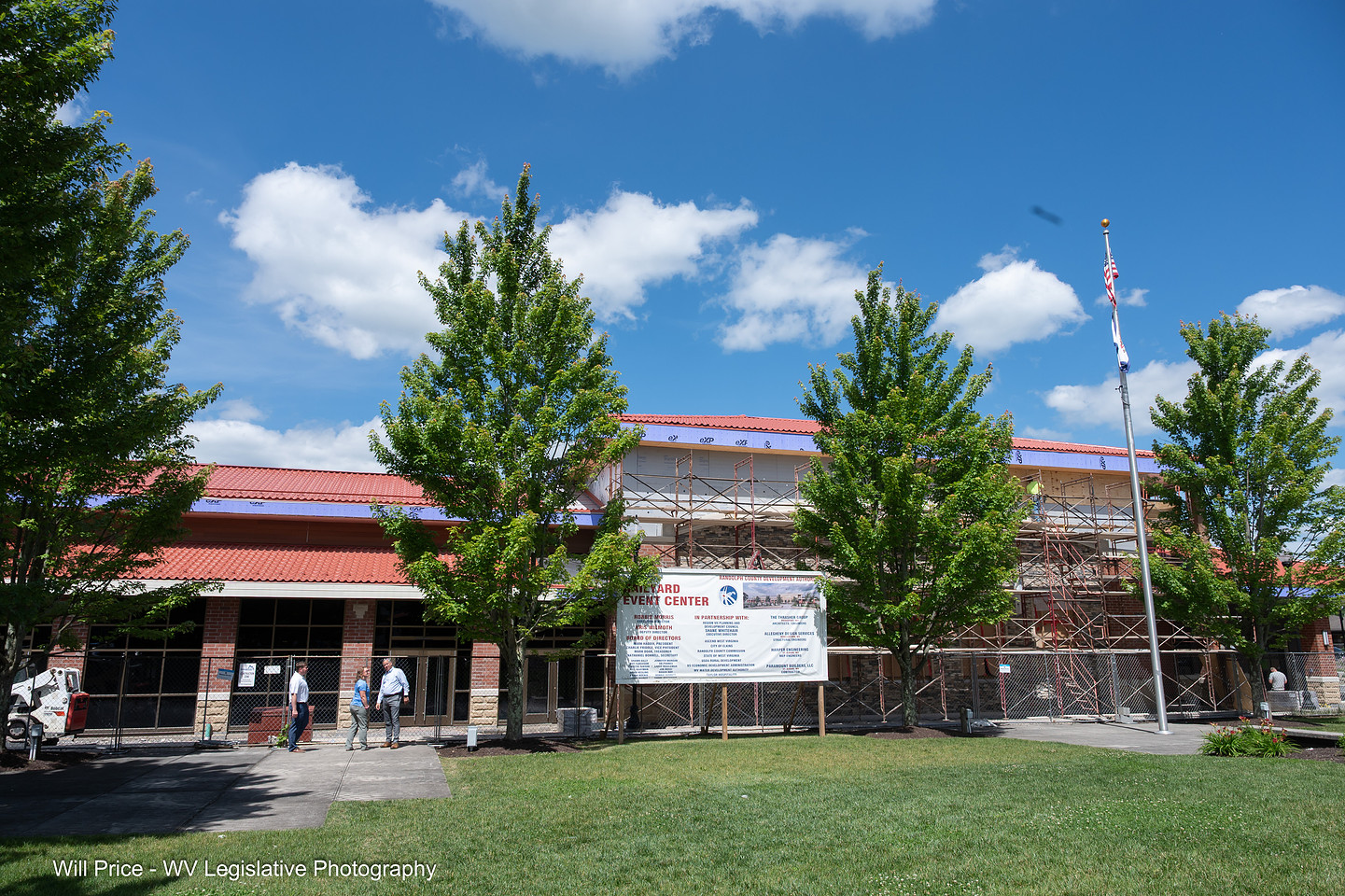
The Railyard Event and Conference Center will open in July 2026 as a destination for celebrations, conferences, and community events. The Randolph County Development Authority purchased the Railyard and the Train Depot to develop the regional economy and tourism by filling a community gap. To reach several tourism destinations, travelers must pass through Elkins, making it an excellent “base camp” for conferences and large groups. The Railyard is an $18.7 million project, with funding from various sources. Throughout the building, the designs pay homage to Elkins’ history and the rail industry. The turntable pit is represented in the ballroom and in the plaza yard. A performance theatre will hold 410 people for presentations and shows. The kitchen is full-scale and can operate for multiple events. Taylor Hospitality is the management company for the Railyard. The Ascend Program also has a place in the event center, as they contributed to the building of a coworking space in the back of the Railyard.
Pilgrim’s Pride is a large poultry processing plant in Moorefield, WV (Hardy County). It is the largest industrial employer in the area, processing over 2 million chickens a week. In 2025, the company opened its $14.8 million employee housing complex and childcare center. The complex is within walking distance of the processing facility and contains 160 units with rates locked for 15 years. The childcare center provides a safe, affordable environment for employees to drop off their children during work. The operation has created stability for employees and the area’s economic growth.
