
Wednesday, March 11, 2026
Home Blog Page 15

House Judiciary Heard Several Bills

House Judiciary and its subcommittees advanced several bills this morning.

House Bill 4098 would restore a person’s right to sit on a jury upon the expungement of one’s record. This bill was reported to the floor.

House Bill 4865 would create a program to allow students who are juniors or seniors, in addition to homeschool students, to work as poll workers. This bill was advanced to markup and discussion.

House Bill 4881 would remove the requirement that the loan value of a motor vehicle be less than $9,500 to allow an automobile dealer, licensed automobile auction, motor vehicle repair facility, or towing company to obtain the title and registration for the abandoned motor vehicle. This bill was advanced to markup and discussion.

House Bill 4996 would create mandatory bail conditions for people charged with making terrorist threats against a school. This bill was advanced to markup and discussion.

House Bill 4997 would prohibit persons convicted of felony terroristic threats towards schools or children from residing within 1,000 feet of a school. This bill was advanced to markup and discussion.

Senate Bill 208 would make certain military records unable to be requested by FOIA in West Virginia. This bill was advanced to markup and discussion.

Courts

House Bill 4850 would provide online training for people to become Executors/Executrixes of an Estate. This bill was reported to the Judiciary.

House Bill 4999 would change the criminal and administrative penalties for assault or battery on athletic officials and participants, including, but not limited to, players, scorekeepers, coaches, and referees.

House Bill 4568 would prohibit service of process in Family Court and civil actions on county property. This bill was advanced to markup and discussion.

House Bill 4709 would recognize the legal standing of the West Virginia Legislature in court actions in case there are unauthorized changes to election laws and rules. This bill was advanced to markup and discussion.

House Bill 5176 would relate to creating the animal abuse database within the West Virginia State Police. This bill was advanced to markup and discussion.

Homeland Security

House Bill 4106 would allow constitutional carry for 18 to 20-year-olds. This bill was reported to the Judiciary.

House Bill 5025 would allow the burning of certain farm structures as long as the Department of Environmental Protection approves said burning. This bill was advanced to markup and discussion.

House Bill 5182 would allow the State Treasurer to allow security personnel to carry a concealed firearm while performing their official duties. This bill was advanced to markup and discussion.

Legal Services

House Bill 4405 would allow for the creation of a second public defender corporation when a public defender company hires six or more assistant public defenders, including the chief public defender. This bill is intended to improve availability and address conflicts of interest. This bill was reported to the judiciary.

House Bill 4452 would remove Mortmain restrictions on religious organizations. This would allow churches and other religious organizations to hold more real estate. This bill was reported to the Judiciary.

House Bill 4638 would include an option to become an organ donor when registering to vote or modifying their voter registration. This bill was reported to the Judiciary.

House Bill 4546 would require biennial reports for limited liability and foreign limited liability companies, in addition to increasing filing fees. This bill was reported to the Judiciary.

House Bill 4710 would increase the amount of time a candidate could switch parties before filing to run for office from 60 days to 180 days before an election. This bill was advanced to markup and discussion.

House Bill 5166 would require a notice to be given to any political committee violating the filing requirements before assessing any civil fines. This bill would also give the Secretary of State authority to grant additional time for compliance, but not exceed an additional 14 days. This bill was advanced to markup and discussion.

House Government Organization Advances Four Bills to Floor

House Government Organization advanced House Bills 4462, 4463, 4561, and 4784 to the floor.

House Bill 4462 would prohibit the sale of cell-cultured products in West Virginia, specifically targeting cell-cultured meat or eggs. This bill was reported to the floor.

House Bill 4463 would modify rules for Sanitarians. This bill would allow the Board of Sanitation to have more authority and rulemaking. Under this bill, the board will be allowed to offer online training for sanitarians, allow a person with an associate’s degree or higher to be eligible for licensing, and add reciprocity between states. This bill was reported to the floor.

House Bill 4561 would allow county sheriffs to appoint more than one chief deputy, with the consent of their respective county commissioner. This bill was reported to the floor.

House Bill 4784 would extend the timeframe of Qualified Opportunity Zones till July 1, 2032. This bill was reported to the floor.

House Bill 4088 would change the licensure for certified public accountants. This bill would offer three different pathways. Two of these pathways include those who have been a part of post-bachelor degree programs, and one to expand the certification to those with only a bachelor’s degree. This bill was advanced to markup and discussion.

If a person seeking to become a certified public accountant decides to only get their bachelor’s degree, they would need to have two years of work experience to apply for their certification.

ICE Bill Passes Senate, Moves to House of Delegates

The Senate met this morning, introducing bills 823-892, adopting resolutions 28 and 30, and advancing five bills to the House.

Senate Bill 615 would require individuals with an illegal immigration status to be turned over to Immigration and Customs Enforcement (ICE) and deported.

If the same individual is present in the state under an illegal immigration status for a second time, they would be guilty of a felony offense and would be incarcerated in a state penitentiary for 3-5 years, and following their release, would be sent to ICE for deportation.

Under the proposed bill, law enforcement can suspect an individual is in the United States under an illegal immigration status only if the officer is detaining the person for a separate legal issue and chooses to report the individual to ICE.

Separate legal issues include, but aren’t limited to:

  • Speeding
  • Broken headlight, taillight, brake light, or turn signal
  • Expired registration or inspection
  • Checkpoint stops (DUI or license checkpoints)
  • Illegal turn or U – turn

“This bill puts good people at risk,” Senator Joey Gracia (D – Marion,13) said, raising concerns that individuals here as United States Citizens fear future interactions with law enforcement due to assumptions about their ethnicity or perceived immigration status.

Senator Patricia Rucker (R – Jefferson, 16), had a different perspective.

“As the only member of this body that is an immigrant, I support this legislation,”  Rucker said. “I never once had any problems with law enforcement or questions that made me feel uncomfortable; this protects Americans and law enforcement.”

Senate Judiciary Chairman Tom Willis (R-Berkeley, 15) closed by stating that when you boil this legislation down, it’s simply about state law enforcement agencies helping to enforce federal laws that have been on the books for years.

After debate, the bill passed and was reported to the House of Delegates for consideration.

Senate Bill 440 would make it a felony to transport telecommunication devices into a state correctional facility.

If an individual attempts to deliver anything into a state correctional facility to aid or facilitate another individual’s escape, they would be guilty of a felony and would be sentenced to a minimum of 10 years in prison.

All bills on third reading passed and were reported to the House of Delegates for consideration.

Afternoon Meetings:

Transportation and Infrastructure at 1 p.m. in Room 451M

Pensions at 2 p.m. in Room 451M

Energy, Industry, and Mining at 2 p.m. in Room 208W

Finance at 3 p.m. in Room 451M

Judiciary at 3 p.m. in Room 208W

Morning Meetings for Feb. 10:

Education at 9:30 a.m. in Room 451M

Government Organization at 9:30 a.m. in Room 208W

The Senate is adjourned until tomorrow, Feb. 10, at 11 a.m.

House Rejects Four Amendments

The West Virginia House of Delegates advanced three bills to the Senate.

House Bill 4522 would ban foreign spending on state ballot issues.

House Bill 4755 would create enhanced sentencing for offenders of aggravated vehicular homicide, driving under the influence causing serious bodily injury, and third offense driving under the influence.

House Bill 4982 would re-establish the Office of Healthy Lifestyles and expand a coordinated, statewide framework to promote nutrition, physical activity, and wellness through various initiatives, agencies, partnerships, and grants.  The bill also requires the development of the Governor’s Fitness Test, a school fitness month, and the reporting of outcomes of both.

In addition to bills passing, the House debated four amendments proposed by Delegates Evan Hansen (D – Monongalia, 79) and Sean Hornbuckle (D – Cabell, 25)

House Bill 4600 would require absentee ballots mailed in to be received by 8:00 p.m. on the day of the election to be counted.

Hansen and Hornbuckle proposed four amendments that would allow for exceptions to the new deadline established in the bill for students, the elderly, military personnel, people with disabilities, or those with an injury that would not allow them to be at a physical polling location. The exceptions return the deadline to current code for these groups. All four amendments were rejected.

Bills introduced can be found here.
Resolutions introduced can be found here.

Committee Meetings, Today February 9

Committee Meetings, Tuesday February 10

The House is adjourned until 11:00 a.m. Tuesday, February 10, 2026. 

Senate Passes Small Business Growth Act

The Senate passed Senate Bill 1, the Small Business Growth Act, which would establish a new program administered by the West Virginia Department of Commerce to encourage capital investment in eligible West Virginia businesses.

The program defines terms like “affiliate” (an entity controlled by another), “capital investment” (cash invested in a growth fund for specific purposes), “growth fund” (a certified entity investing in rural businesses), and “eligible business” (a business with fewer than 250 employees and principal operations in West Virginia). Growth investors making capital investments in certified growth funds can receive tax credits against their state tax liability, with the credit amount determined by an “applicable percentage” that increases over time.

The legislation outlines application procedures for growth funds, including requirements for business plans and revenue-impact assessments, and sets limits on the total amount of credits that can be issued annually. It also includes provisions for recapturing credits if growth funds fail to meet investment or reinvestment requirements, prohibits certain investments by eligible businesses in growth funds, and mandates annual reporting by growth funds on job creation and salaries. The act would take effect on January 1, 2027.

The bill now heads to the House of Delegates for consideration.

The Senate is adjourned until Monday, Feb. 9, at 11 a.m.

The Judiciary Subcommittee for SB593 will meet Monday at 9 a.m. in 208W

House Judiciary and Subcommittees Meet Today

House Judiciary and its subcommittees met this morning.

Judiciary

House Bill 4412 would require pornography websites to use some kind of age verification method to prevent minors from accessing the website. This bill would also create liability and penalties against the website if do not follow these procedures. This bill was reported to the floor.

House Bill 4725 would allow a court to order a change in the animal’s place of custody and to order the animal euthanized if it is in the animal’s best interests or for public health and safety. The euthanasia of the animal must be based on a sworn testimony of a licensed veterinarian or animal control officer. This bill was reported to the floor.

House Bill 4801 would define permissible expenditures for municipalities and counties. This bill was reported to the floor.

Senate Bill 207 would clarify the sheriff’s compensation for tax collection. This bill was reported to the floor.

House Bill 4098 would restore the right of a person to sit on a jury upon expungement of one’s record.

House Bill 5101 would establish the Joanna Phillips Domestic Violence Prevention Act. This act would create and increase penalties for certain domestic violence offenses and change bail requirements for domestic violence.

Legal Services

House Bill 4865 would create a program to allow students who are juniors or seniors to work as poll workers. This bill was reported to the Judiciary.

House Bill 4881 would remove the requirement that the loan value of a motor vehicle be less than $9,500 to allow an automobile dealer, licensed automobile auction, motor vehicle repair facility, or towing company to obtain the title and registration for the abandoned motor vehicle. This bill was reported to the Judiciary.

House Bill 4405 would allow for the creation of a second public defender corporation when a public defender company hires six or more assistant public defenders, including the chief public defender. This bill is intended to improve availability and address conflicts of interest.

House Bill 4452 would remove Mortmain restrictions on religious organizations. This would allow churches and other religious organizations to hold more real estate.

House Bill 4638 would include an option to become an organ donor when registering to vote or modifying their voter registration.

Homeland Security

House Bill 4996 would create mandatory bail conditions for people charged with making terrorist threats against a school.

House Bill 4997 would prohibit persons convicted of felony terroristic threats towards schools or children from residing within 1,000 feet of a school.

House Bill 4106 would allow constitutional carry for 18- to 20-year-olds.

House Bill 4624 would permit the county commission of each county to lease, rent or to permit the use of a county-owned wireless tower or any portion thereof, with exceptions.

House Sends Six Bills to Senate

The West Virginia House of Delegates advanced six bills to the Senate.

House Bill 4461 would require Internet or telecommunications providers that fail to provide subscribed customers service for five or more days to issue a refund or credit for the unavailable service.

House Bill 4570 would allow a third party to serve the eviction notice by posting it on the front door, securing it, and taking a photograph of it to show that it was posted if the tenant is not available to receive the notice.

House Bill 4382 would require collection agencies to provide 30 days’ notice via mail before they garnish wages. This bill would also require a monthly statement to the debtors of how much money was garnished.

In addition to bills passed, the House passed two amendments for House Bill 4982. The first amendment, proposed by Delegate Wayne Clark (R – Jefferson, 099), would require the food used for the Make West Virginia Healthy Act of 2026 to be sourced locally.

The second amendment, proposed by Delegates Joe Statler (R – Monongalia, 77) and Christopher W. Toney (R – Raleigh, 43), would allow high schools to utilize existing facilities if available for health initiatives and would allow the Department of Education to administer the Presidential Fitness Test more easily.

Bills introduced can be found here.
Resolutions introduced can be found here.

Committee Meetings, Today February 6

  • Sub. Com on Courts will meet after the floor session in Room 410M
  • Sub. Com on Homeland Security will meet after the floor session in Room 410M

Committee Meetings, Monday February 9

The House is adjourned until 11:00 a.m. Monday, February 9, 2026. 

Abortion Pill Bill Heads to Full Senate

The Senate Judiciary Committee advanced a bill on Thursday evening that would prohibit out-of-state entities and health care providers from sending abortion pills to West Virginia.

Senate Bill 173 would prohibit the trafficking and dispensing of chemical abortion pills into West Virginia.

The bill was previously approved by the Senate Health Committee.

The legislation would amend the West Virginia Unborn Child Protection Act by adding provisions that specifically target “abortifacients”—chemical or drug agents used to terminate pregnancy. The bill defines an abortifacient as “any chemical or drug prescribed or dispensed with the intent of causing an abortion.”

According to the bill’s language, a person or entity would be guilty of performing or attempting to perform an abortion with an abortifacient if they knowingly and willfully:

  • Send an abortifacient to a person in West Virginia by courier, delivery, or mail service
  • Place an abortifacient into the stream of commerce knowing it will be used in or sent to West Virginia
  • Prescribe an abortifacient to a person in West Virginia, regardless of whether the prescriber is located in the state
  • Disseminate an abortifacient in West Virginia without a lawfully valid prescription

The bill establishes different penalties based on who commits the offense:

For non-medical professionals: A felony conviction with imprisonment in a state correctional facility for 3-10 years.

For licensed medical professionals: Subject to disciplinary action by the applicable licensing board. If found to have knowingly and willfully violated the law, the medical professional’s license shall be revoked.

The legislation specifically states that “a woman who unlawfully receives an abortifacient” cannot be charged with or convicted of a criminal offense related to her own unborn child.

The bill  as it came over from Senate Health created a civil cause of action, allowing a pregnant woman or her family members to sue anyone who knowingly and willfully violates the prohibition. If a claimant prevailed, they could receive:

  • Injunctive relief preventing future violations
  • Damages of $10,000 for each abortion that was knowingly and willfully performed or attempted

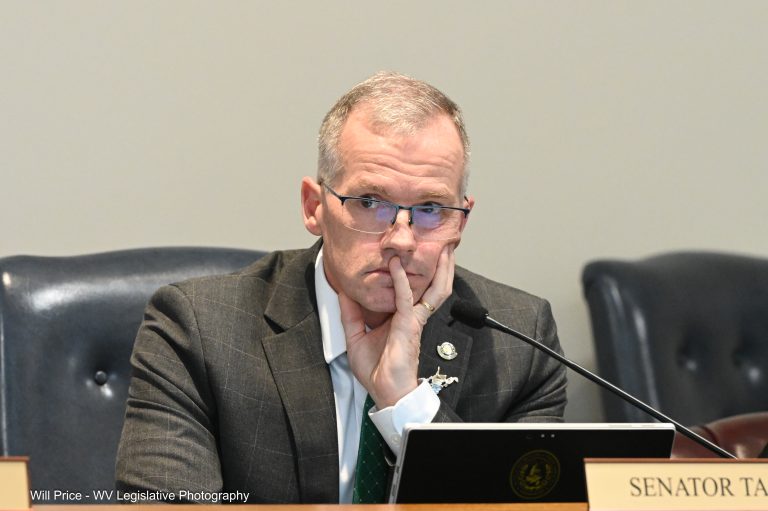
The Senate Judiciary Committee approved an amendment by Sen. Eric Tarr, (R-Putnam, 04) adding a requirement that claimants who would sue under the law notify the state attorney general. It also adds language that the attorney general may pursue civil action under the law and recover expenses to the maximum amount allowed by law. An indictment or conviction would not be necessary to establish liability.

Tarr said the addition would put pressure on the attorney general to sue.

He expressed concerns that a section in the bill allowing claimants to be awarded damages up to $10,000 may encourage abortion.

The legislation also approved an amendment clarifying that no criminal or civil action may be taken against motor carriers or freight forwarders as defined by federal code.

The bill provides limited exceptions:

  • Pharmacies fulfilling lawfully valid prescriptions issued by licensed medical professionals in West Virginia
  • Physicians providing medical procedures or services for legitimate medical reasons to a pregnant woman that result in accidental or unintentional physical injury to or death of the unborn child

Originally, the bill required that within one year of initial licensure, all licensed medical professionals complete two hours of continuing medical education regarding “the dangers of the abortion pill and the efficacy of the abortion pill reversal.” Earlier this week in the Senate Health Committee, Senator Tom Takubo (R-Kanawha, 17) successfully amended the bill to change the continuing education piece to an attestation and a signed affidavit stating the medical professional knows that the anti-abortion law is codified in West Virginia.

The legislation now advances to the full Senate for a vote.

House EIT Advances Four Bills

The House subcommittee on Environment, Infrastructure, and Technology advanced four bills this afternoon.

House Bill 4615 would create the Public Water Supply Reform Act of 2026. This act would require public water systems to provide quarterly operational and financial reports to the appointed board members of the public service district, participate in the Open Checkbooks program, and, when receiving enough complaints about a water system, a forensic audit must be conducted. This act would also require water storage tanks to be equipped with a device to collect data from the water system. This bill was reported to the committee on Energy and Public Works.

House Bill 4563 would require an EZ Pass transponder to be registered to a person rather than a vehicle. This bill was reported to the committee on Energy and Public Works.

House Bill 4471 would require approved sewage systems for all rental properties. This bill was reported to the committee on Energy and Public Works.

House Bill 4537 would require municipalities and public service districts to determine the cost of adding potential customers to the water service and apply for funding through the West Virginia Infrastructure and Jobs Development Council. This service will be extended to customers who have made the required deposits and extend the service to possible customers, if the fees have been covered by a grant(s) for the extension. This bill was reported to the committee on Energy and Public Works.

House Gov. Org. Hears Several Bills

House Government Organization and Subcommittee on Government Administration met this afternoon.

Government Organization

House Bill 4501 would facilitate the practice of dietetics between states to improve public access to dietetic services. This bill preserves the authority of the states to protect public health and safety through state licensure.

House Bill 4025 would prevent new hires and employees who will be promoted within the Departments of Health Facilities, Department of Human Services, and Department of Health from entering the classified civil service system. Employees who are currently employed and stay within their position will remain a part of the classified civil service system. 

House Bill 4561 would clarify a sheriff’s authority to hire within their own office. This bill would allow a sheriff may have and appointt more than one chief deputy with the advice and consent of the county commission.

House Bill 4577 would create reciprocity with the Republic of Ireland for driver’s licenses.

House Bill 4462 would prohibit cell-cultured products.

House Bill 4819 would change the use of criminal records in determinations of whether to allow a person to be issued a license, certification, registration, or other authorization to engage in a profession.

Government Administration

House Bill 4531 would provide identification documents, such as a photo ID, a replacement driver’s license, or a replacement birth certificate, to homeless individuals residing at homeless shelters within this state, at no cost.

House Bill 4612 would require DMV to issue a new title when the old title has been lost, under specific conditions. Regardless of vehicles age, the vehicle cannot appear on any list as stolen. If a title appears as stolen, the issued title will be void, and an investigation will be required to take place.

House Bill 4518 would require DMV and the Parkways Authority to coordinate records for the process of updating a driver’s information when getting a new vehicle and using EZ-Pass.

House Bill 4769 would require the Governor to make crisis plans.

House Bill 4932 would allow “A.C.” to be a name ending for an accounting corporation.

House Bill 4978 would allow Workforce West Virginia to provide people who claim unemployment with information from private employers, including tailored positions based on their previous job experience and skills.

House Bill 4793 would allow fourteen year olds to be able to apply to become apprentices for a barber or cosmetologist.

House Bill 4667 would clarify that hair braiding, threading, blow-dry styling, and makeup application are not regulated. In addition, this bill would create a salon training program that would allow licensed salons to employ trainees to cut and color hair and, after 1,000 hours, sit for the hair styling exam.