
Sunday, August 2, 2026
Home Blog Page 155

House Finance Advances Supplemental Appropriations

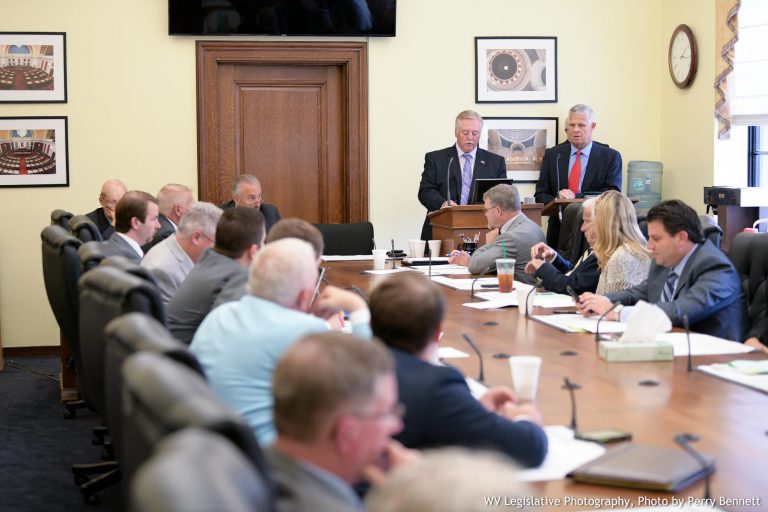
The House Finance Committee reported several supplemental appropriation bills to the House floor Monday.

These bills were passed out of committee:

  • H.B. 132– supplemental appropriation for the 2020 budget year, reducing $290,000 from the Department of Health and Human Resource’s Division of Health Central Office and appropriating that amount to the Department of Agriculture. This is a result of the passage of a Senate Bill that placed regulatory authority over milk products to the Department of Agriculture instead of the DHHR.
  • H.B. 146– establishing and funding of substance use disorder treatment and recovery facilities.
  • H.B. 148– supplemental appropriation taking $244,200 out of the unappropriated general revenue fund to settle issues arising from the Broadband Opportunities Program.
  • H.B. 149– supplemental appropriation adding a new item of appropriation in the general revenue to the Governor’s Office, Civil Contingent Fund for the Milton Flood Wall. This bill would dedicate $8 million to the project, which would allow for the process of buying property and obtaining other rights to begin. The project has an estimated completion date of five years.
  • H.B. 150– a bill to appropriate $68,000 in special revenue spending authority to the Home Rule Board Operations Fund., which was created through a Senate bill passed during the regular session. The spending authority was left out in the creation of the board.
  • H.B. 151– a bill that would appropriate $70,000 to the Division of Culture and History, which includes money for historic preservation grants, competitive arts grants, and funding for Save the Music.
  • H.B. 152– a bill appropriating $1 million from the general revenue fund to the Department of Environmental Protection’s Division of Environmental Protection.
  • H.B. 153– supplemental appropriation directing $2 million to the Ryan Brown Addiction and Recovery Fund.
  • H.B. 157– a supplemental appropriation bill for the 2019 fiscal year which would dedicate $800,000 to the Department of Military Affairs and Public Safety to pay for stream gauges.
 

Originating House Education Bill Reported to House Floor

0

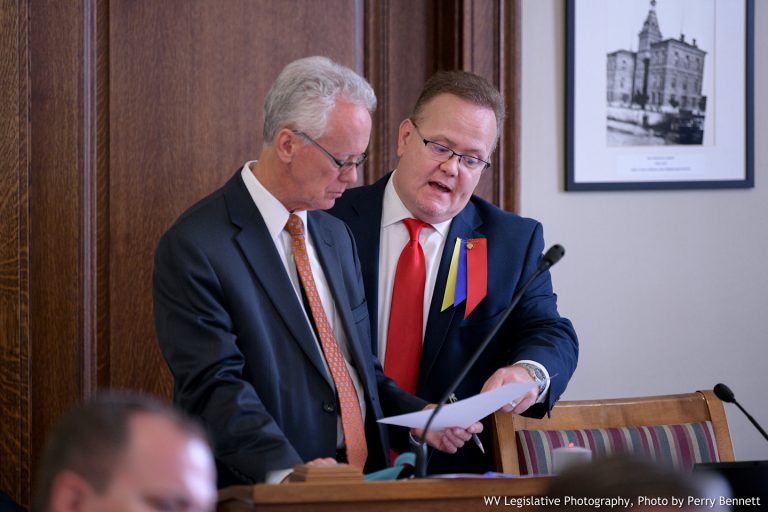
A House education subcommittee advanced an originating education bill Monday.

Senate Bill 1039, the Student Success Act, was referenced to the House Subcommittee on Education C. The committee instead took up an originating bill and reported that bill to the House floor in a 14-8 vote.

When another subcommittee member asked why the House was originating the bill, Delegate Paul Espinosa, R-Jefferson, said, “We gauged the interest in 1039 or any changes members may have. It was the will of our caucus to have a fresh start. There were significant changes and the thinking of the education leadership team and members was to start anew.”

The originating bill had several differences from Senate Bill 1039. To see an outline of some of the major differences, visit here.

The originating bill would cap charter schools at 10 and would provide for charter schools to go into effect for the 2021 school year.

The originating bill would provide that before applying to form a charter school, a group would have to have or have submitted an application for a 501(c)(3) tax-exempt status. Higher education institutions also could submit applications to form charter schools.

County school boards would have to approve the applications. The state Board of Education would review an application if a charter contract is in a county where the state board has intervened in the operation of the school system and limited authority of the county board. It also could review applications in an instance where an application is approved by the county school board and the county board forwards that application to the state school board, requesting it to perform an authorizer function.

The bill does not include an appeal process for charter school applications.

The state school board would do up-front work on best practices, develop applications and contract forms and would provide training for applicants and authorizers. The bill also provides that preference may be given to the primary recruitment community, previous enrollment, and siblings. The bill also would provide that a lottery would not override previous attendance areas following any conversion to charter schools.

The originating bill removed a proposed new section regarding work stoppages and strikes.

The originating bill also added a proviso clarifying that increasing allowances for professional student support personnel may be made through public-private partnerships or contracts.

The originating bill replaced the tax credit under the Senate’s bill and would instead give a $200 increase to classroom teachers and librarians for supplies.

Some delegates expressed concerns regarding transportation and funding. Funding would follow students from a public school to a charter school if the student transferred.

The House subcommittee also reported House Concurrent Resolution 103 to the floor. HCR 103 is a study resolution, requesting the Joint Committee on Government and Finance to review the the Albert Yanni Programs of Excellence in Vocational-Technical Education.

These programs were created in 1989 to provide educational incentives for students and educators to achieve excellence in vocational-technical training.

HCR 103 would study these programs to determine their effectiveness and how they could be restructured or repealed.

House Reconvenes, Refers Student Success Act to Select Committee C

The House reconvened the special session Monday morning, referring Senate education bills to committees.

Senate Bill 1039, establishing the Student Success Act, was referred to the House Select Committee on Education C, which meets at 10 a.m in House Education. The House referred Senate Bill 1040, the Education Savings Account Act, to the Select Committee on Education B, which meets at 10:30 a.m in House Government Organization.

The House took up for immediate consideration and read a first time House Bill 144, which establishes the West Virginia Business Ready Sites Program.

The House also introduced 57 bills Monday – House Bills 145-202.

The House will reconvene at 6 p.m.

Senate Passes Student Success Act, ESAs.

The Senate passed the Student Success Act on an 18-15-1 vote, following a lengthy debate Monday morning. Following an hour recess, the Senate returned, suspended the constitutional rules requiring a bill be read on three separate days, and passed the Education Savings Account Act by the same vote.

The Student Success Act (SB1039) includes a variety of proposed changes to the public education system, including pay increases, charter schools under the purview of county and state boards of education, increased support personnel for schools, open enrollment, incentives to fill in-demand positions and financial support for smaller county school systems, among other things.

On Sunday, the Senate amended the bill to withold pay and prevent extracurricular activities during a public school strike. The amendment also prevents superintendents from being able to close school during a work stoppage. The change codifies that strikes of this nature are illegal.

Education savings accounts (ESAs) allow parents to withdraw their children from public district or charter schools and receive a deposit of public funds into government-authorized savings accounts with restricted, but multiple, uses. The funds can cover private school tuition and fees, online learning programs, private tutoring, and other approved learning materials and programs.

Senate Bill 1040 does not have a limitation in overall number, total amount spent or a set type of student that could qualify, such as special needs.

The state Department of Education would make the money available to the state Treasurer, which would operate the program. If insufficient funding is available, priority would go to students whose applications were submitted first.

Parents could apply for an education savings account after July 1, 2020. The household income of applying families is not to exceed $150,000 a year. A parental review committee would be established to help the Treasurer oversee the use of the program.

Senate Adopts Four Amendments to Student Success Act, Moves Bill to Third Reading

The Senate adopted four amendments to the Student Success Act and advanced the bill to third reading during a Sunday afternoon floor session.

Senator Charlie Trump (R-Morgan, 15) successfully amended the bill. His change deals with the withholding of pay and preventing extracurricular activities during a public school strike. The amendment also prevents superintendents from being able to close school during a work stoppage. The change codifies that strikes of this nature are illegal.

Senator Ryan Weld (R-Brooke, 1) amended the bill to remove an institution of higher education from being a potential authorizer of charter schools, among other changes.

Senator Eric Tarr (R-Putnam, 4) amended the bill to allow county boards to establish an exceptional needs fund from surpluses for students who are likely to perform better outside of the public school setting.

Senator Patricia Rucker (R-Jefferson, 16) made a technical amendment to the bill.

An amendment by Senator Bill Hamilton, (R-Upshur, 11) to allow county voters to approve charter schools by referendum, was rejected.

The bill will be up for a vote on third reading in the Senate tomorrow.

Senate Bill 1040, Education Savings Account Act, was approved by the Rules Committee, read a first time, and will be on second reading tomorrow.


The Senate has adjourned until tomorrow, June 3, at 9 a.m.


Senate Introduces Student Success Act

The Senate reconvened the 1st Extraordinary session Saturday morning, introducing Senate Bill 1039, Establishing the Student Success Act, as well as several other bills.

The bill includes a variety of proposed changes to the public education system, including pay increases, charter schools under the purview of county and state boards of education,  increased support personnel for schools, open enrollment, incentives to fill in-demand positions and financial support for smaller county school systems, among other things.

The bill removes concepts that were controversial during the 2019 regular session, including education savings accounts, “paycheck protection” and a nonseverability clause.

Other changes made to the bill late Friday night included:

• Removing authority of county boards to increase their regular levy rate.

• Correcting language in the teacher-pupil ratio section to be consistent with the intent to not
change class sizes.

• Removing all of the strike/work stoppage language except for prohibiting extracurricular
activities on days school is closed due to a work stoppage or strike.

• Adding language to the Innovation in Education article providing that no waivers from state
board rules can be granted without the approval of the State Board.

• Allowing any accredited WV public institution of higher education to apply to convert or create a
charter school, but prohibits an institution of higher education from applying to itself or another
institution of higher education.

• Making several changes to provisions relating to the searchable budget database and website
such as adding language providing that the State Superintendent shall not be required to violate
FERPA; and providing that employee addresses are not to be made public or otherwise
displayed on the budget data website.

• Removing language providing that net enrollment does not include any adult charged tuition or
special fees beyond that required of the regular secondary vocational student.

A motion to suspend the constitutional rules requiring a bill be read on three separate days for SB1039 failed on a 18-15 vote. A 4/5 vote was needed to suspend the rules. Senate Bill 1039 will be on second reading on Sunday, June 2.

Senate Bill 1040, Education Savings Account Act, was also intoduced. A motion to take the bill up for immediate consideration failed. The bill will be on first reading tomorrow, June 2.

Senate Bill 1041 , WV Business Ready Sites Program, and Senate Bill 1042 , Special Community Development School Pilot Program, were introduced and referred to committee.

Finally, the Senate amended and passed House Bill 118, which relates to the use of post-criminal conduct in professional and occupational initial licensure decision making. The bill had passed earlier in the special session. Corrections were made today to avoid unintended consequences and get the legislation more in line with its intent. The bill now goes to the House of Delegates for consideration.

The Senate has adourned until tomorrow, June 2, at 2:00pm.


Special Session Call Amended

Gov. Jim Justice amended his proclamation for the First Extraordinary Session of 2019, adding a bill relating to the West Virginia Business Ready Sites Program.

The governor issued the amended proclamation Friday.

The Senate is set to resume the special session Saturday at 10 a.m. The House is set to reconvene at 8:30 a.m. Monday, June 17.

Senate to Reconvene Saturday, House to Reconvene June 17

The Senate will resume the First Extraordinary Session of 2019 at 10 a.m. Saturday, June 1.

House Speaker Roger Hanshaw, R-Clay, sent a letter Thursday to all delegates informing them that the House will resume the special session at 8:30 a.m. Monday, June 17.

The House split into four select education committees, with these committees consisting of 25 members. Nine bills were assigned to these select committees.

***

Gov. Jim Justice has signed 17 bills as of Thursday, including bills dedicating money to improve state roads and a bill allowing for “vertical integration,” which is intended to help the state’s medical cannabis program.

These are the bills:

  • House Bill 111– Relating to refunds of excise taxes collected from dealers of petroleum products 
  • House Bill 112– Relating generally to the personal income tax
  • House Bill 115– Relating generally to court actions in abuse and neglect proceedings
  • House Bill 116– Relating generally to persons 18 years of age and older in the custody of the Bureau of Juvenile Services
  • House Bill 117– Relating to reduced rates for low-income residential customers of privately owned sewer and combined water and sewer utilities
  • House Bill 119– Supplementing, amending, decreasing, and increasing items from the State Road Fund to the Department of Transportation
  • House Bill 133– Relating to the admissibility of health care staffing requirements in medical professional liability litigation
  • Senate Bill 1001– Upper Kanawha Valley Resiliency and Revitalization Program
  • Senate Bill 1004– Antihazing law
  • Senate Bill 1006– Authorizing the West Virginia Board of Physical Therapy to conduct criminal background checks on initial license applicants
  • Senate Bill 1009– Establishing health professionals’ student loan programs
  • Senate Bill 1012– Creating voluntary certification of recovery residences
  • Senate Bill 1013– Permitting certain trained professionals to provide counseling in medication-assisted treatment program
  • Senate Bill 1016– Supplemental appropriation to the Department of Transportation, Division of Highways
  • Senate Bill 1019– Supplementing, amending, decreasing, and increasing existing appropriations from State Road Fund to DOH for fiscal year ending June 30, 2020
  • Senate Bill 1026– Expiring funds from Treasurer’s Unclaimed Property Fund and supplementing appropriations to Governor’s Office
  • Senate Bill 1037– Relating generally to medical cannabis


Governor Signs Four Bills From Special Session

Gov. Jim Justice has signed four bills that were passed during the special session.

Last week, the Legislature resumed its special session, passing 18 bills, before adjourning until further call of the House Speaker and Senate President. The Senate plans to reconvene Saturday.

On Tuesday, the governor signed four bills into law, including three bills directing money to improve state roads:

  • House Bill 119– Supplementing, amending, decreasing, and increasing items from the State Road Fund to the Department of Transportation
  • House Bill 133– Relating to the admissibility of health care staffing requirements in medical professional liability litigation
  • Senate Bill 1016– Supplemental appropriation to the Department of Transportation, Division of Highways
  • Senate Bill 1019– Supplementing, amending, decreasing, and increasing existing appropriations from State Road Fund to DOH for fiscal year ending June 30, 2020

Legislature Passes 18 bills, House Creates Four Select Education Committees

The West Virginia Legislature passed 18 bills Monday, including bills dedicating money to secondary road maintenance and legislation to help the state’s medical cannabis program.

The Legislature resumed its special session to fix bills that were vetoed by Gov. Jim Justice. The governor had 33 bills on his amended call. Both chambers adjourned until further call of the House Speaker and Senate president.

Three bills that completed legislation – House Bill 119, Senate Bill 1016, and Senate Bill 1019 — would direct an additional $88.5 million to improve state roads, with a significant amount going toward secondary road maintenance.

The Legislature also passed Senate Bill 1037, which would allow for vertical integration in the state’s medical cannabis program. The bill allows people or businesses to hold grower, processor and dispensary permits instead of limiting them to just one. The bill additionally said patient certificates may not be issued until July 1.

A list of completed legislation can be found here.

The House created four separate education committees comprised of 25 members each. Nine bills, including the proposed teacher and service personnel pay raise bill, were assigned to these select committees. These bills were:

  • House Bill 134-increasing the annual salaries of public school teachers and school service personnel, which was referred to the Select Committee on Education D
  • House Bill 135– increasing the amount that a faculty senate of a public school may allocate to a classroom, which was referred to the Select Committee on Education A
  • House Bill 136– authorizing a study of student loan payments tax credits and a loan forgiveness program for teachers, which was referred to the Select Committee on Education B
  • House Bill 138-restoring local public school flexibility, which was referred to the Select Committee on Education D
  • House Bill 139-authorizing a competitive grant program to implement vocational-technical education programs, which was referred to the Select Committee on Education A
  • House Bill 140-providing a bonus for teachers willing to teach in certain critical needs areas, which was referred to the Select Committee on Education A
  • House Bill 141-relating to school calendar and testing, which was referred to the Select Committee on Education D
  • House Bill 142– relating to modifications to the school aid formula, which was referred to the Select Committee on Education A
  • House Bill 143– increasing the basic foundation allowance to the county for professional student support personnel, which was referred to Select Committee on Education A

A motion to take up for immediate consideration Senate Bill 1029, which would provide a pay raise for teachers and school service personnel, failed and the bill was sent to the Senate Education Committee. Six other education bills were referred to the Senate Education Committee:

  • Senate Bill 1030– increasing basic foundation allowance for county professional student support personnel
  • Senate Bill 1031– authorizing competitive grant program for vocational-technical education programs in middle schools
  • Senate Bill 1032– restoring local public school flexibility
  • Senate Bill 1033– modifying school aid formula
  • Senate Bill 1034– relating to studies of certain issues affecting public education
  • Senate Bill 1035– relating generally to high-quality education

A motion to suspend the constitutional rule requiring bills to be read on three separate days failed for House Bill 113, which would establish tax incentives for new businesses in opportunity zones. This bill was read a first time.

Bills advanced to second reading in the House were:

  • Senate Bill 1015– supplemental appropriation to Secretary of State, General Administrative Fees Account
  • Senate Bill 1017– supplemental appropriation to Department of Arts, Culture, and History, Educational Broadcasting Authority
  • Senate Bill 1020– supplementing and amending Chapter 31, Acts of the Legislature, 2019, known as Budget Bill
  • Senate Bill 1021-decreasing existing appropriation and adding appropriation to Department of Veterans’ Assistance
  • Senate Bill 1023– supplementing, amending, increasing, and adding items of appropriations to Attorney General, Consolidated Federal Fund
  • Senate Bill 1024– supplemental appropriation to Department of Agriculture Capital Improvements Fund
  • Senate Bill 1025– supplemental appropriation to DHHR, Division of Human Services for fiscal year ending June 30, 2019
  • Senate Bill 1027– adding new items and increasing existing items to various accounts
  • Senate Bill 1038– supplemental appropriation to the DHHR Division of Health’s Central Office