Wednesday, June 3, 2026
Home Blog Page 30

2026 Legislative Session Commences Today

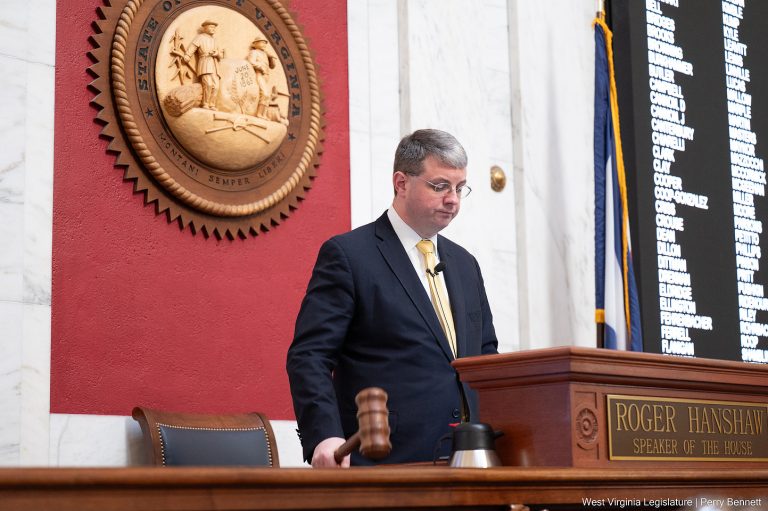
The West Virginia House of Delegates convened for the second session of the 87th Legislature at noon today.

First, letters of resignation and appointment were read. Then a quorum was established.

The rules were suspended to adopt House Resolutions 1 and 2.

House Resolution 1 amends House Rule 32 to allow the Speaker to recognize a member by name; however, members in debate cannot address one another by name. The resolution also amends Rule 82 to allow the motion to discharge to be tabled.

Two amendments to HR 1 were offered and rejected. The first amendment would have required a registered vote for the motion to table a discharge motion. This amendment was rejected with 27 in favor and 68 opposed. The second amendment would have required the video streaming and video archiving of legislative floor sessions and committee meetings. This amendment was rejected with 20 in favor and 75 opposed.

Additionally, rules were suspended to adopt House Concurrent Resolutions 1 and 2.

House Concurrent Resolution 1 invites the Governor to address the Legislature for the State of the State.

House Concurrent Resolution 2 amends Rule 31 of the Joint Rules relating to infrastructure naming resolutions.

Resolutions introduced can be found here.
Bills introduced can be found here.

Committee Meetings, Today, January 14

  • Education 2 p.m. in House Chamber

Committee Meetings, Tomorrow, January 15

  • Finance at 9 a.m. in Room 460M
  • Judiciary at 9 a.m. in Room 410M
  • Gov. Org. at 1 p.m. in Room 215E
  • Education at 2 p.m. in Room 432M
  • Energy & Public Works at 3 p.m. in Room 410M
  • The House is in recess until 6:30 p.m.

Senate Kicks Off 2026 Regular Session

The Senate convened the Second Regular Session of the 87th Legislature today at Noon.

After adopting various procedural resolutions to begin the work of the session, the body adopted Senate Resolution 2, which creates the Senate Select Committee on School Choice.

The Senate also adopted Senate Resolution 5, which designates January 14, 2026 as Foster Care Child Welfare Day at the Capitol.

The body also introduced Senate Bills 1-249 as well as 17 resolutions.

The Senate is in recess until 6:30 p.m.

Committee Meetings for Jan. 15, 2026:

Finance at 9 a.m. in 451M

Health at 1 p.m. in 451M

Interim Report: Joint Committee on Flooding

0

The Joint Committee on Flooding met yesterday to discuss disaster recovery and state emergency management.

Laura Pierce, disaster services specialist for Catholic Charities, spoke to the committee this morning about the pressing need for case management in West Virginia.

Pierce said several nonprofits seek and organically receive funding for long-term case management and recovery after disasters. She said there is currently over half a million dollars available to nonprofits for direct assistance in disaster recovery in West Virginia, but organizations are unable to access it without trained disaster case managers.

Pierce said, historically, the Voluntary Organizations Active in Disasters (VOAD) has provided long-term case management for disaster victims through federal funding. The organization received funding from FEMA 10 years ago.

As of now, VOAD has no available funding for disaster case management for existing events.

Pierce said that as the role of FEMA has shifted, funding has wavered, and nonprofit organizations have had to seek funding themselves.

Catholic Charities has received a grant that will allow it to provide disaster case manager training free for the next two years. Pierce said the lack of disaster case managers has caused stress on the long-term disaster recovery process.

When asked about the biggest issue for families receiving help following a crisis, Pierce said the six months or more after the crisis is the problem. She said families will receive immediate aid but little help afterward due to a lack of disaster case managers.

Pierce said more than 20 counties in the state have experienced disaster events within the recent past.

Pierce said Catholic Charities has covered 100% of households affected by Hurricane Helene; however, of the six recent disasters in West Virginia, three have gone without disaster coverage. Of the 1255 cases reported in West Virginia for Hurricane Helene, Catholic Charities has completed three.

During the McDowell County floods in February 2025, 3,955 households were reported to be affected. 47 million dollars in federal funding. Pierce said the households of McDowell County would likely need $ 20 million to continue supporting the county.

The last three events (go and find specifics) have not received FEMA funding approval for disaster case managers.

Pierce said West Virginia’s Disaster Recovery Trust Fund was originally established in 1990 and then was revamped in 2023. She said that since 2023, this fund has not received any allocation of funds.

Following Pierce, Catherine Clinch, president of Tidal Basin, and Eric Letvin, vice president of resiliency for Tidal Basin, spoke about the future of state emergency management. Clinch said the current federal administration has stressed the state’s role in disaster response.

Clinch said Tidal Basin would like the West Virginia Emergency Management Division to spread out its offices across the state to promote local communication between offices.

Clinch said after speaking with Matthew Blackwood, deputy director of the WVEMD, that they would look at strengthening the continuity of operations program and continuity of government.

Tidal Basin’s key points focused on enhancing training exercises, regional advocacy, funding, and the state being proactive in disaster response. Clinch said FEMA’s role is changing and might not have the same capacity to support the states.

Letvin shared ideas of how West Virginia should move forward with disaster response, such as decreasing the federal role and increasing the state role in disaster response, especially after an increase of the threshold for federal declaration.

The threshold for federal disaster declarations has increased by a factor of 4. According to Letvin, with this new factor increase, Pennsylvania, other than COVID, would not have received a declaration for these disasters since 2011.

John K. Jordan Takes Oath of Office

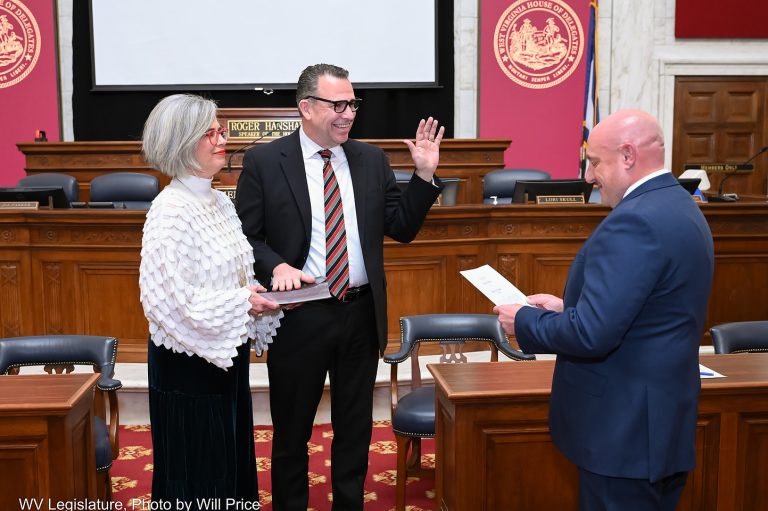
This evening, Delegate John K. Jordan was sworn in as a member of the House of Delegates. Jordan was appointed to fill the seat vacated by Brandon Steele. Clerk Jeff Pack administered the oath of office.

Jordan, the Lead Pastor of Calvary Assembly of God, accepted this appointment to become more involved in his community.

“I’ve always encouraged my congregation to get involved with the community. So, when I was asked, I decided I needed to do the same,” Jordan said.

Delegate Jordan represents the 42nd District, which is Raleigh County.

Delegate Jordan was accompanied by his wife, Stephanie, for the swearing-in ceremony. Delegates Rohrbach and Bell were also in attendance.

Interim Report: Joint Committee on Children and Families

0

The Joint Committee on Children and Families met this afternoon to hear presentations on proposed 2026 legislation. Bills presented proposed legislation on case workers, out-of-state placement, social services, and case decisions.

Presenters proposed dozens of bills, including the Case Worker Service Pilot Program bill, County Bureau of Social Service Monthly Meeting bill, Assistant Guardian ad Litem and Raise and Compensation bill.

All bills were reported to the Joint Committee on Government and Finance with a recommendation that it be introduced during the next regular session of legislature.

Interim Report: Legislative Oversight Commission on Education Accountability

0

The Legislative Oversight Commission on Education Accountability met this afternoon to hear a report on the Third Grade Success Act and the Beginning-Of-Year Benchmark/Screener Report.

The Third Grade Success Act is a program that provides additional support to students with learning deficiencies through initiative centers surrounding the science of reading, professional learning, early childhood development, writing instruction, literacy, and numeracy support.

“The department continues to ensure every child builds solid reading and math foundations by third grade,” Drew McClanahan, WVDE Legislative and Policy Officer, said

The presenter states that more than 1,120 educators and 200 administrators participate in professional learning. Literacy and numeracy networks launched a multi-tiered system offering coaching support to all districts and classrooms. Professional learning, coaching, and strategy planning are shared across counties to ensure collaborative growth and promote district-wide success

Intensive support is provided through dyslexia training, early intervention and guidance for struggling readers, ECAT training, and classroom support. Nineteen regional mathematics training sessions were provided, with over 600 participants engaging.

The presenter states that Harvard and Stanford did a study where they presented that West Virginia rose from 42nd to 11th nationally in reading growth and from 22nd to 6th nationally in numeracy growth.

We are very optimistic and thankful to this body for the Third Grade Success Act and the support to continue the work,” McClanahan said.

Transitioning from education to healthcare, Amanda McCarty, Senior Director of Health Sciences, briefed legislators on a 2025 Health Sciences and Rural Health Report Card.

The presenter states that West Virginia Health Science professions are competitive nationally and have lower tuition and debt than other states.

The West Virginia nursing board is facing an aging workforce and retention challenges. Workforce and distribution challenges are prevalent in rural areas.

There are three state-funded medical schools in the state of West Virginia. West Virginia enrolls more medical students per capita than any other state. The MCAT scores for each school are above the national average. All three schools are reported to have one of the lowest tuitions in the nation. In-state tuition ranges from $23,000 and $35,000, and out-of-state tuition ranges from 70,000 per year. Medical license pass rates are between 97 and 100 percent. Thirty percent of graduates chose to remain in the state for residency.

The presenter states that rural areas are lacking healthcare access, and medical schools in West Virginia encourage students to stay in the state for residency.

Nationally, more than 138,000 nurses have left the workforce since 2022, and 40 percent intend to leave by 2029 due to age and retirement. Workforce West Virginia estimates 1,500 job openings each year due to growth and replacement needs in the nursing workforce. The nursing workforce in West Virginia has grown 1.3 percent since the pandemic.

Also, Brian Weingart, Senior Director of Financial Aid, presented a Comprehensive Report on WV Financial Aid 2025.

There have been higher FAFSA completion rates this year than in the past 10 years.

The presenter states there will be legislation for online streaming focus groups for students to make the financial aid process easier, to eliminate burdens while maintaining integrity.

Due to the budget reconciliation from the Big Beautiful Bill, student loans will be capped and prorated starting next year, and graduate plus loans will be limited, along with loans for part-time students.

The committee then heard from Sarah Tucker, chancellor of the Higher Education Policy Commission and the Community and Technical College Council, who reported on the Dual Enrollment Pilot Program Report. Dual Enrollment allows high school students to take college-level courses, earning college credits in high school.

Dual Enrollment is now offered to private school students, public school students, and homeschooled students.

Eight thousand students have earned over 72,000 college credits in the past year. This past fall, 8,000 students enrolled. The presenter states that the growth number is in double digits each year.

Students are encouraged to enter pathways that will lead to jobs in the state, such as health science, education, social service, and welding, pathways that will lead to jobs in the state.

The presenter states that 3.6 million is needed due to the growth of the program.

Interim Report: Joint Committee on Energy and Public Works

0

The Joint Committee on Energy and Public Works met this morning to hear updates from representatives on electric transmission expansion.

PJM representatives Lori Lee, manager for Regulatory and Legislative Affairs, and Sami Abdulsalam, director of Transmission Planning, provided updates on potential enhancements across the grid to maintain system reliability and development.

PJM is responsible for 21% of the United States’ GDP and has proposed enhancements for its system over the past several years, including those for West Virginia.

Abdulsalam said existing lines have to carry more energy, leading to congestion, but with new transmission lines, overall efficiency can be improved and the costs of delivering electricity can be reduced.

Over the past 10 years, new transmission lines have provided $1.4 billion in congestion savings and upgrades over the past five years have provided ratepayers with savings of $900 million a year. In addition, the past five years have resulted in $1 billion a year in congestion savings.

PJM concluded their presentation with key points, including that transmission development promotes economic development, proposed transmission developments offer enhanced reliability to the West Virginia transmission system, future load growth will benefit from transmission assets, and allows West Virginia better surplus generation to flow out of the state.

Following PJM, Kamran Ali, Sr. vice-president of Transmission Grid Planning & Engineering for American Electric Power (AEP), spoke about the current developments with the Valley North Project.

The Valley North Project includes 260 miles of new 765-kV transmission line between Putnam County, West Virginia, and Frederick County, Maryland, along with two new substations in Hardy County, West Virginia, and Frederick County, Maryland. The line spans approximately 225 miles in West Virginia, 31 miles in Virginia, and 5 miles in Maryland.

Ali said on Thursday, Jan. 15, the organization will be engaging with stakeholders, local officials, politicians, and businesses to consider ideas and opinions about the project.

In the summer of this year, the project will be holding open public houses to gain feedback from communities. Fall 2026 will be when the proposed route is developed and regulatory information for applications will be gathered.

Ali said the project has a goal to have the least impact possible on communities and landowners.

Abby Reale, Sr. advisor for West Virginia Government Affairs and representative for First Energy, informed the committee about the development of the Gore-Doubs-Goose Creek Improvements Project (IDOUBS).

The IDOUBS project is a 44-mile project starting outside of the Gore Substation in Frederick County, Virginia, that extends east through 17 miles of Frederick County, 15 miles of Jefferson County, West Virginia, and 10 miles through Loudoun County, Virginia.

The project will also be building two new 138 kV lines through the Stonewall Substation in Clearbrook, Virginia, to the proposed Woodside substation nearby. The project will rebuild existing lines and add a 500kV line.

Reale said the organization’s goals through the project will be to enhance transmission within West Virginia and address regional needs.

Finally, Matt Pawlowski, vice-president of development for NextEra Energy Transmission, discussed the future of the MidAtlantic Resiliency Link Project and the goals behind it. Pawlowski said the MARL project is looking to enhance economic benefits, strengthen the electrical grid, and build a new substation.

The MARL project plans on building a 107.5-mile 500-kV transmission line that connects a substation in Pennsylvania to a connection point near Gore, Virginia. The project includes a new 500/138-kV substation in Frederick County, Virginia, and connects a substation on the Maryland side of the West Virginia border.

Pawlowski said West Virginia’s peak electricity demand is expected to rise by 8-12% in the summer and 10-11% in the winter over the next decade. With these increases in mind, Pawlowski said this project is to strengthen the grid, reduce outages and has been working closely with PJM to enhance the economic benefits.

The MARL project is starting this year to file state regulatory application filings. In 2027, they expect to have all state regulatory approvals. Following the approvals, in the fall of 2029, construction is planned to begin and the transmission line will be finished and in service by the end of 2031.

This schedule is subject to change as the project progresses.

Interim Report: LOCHHRA

The Legislative Oversight Committee on Health and Human Resources Accountability met this morning.

The committee first heard from the Commissioner of the Bureau of Behavioral Health about certified community behavioral health clinics. There are 495 CCBHCs in 46 states. West Virginia has six CCBHCs in several locations: Parkersburg, Morgantown, Summersville, Beckley, Princeton, and Huntington. Last year, 23,084 individuals were interviewed at these clinics. With these clinics, there has been a 37 percent decrease in ER visits for mental health and a 72 percent decrease in time spent in hospitals for mental health. Patients in the clinics have seen an increase in employment and education, as well as a reduction in substance use.

The Secretary of Human Services provided information about changes made to payments and the PATH system. He stated the changes were made due to a lack of oversight. The PATH system is contracted with Optum for its ninth year. Technology is a major issue with changing the system, as part of it is modern technology, but several programs remain on the mainframe. An effective integration has not been identified.

The Secretary of Health Facilities provided an update on the state-operated hospitals, including Welch, Bateman, and Sharpe.

Interim Report: Select Committee on Veterans’ Affairs

0

The Select Committee on Veterans’ Affairs met this evening and heard a presentation on Veteran benefits in West Virginia. Approximately 30% of all veterans receive some form of disability compensation monthly, which is when the VA provides a tax-free benefit designed to compensate veterans with injuries that are service-connected, and that number rises to 40% for post-9/11 GWOT veterans.  Veterans are assigned a rating that determines the amount of money they will receive monthly. Veterans’ ratings at a 10% receive roughly $170, and 100% ratings receive roughly $4,000 a month. Over 9,000 veterans in West Virginia have 100% ratings, bringing in over $400 million a year in the state. Honorable discharge is not needed to receive the disability benefit. It has implications for access to healthcare and education for veterans and their families, who rate at 100%. The entirety of tuition at WVU would be covered for veterans rated at 100%. Benefits can be applied for on paper or online; legal assistance is not required.

The presenter stated that the main shortfalls for WV veterans are:

  • Access to paperwork
  • Access to reliable internet
  • Access to medical records
  • Inability to reach someone on the phone
  • Access to knowledge and a lack of education from the VA on navigating their system
  • Compensation and Pension examinations are hours away, scheduled on short notice.
  • Erroneous materials coming out of VA

The presenter also states that unlawful companies are charging veterans thousands of dollars illegally for “consulting” services and advisory services on claims. The presenter displayed letters that the VA OGC sent outlining illegal practices. Presently, Texas, North Carolina, Maine, New Jersey, and various other states are pursuing lawsuits against companies.

The presenter states that the legislature could help by passing a bill that creates a cause of action for consumer protection against those not in compliance with federal law.

Previous bills, known as the Plus Act and the GUARD Act, were introduced in prior sessions but not passed. The presenter states that all anyone needs to do is comply with the existing law.

Interim Report: Joint Standing Committee on Education

0

The Joint Standing Committee on Education met this afternoon to hear updates from West Virginia educational organizations.

To start the meeting, Monica Beane, head of educational partnerships for ETS, and Lisa Colon-Durham, director of educational partnerships for ETS, spoke about the nonprofit and provided information on new routes for educators to take the PRAXIS exam. These routes include programs such as Free After Three, Praxis Bridge, and Praxis Steps.

The ETS’ Free After Three program allows candidates to retake the Praxis exam free of charge after their third failed attempt. Colon-Durham said this reflects the program’s commitment to future educators who demonstrate resilience and to alleviating financial barriers for aspiring educators. Praxis Bridge offers candidates who scored within one point of the standard error of measurement an alternative to the exam. Candidates who are eligible for Praxis Bridge can instead opt for a professional module that covers the content, provides study materials, and assesses their understanding.

Praxis Bridge was officially deployed in February of 2025 for elementary education, but West Virginia piloted the program in November of 2024. Following elementary education, Praxis Bridge launched in multiple subjects over the course of 2025.

In addition to these programs, ETS will be introducing Praxis Steps with the new Elementary Education Fundamentals Test in the spring of this year. Praxis Steps allows for educators to have flexibility, targeted retakes, and provides more ways for educators to succeed.

The next presentation was given by the June Harless Center at Marshall University, featuring Tarabeth Heineman, executive director; Maggie Luma, chief of staff; and Kelly D. Bradley, dean of the College of Education and Professional Development.

Luma presented a sample of programs that the June Harless Center provides to the state. The Harless Center received this year $100,000 to support early childhood language. The Harless Center has also taken over the Dolly Parton Imagination Library in West Virginia.

In West Virginia, 56% of eligible children are enrolled in the program. Luma said this equates to 49,000 children in West Virginia.

Since 2019, 3,672,299 books have been delivered to children in the state.

According to Heineman, the Center came not only to present their programs, but also to share the impact of funding cuts from previous years.

In 2008, the state funding for the June Harless Center was established at $300,000. In 2014, the funding amount was cut to $274,889. In 2025, the state funding for the Center was zeroed out.

Heineman said that with this most recent funding cut, the Center’s educator reach has dropped by 62% for their STEAM team.

Following the June Harless Center presentation, the Mountaineer Mathematics Master Teachers organization (M3T) presented its goals and its past and current reach. This information was presented by Joanna Burt-Kinderman.

From 2020 to 2026, the M3T Network had 42 leaders across 29 districts, and teachers participating from 37 districts. The network also included upwards of 300 teachers in local improvement teams and served over 30,000 students.

The M3T is looking towards the future with goals of increasing teacher retention, supporting teachers across district lines, promoting teacher agency, and sustaining investment in WV.

Next, the West Virginia Public Education Commission shared programs like STEAM TAC, Sparking Early Literacy, and Teachers’ Ascend. The WVPEC was represented by Donna Peduto, executive director, and Canyon Lohnas, program specialist.

STEAM TAC is a program that offers classroom visits and professional learning opportunities, enhances STEAM learning through hands-on immersions led by STEAM specialists, and, since the beginning of the program, has reached 63,000 students and 900 teachers in all 55 counties.

Lohnas said with their newest program, Teachers’ Ascend, they aim to alleviate the teacher shortage in West Virginia. During the 2024-2026 Pilot Program, 11 new teachers began working in West Virginia.

Lohnas said outside of alleviating the teacher shortage, the WVPEC is looking forward to exploring sustainable funding models, expanding to high shortage areas, and advocating for systems-level changes.

Sparking Early Literacy funds projects in school readiness; each project in phase 3 demonstrated success and has secured funding for continuation. Over the course of the program, 27 unique projects have impacted 5000 students across 24 counties and have brought a $1.3 million investment to West Virginia.