Tuesday, June 2, 2026
Home Blog Page 4

House Advances Adjunct Teaching Bill

The West Virginia House of Delegates advanced several bills, including the following:

Senate Bill 155 would create an adjunct teaching permit. This permit would allow individuals to fill vacant teaching positions, offer new classes, or enhance a program. To qualify for an adjunct teaching permit, individuals must have four years of experience in the area they will teach or a college degree in that area. The individual will be required to submit a criminal background check. The adjunct permit is valid for 1 year and is renewable.

Senate Bill 137 would change parole eligibility and sentencing for second-degree murder and voluntary manslaughter. This bill would require a person convicted of second-degree to serve 15 years before becoming parole eligible. Under current law, the minimum time served before parole eligibility is 10 years. This bill would require someone convicted of voluntary manslaughter to serve five years, rather than three, to become parole eligible.

Senate Bill 1060 would establish a West Virginia certification for thoroughbred horses. To be a West Virginia certified thoroughbred, the horse must be registered with the West Virginia Thoroughbred Breeds Association, prior to its three year-old year finished six consecutive months of verifiable residence in the state. In addition to this, these horses will be subject to an affidavit, certification, or audit/inspection by the WV Thoroughbred Breeders Association, ineligible to participate in WV Accredited Stakes Races or WV Breeders Classics, and will be ineligible for the West Virginia Thoroughbred Fund.

In addition to the passage of bills, the House amended Senate Bill 467 and Senate Bill 712.

S.B. 467 would allow businesses to enforce Purple Heart parking spaces. This bill also establishes penalties for those who park in these spaces who do not have a Purple Heart medal.

On the floor, the Energy and Public Works Committee proposed an amendment that would make it so people could not be convicted of these penalties if they show a passenger in their car is a Purple Heart recipient. This amendment was adopted.

S.B. 712 would allow the Department of Highways to permit applicants to install cattle guards on public roads.

On the floor, the Energy and Public Works Committee proposed an amendment that would allow the DOH to require signage to notify others of the cattle guard, and the removal of the cattle guards can be ordered by the DOH.

Committee Meetings, Today, March 9

Committee Meetings, Tomorrow, March 10

The House is adjourned until 11 a.m. Tuesday, March 10.

Senate Education Advances School Funding Bills

The Senate Education Committee met on Monday morning and advanced several House Bills concerning school funding and higher education.

House Bill 5438 would modify the public-school funding formula to support instructional programs, technology, and teacher and leadership development.

Unused funds from the Department of Education could be reappropriated for initiatives like the Third Grade Success Act and for permitting counties to use up to 50% of teacher and leader induction funding for projects requested through the Safe School Fund.

Senator Eric J. Tarr (R – Putman, 04) raised concerns about Cutting 50% of the teacher and leader program.

Senator Tarr proposed an amendment striking language in the bill that would prevent funding from being cut from the Teacher and Leader Program, which would remove protections for that program’s funding.

The amendment, which protected teacher and leader program funding from being redirected, was adopted.

The bill, as amended, was reported to the full Senate with a recommendation of passage.

House Bill 4087 would establish the West Virginia-Ireland Education Alliance to create partnerships between West Virginia and Ireland higher education institutions.

The bill also allows partnered two-year and four-year colleges to apply for grants of up to $50,000 for student exchanges and collaborative programs, with awards determined by the Higher Education Policy Commission.

The bill was reported to the full Senate with a recommendation of passage, first being sent to the committee on Finance.

House Bill 5163 would exempt child-care programs operated by county boards of education exclusively for the children of their employees or students from certain state child-care licensing requirements.

The State Board of Education could establish its rules to ensure the health, safety, and welfare of children enrolled in those programs.

The bill was reported to the full Senate with a recommendation of passage, first being sent to the committee on Finance.

House Bill 5453 would establish a new school funding formula beginning in the 2027-2028 school year.

The bill sets a base funding amount of $6,500 per student and creates a Supplemental School Aid Fund to provide additional funding for special needs students and certain extraordinary expenses, with annual legislative oversight of fund distribution.

Senator Garcia proposed an amendment to provide funding for special education and special needs students’ services for the years 2026 and 2027.

“With the HOPE scholarship, if they need more money, we give them more money every time, and I have six schools in Marion County that are on the chopping block, and this is another opportunity for all of us to give them some relief,” stated Joey Garcia (D – Marion, 13).

The amendment was rejected.

The bill was reported to the full Senate with a recommendation of passage, first being sent to the committee on Finance.

House Bill 5511 would allow a county school board to make a lump-sum payment of up to $6,000 for accrued and unused personal leave when a full-time school employee dies.

The payment would be made to the employee’s estate and would not include retirement contribution deductions or count toward the employee’s final average salary.

The bill was sent to the full Senate with a recommendation of passage, first being sent to the committee on Finance.

House Judiciary Holds Sunday Meeting

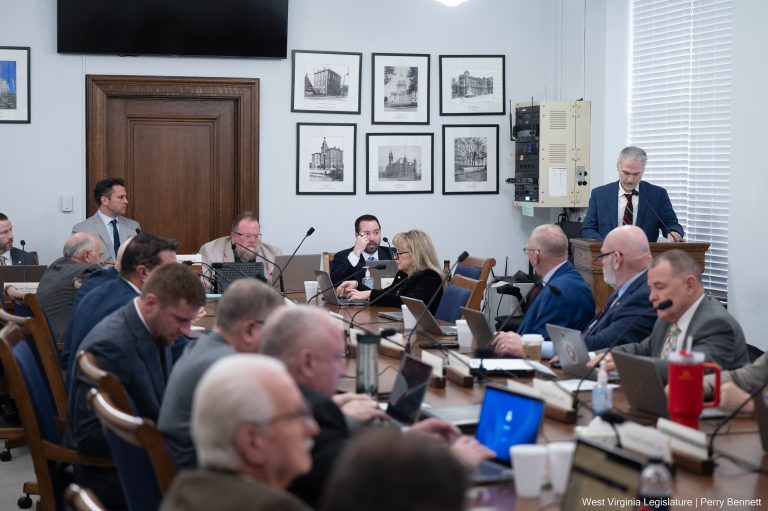
The House Judiciary Committee met Sunday afternoon.

Markup & Passage

Senate Bill 459 adds step-siblings to the list of meaningful bonds to be considered in the best interest of a child.

Senate Bill 558 creates a new law for aggravatingly passing or failing to stop for a stopped school bus. The bill was amended to include language from House Bill 5587, which authorizes the installation of video cameras on school buses to capture violations of the law.

Senate Bill 643 discontinues the WV Supreme Court of Appeals Public Campaign Financing Program. Remaining funds shall be transferred to General Revenue.

Senate Bill 670 would create and protect series limited liability companies. The bill sets definitions, duties, responsibilities, and duration of a protected series of limited liability companies. The bill was amended to add language from House Bill 4546, relating to reporting requirements, and House Bill 5227, relating to delinquent check fees and veteran-owned business logo.

Senate Bill 794 clarifies that the Intermediate Court of Appeals lacks appellate jurisdiction over appeals from adoption orders or decrees. Only the Supreme Court will handle these appeals.

Senate Bill 944 expands the list of eligible federal law enforcement officers authorized to enforce the law in the state to include military law enforcement.

Senate Bill 947 allows the State Registrar to provide copies of birth and death records to homeless individuals under 18.

Senate Bill 1026 increases the penalties for disturbing religious worship. The bill increases the penalties from six months to a year and fines ranging from $250 to $1,000.

Committee Hearing

Senate Bill 54 establishes criminal penalties for abuse or neglect of incapacitated adults by a caregiver.

Senate Bill 506 allows county commissions to lease, rent, or permit the use of county-owned wireless towers. The bill does set criteria and prohibited uses.

Senate Bill 651 allows the State Auditor to engage a private auctioneer to sell certain tax-delinquent properties. It requires the highest bidder to pay the buyer’s fee to the private auctioneer.

Senate Bill 900 adds correctional and detention facilities to the list of facilities where unmanned aircraft cannot be flown.

Senate Bill 1008 would amend the procedures for handling asbestos and silica litigation and enhance the judicial system’s ability to manage it.

House Gov. Org. Reconsiders Public Water Bill

The House Committee on Government Organisation advanced several bills to the floor.

Senate Bill 167 would allow municipalities to fill out an application to the State Auditor for “good cause,” which would allow municipalities to conduct late meetings and file late reports. This bill was reported to the floor.

Senate Bill 233 would make the Commissioner of Labour unable to require that someone who is seeking a Class 1 license to administer polygraphs have a bachelor’s degree. In addition, this bill would make it so the Commissioner of Labour could not require someone seeking a Class 2 license to administer polygraphs to have an associate’s degree. This bill was reported to the floor.

Senate Bill 586 would change the requirements for public water systems. This bill would make it so the Secretary of the Department of Health can not make rules that require public water systems or businesses to have low-hazard backflow preventers inspected more than once every three years. A backflow preventer is a device used to prevent contaminated water from flowing backwards into the public water supply. This bill was not advanced to the floor after being voted down, originally, but was then reconsidered and advanced to the floor. 

A motion to reconsider the bill was proposed by Delegate Adam Burkhammer (R – Lewis, 64). Burkhammer said he made the motion to support small businesses by reducing the costs for evaluating backflow preventers.

Senate Bill 603 would require that one citizen member of the state’s property valuation training and procedures commission have knowledge in agriculture. This bill was reported to the floor.

Senate Bill 703 would establish the Social Work Licensure Compact. This bill would allow for reciprocity between states for social workers to improve public access to social work services. The Compact will be regulated by the State to protect public health and safety through the current licensing system. This bill was reported to the floor.

Senate Bill 755 would remove state agencies’ requirement to submit annual reports for small, women and minority-owned businesses to the Department of Administration. This bill was reported to the floor.

Senate Bill 756 would allow the purchasing director to give authority to state spending units to use best value procurement to spend money without needing the director’s approval. This bill was rejected.

Senate Bill 878 would create the Office of Entrepreneurship within the Office of the Secretary of State. This bill was reported to the committee on Finance.

Senate Bill 970 would exempt volunteer fire departments from raffle regulations. This bill was advanced to markup and discussion.

Senate Bill 1011 would allow volunteer fire departments to submit their audits electronically. This bill was advanced to markup and discussion.

House Education Tables SB 745 and Advances SB 890

House Education met this afternoon; one bill was tabled, while another advanced.

Markup & Passage

Senate Bill 745 would update the school nutrition program. The bill was tabled.

Senate Bill 890 would change the school calendar from days to hours. The bill advances

Committee Hearing

Senate Bill 63 creates the Sustaining Opportunities for Academics in Rural Schools Act (SOAR). It would allow a good-standing charter school wishing to open an additional location to submit an abbreviated application.

Senate Bill 778 would allow students to receive timely educational support by allowing nurse practitioners, physician assistants, and physicians to certify eligibility for homebound services.

Senate Bill 804 would provide that students participating in good standing in an extracurricular sport are not required to comply with the statutory middle school and high school physical education requirements.

Senate Bill 899 would permit teachers with a minimum of 15 years of experience teaching at the elementary, middle, or high school level to be certified to work as school principals at the school level in which they have the 15 years of experience teaching if they also successfully complete a year-long program developed and administered by the West Virginia Department of Education to ensure the candidate demonstrates competence in the core elements of school administration.

Senate Concurs and Completes 5 Bills

This morning, the Senate convened and adopted Senate Resolution 58, regarding Girl Scouts Day, and Senate Resolution 59, regarding Mingo County Day.

The Senate also concurred with House amendments and completed legislative action on five bills.

Senate Bill 58 would make changes to the Division of Motor Vehicles’ Safety and Treatment Program and the Motor Vehicle Alcohol and Drug Test and Lock Program for drivers whose licenses were revoked for DUI-related offenses.

The bill would establish a grievance and appeals process for participants and prohibit requirements for minimum driving time, total miles driven, or how often a participant must use their vehicle in the ignition interlock program, which is a system requiring a driver to blow into a breathalyzer attached to their car to start it.

Senate Bill 659 would prohibit municipalities from restricting homeowners from building at least one accessory dwelling unit (ADU), which is a smaller, independent residential unit on the same property as a single-family home.

The bill would require cities to allow these units by right and limit certain local regulations, such as requiring extra parking or restrictive design standards.

House Bill 4022 would require the state to allocate and station child protective services workers in counties based on population, referrals, and average case load.

This bill would require an annual report to the Legislature detailing staffing allocations and explaining any changes that lasted more than one week.

House Bill 4433 would modify West Virginia’s human trafficking laws by increasing penalties for trafficking, forced labor, debt bondage, and sexual servitude.

The bill also defines “illegal alien” as any individual who has entered the United States without authorization and is subject to removal if apprehended, or an individual who has lawfully been admitted into the United States but has since violated the terms of admission or is without legal status.

Under the bill, “illegal aliens” are not eligible for restitution.

House Bill 5682 would move $72 million from the Governor’s Civil Contingent Fund into the state’s unappropriated surplus and create a supplemental appropriation for the Higher Education Policy Commission.

The funds are intended to support biomedical sciences research, including:

* $30 million for Marshall University School of Medicine
* $32 million for West Virginia University School of Medicine
* $5 million for WVU Dental School
* $5 million for West Virginia School of Osteopathic Medicine

The Senate is adjourned until 11 a.m. on Monday, March 9, 2026.

House Honors Former Senator Tony Whitlow

The West Virginia House of Delegates advanced Senate Bills 607, 690 and honored former delegate and senator Tony Whitlow.

House Concurrent Resolution 13 honors Tony Whitlow. Whitlow served West Virginia in the House of Delegates in 1970, 1972, 1976, 1980, and 1982. Whitlow was elected to the West Virginia Senate from the tenth senatorial district in 1984 and reelected in 1988 and 1992.

Senate Bill 607 would authorize airport authorities under state law to use project delivery methods in accordance with the Federal Aviation Administration. This bill would allow airports in West Virginia to plan and construct airport infrastructure projects funded through the Federal Aviation Administration’s Airport Improvement Program.

Senate Bill 690 would expand the options the Division of Highways has for highway projects and modify the money limits for the Highway Design-Build program. In addition to the changes to the Highway Design-Build program, this bill would also allow the Commissioner of Highways to enter into agreements that include the Construction Manager/General Contractor contracting procedures.

In addition to the passage of bills, the House amended Senate Bill 137.

Senate Bill 137 was amended on second reading. S.B. 137 would change parole eligibility and sentencing for second-degree murder and voluntary manslaughter. This bill would require a person convicted of second-degree to serve 15 years before becoming parole eligible. Under current law, the minimum time served before parole eligibility is 10 years. This bill would require someone convicted of voluntary manslaughter to serve five years, rather than three, to become parole eligible.

This bill was amended by the Judiciary committee to set dates for the new parole eligibility to not infringe with ex post facto laws. This amendment also clarifies that victims and prosecutors can attend parole hearings either virtually or in-person.

Committee Meetings, Today, March 6

Committee Meetings, Sunday, March 8

Committee Meetings, Monday, March 9

The House is adjourned until 11 a.m. Monday, March 9.

Senate Judiciary Moves 4 Bills Friday Morning

The Senate Judiciary Committee advanced four bills during a brief meeting Friday morning.

House Bill 4138 would expand the list of offenses that require individuals convicted of certain crimes to register with the state police, a process often referred to as sex offender registration.

Specifically, the legislation would mandate registration for those convicted of sexual extortion and aggravated sexual extortion, crimes previously covered under §61-8B-6 of the West Virginia Code.

It also would clarify that individuals convicted of the repealed offense of sexual assault of a spouse, also formerly under §61-8B-6, must continue to register. Furthermore, the bill would add new categories of offenses to the registration requirement, including the nonconsensual disclosure of private intimate images (§61-8-28a) and any crime listed under §61-8-32 of the code.

These additions are intended to ensure that individuals convicted of these offenses are subject to the same registration and notification requirements as those convicted of other sex offenses, contributing to public safety by tracking individuals with a history of certain criminal behavior.

House Bill 5067  would modify the powers and duties of the Director of the Division of Administrative Services in West Virginia. Specifically, it would clarify that the Director can enter into agreements with law enforcement agencies within the Department of Homeland Security to help them apply for and manage federal grant programs that are exclusively for law enforcement or are specifically invited by the federal program.

The legislation also would remove the authority of the Deputy Secretary of the Department of Homeland Security to hear certain appeals and instead designates the Office of Administrative Hearings as the body responsible for hearing appeals from any contested matters before a subcommittee of the Governor’s Committee on Crime, Delinquency and Correction.

House Bill 5406 would make several changes to West Virginia’s laws regarding driving under the influence (DUI).

Primarily, the bill would designate the West Virginia State Police Forensic Laboratory as the authority responsible for certifying secondary chemical tests, their methods, and the approval of preliminary breath analysis devices, taking this role away from the Bureau of Public Health.

The legislation would also update the blood alcohol concentration thresholds for juveniles, remove propoxyphene from the list of substances tested for in blood analyses, and eliminate outdated references to urine testing. Additionally, it would allow individuals trained in phlebotomy to draw blood for these tests.

House Bill 5444 would increase the monthly fee that parolees must pay for supervision from $40 to $50, with the amount still based on their ability to pay.

Additionally, the legislation outlines factors the Division of Corrections and Rehabilitation must consider when determining a parolee’s financial ability to pay the fee, such as income, assets, debts, and necessary employment-related expenses. The bill also specifies conditions under which substance abuse treatment or reporting to a day report center can be imposed as part of parole.

All four bills were recommended to the full Senate for passage.

House Completes Action on Budget Bill

This evening, the House of Delegates reconvened to take up Senate Bill 250, Budget Bill. The Chair of Finance presented the changes from the previously presented bill. This budget is the work of a compromise between the House and the Senate. The Senate passed it this morning.

The House of Delegates completed legislative action on Senate Bill 250. The Budget Bill allocates the $5,484,667,000 of General Revenue as follows:

  • Legislative
    • Senate: $6,652,206
    • House of Delegates: $12,620,268
    • Joint Committee $12,722,947
  • Judicial: $176,499,021
  • Executive
    • Governor’s Office: $6,250,122
    • Custodial Fund: $622,377
    • Civil Contingent Fund: $10,100,000
    • Auditor’s Office: $2,779,793
    • Treasurer’s Office: $3,730,187
    • Department of Agriculture: $14,719,072
      • Meat Inspection Fund: $1,214,444
      • Agricultural Award Fund: $15,000
      • WV Agricultural Land Protection Authority: $111,862
    • West Virginia Conservation Agency: $12,417,443
    • Attorney General: $8,023,360
    • Secretary of State: $1,171,797
    • State Election Commission: $7,508
  • Department of Administration
    • Office of Secretary: $16,223,859
    • Division of Finance: $825,887
    • Division of General Services: $26,463,626
    • Division of Purchasing: $1,024,457
    • Travel Management: $1,195,454
    • Commission on Uniform State Laws: $65,550
    • WV Public Employees Grievance Board: $1,178,156
    • Ethics Commission: $673,154
    • Public Defender Services: $46,010,978
    • Division of Personnel: $900,000
    • Committee for the Purchase of Commodities and Services from the Handicapped: $4,055
    • West Virginia Prosecuting Attorneys Institute: $818,747
    • Office of Technology: $7,000,000
    • Real Estate Division: $888,578
  • Department of Commerce
    • Division of Forestry: $7,312,143
    • Geological and Economic Survey: $3,334,758
    • Division of Economic Development: $16,844,700
    • Office of Energy: $1,036,585
    • Division of Labor: $1,743,200
    • Division of Natural Resources: $31,658,977
    • Division of Miners’ Health, Safety, and Training: $12,949,136
    • Board of Coal Mine Health and Safety: $360,281
    • WorkForce West Virginia: $2,075,340
    • Office of the Secretary: $3,134,244
    • State Board of Rehabilitation: $16,227,477
  • Tourism
    • Office of the Secretary: $21,050,127
    • Division of Culture and History: $6,689,995
    • Library Commission: $1,380,493
    • Educational Broadcasting Commission: $3,859,496
  • Department of Education
    • School Lunch Program: $2,511,490
    • State Department of Education: $223,525,706
    • Aid for Exceptional Children: $36,913,699
    • State Aid to Schools: $2,010,884,589
    • Vocational Division: $38,766,049 Now $38,703,506
    • WV School for the Deaf and the Blind: $14,511,425
    • School Building Authority: $34,000,000
  • Department of Environmental Protection
    • Environmental Quality Board: $136,671
    • Division of Environmental Protection: $7,807,802
    • Air Quality Board: $76,645
  • Department of Health
    • Central Office: $7,339,926
    • Office of Shared Administration: $4,492,893
    • Bureau for Public Health
      • Office of Commissioner: $4,492,893
      • Health Statistics Center: $638,606
      • Office of Environmental Health Services: $3,652,860
      • Office of Epidemiology and Prevention Services: $2,997,605
      • Office of Laboratory Services: $4,172,175
      • Office of Maternal, Child, and Family Health
        • Children’s Special Care: $1,685,672
        • Infant, Child, Adolescent, Young Adult Health: $2,030,040
        • Maternal, Child, and Family Health Epidemiology: $469,195
        • Community Health: $435,508
        • Women’s and Family Health: $2,557,262
        • WV Birth to Three: $17,156,198
      • Office of Medical Cannabis: $1,218,359
      • Office of Nutrition Services: $38,540
      • Commission for Deaf and Hard of Hearing: $242,921
      • Center for Local Health: $20,305,818
      • Office of Chief Medical Examiner: $14,138,525
      • Office of Emergency Medical Services: $5,332,052
      • Office of Threat Preparedness: $5,595
      • Office of Community Health and Health Promotion: $9,160,839
      • Human Rights Commission: $1,563,667
      • Office of Inspector General: $8,752,760
    • Department of Human Services
      • Division of Human Services: $202,097,379
      • Office of Shared Administration: $27,996,004
      • Bureau for Medical Services
        • Office of the Commissioner: $901,324
        • Medical Services Administration: $47,412,257
        • Policy and Programming: $207,232,063
        • Home and Community Based Waiver Programs: $162,553,454
      • Bureau for Social Services
        • Office of Commissioner: $31,064,017
        • Children’s Services: $43,092,266
        • Adoption: $85,350,822
        • Foster Care: $202,733,826
        • Adult Services: $6,350,984
        • CPS Caseworkers: $33,679,906 Now $33,711,856
        • Caseworkers: $13,916,220
        • APS Caseworkers: $5,984,002
        • YS Caseworkers: $6,564,776
      • Department of Health Facilities
        • Central Office: $7,743,609
        • Health Facilities Capital Projects Fund: $550,000
        • Welch Community Hospital: $24,216,810
        • Sharpe Hospital: $140,131,859 Now $105,131,859
        • Mitchell-Bateman Hospital: $63,393,315
        • Sharpe Hospital – Transitional Living Facility: $2,366,766
      • Department of Homeland Security
        • Office of the Secretary: $4,296,125
        • Division of Emergency Management: $9,145,657
        • Division of Corrections and Rehabilitation
          • WV Parole Board: $1,288,692
          • Central Office: $360,425
          • Correctional Units: $371,824,592
          • Bureau of Juvenile Services: $61,885,429
        • WV State Police: $116,510,428
        • Division of Protective Services: $3,990,124
        • Criminal Justice Fund: $24,740,215
        • Division of Administrative Services: $6,038,001
      • Department of Revenue
        • Office of Secretary: $29,687,240
        • Tax Division: $32,263,563
        • State Budget Office: $1,136,629
        • WV Office of Tax Appeals: $1,223,334
        • State Athletic Commission: $36,075
      • Department of Transportation
        • Division of Multimodal Transportation Facilities: $1,353,865
          • State Rail Authority: $2,809,484
          • Public Transit: $2,982,129
          • Aeronautics Commission: $993,394
        • Department of Veterans’ Assistance: $15,946,337
          • Veterans’ Home: $1,968,297
        • Bureau of Senior Services: $6,580,366
        • WV Council for Community and Technical College Education
          • Control Account: $14,862,985
          • Mountwest: $7,266,540
          • New River: $7,427,480
          • Pierpont: $8,670,830
          • Blue Ridge: $10,293,911
          • WVU-Parkersburg: $12,810,316
          • Southern WV CTC: $10,109,295
          • WV Northern CTC: $9,488,092
          • Eastern WV CTC: $2,504,429
          • BridgeValley: $9,452,680
        • Higher Education Policy Commission
          • Control Account: $82,987,803 Now $83,862,365
          • WVU School of Medicine: $22,987,917
          • WVU General Administration: $29,936,520
          • Marshall University School of Medicine: $10,320,177
          • Marshall University Administration: $62,171,347
          • WV School of Osteopathic Medicine: $6,647,449
          • Bluefield State University: $7,373,016
          • Concord University: $12,044,454
          • Fairmont State University: $21,428,966
          • Glenville State University: $8,228,878
          • Shepherd University: $14,126,797
          • West Liberty University: $10,879,707
          • West Virginia State University: $18,445,688
          • WVNET: $2,028,906
        • Adjutant General
          • State Militia: $17,077,459
          • Military Fund: $78,887

Aside from the General Revenue Fund, the totals for other revenue funds were provided:

  • State Road Fund: $2,140,737,875
  • Special Revenue Funds: $2,719,106,817
  • Lottery Revenue: $154,006,000
  • Excess Lottery Funds: $334,612,000
  • Federal Funds: $9,729,228,617
  • Federal Block Grants: $725,016,495
  • General Revenue Surplus: $245,350,000
  • Lottery Surplus: $16,750,000
  • Excess Lottery Surplus: $21,345,488

The House is adjourned until 11 a.m. tomorrow March 6.

Vape Safety Act Bill Clears Senate HHR

The Senate Health and Human Resources Committee met on Thursday afternoon and advanced four bills regarding child welfare, medical physician education, pharmacy benefit managers, and the vape safety act.

House Bill 5214 would require parents who have been adjudicated for child abuse or neglect to undergo lab-confirmed drug testing before their child is returned home.

If a parent tests positive for alcohol or controlled substances without a valid prescription or medical marijuana card, the child cannot be reunified until the issue is addressed, and the court must hold a hearing within 10 days.

Senator Joey Garcia (D – Marion, 13) proposed an amendment that would strike language requiring the child to be removed from their parents’ home immediately if the parent tests positive and instead require the court to make that decision.

The amendment was adopted.

Senator Patricia Rucker (R – Jefferson, 16) proposed an amendment clarifying that a parent can only be tested for drugs if reasonably suspected by the court or the department.

The amendment was adopted.

The bill, as amended, was reported to the full Senate with a recommendation of passage, first being sent to the committee on Judiciary.

House Bill 4951 would require all physicians, podiatrists, and osteopathic physicians in West Virginia to complete continuing medical education (CME) in nutrition as part of their biennial license renewal.

The bill is intended to ensure that medical professionals maintain up-to-date knowledge in nutrition to support patient care.

Senator Tom Takubo (R – Kanawha, 17) proposed an amendment clarifying that new and renewal licensees would be required to complete the medical education in nutrition once, and current licensees will continue the nutrition education update when recommended by the Board of Medicine.

The amendment was adopted.

The bill, as amended, was reported to the full Senate with a recommendation of passage.

House Bill 5430 would prohibit pharmacy benefit managers (PBMs) from managing benefits for any pharmacy they own or have an affiliate in West Virginia.

The bill would require PBMs to pay all pharmacies at least the national average drug cost plus a $10.49 dispensing fee, and prevent them from charging extra fees, secretly adjusting payments, or treating 340B pharmacies that serve low-income patients differently.

This bill is intended to ensure that pharmacies in West Virginia are treated fairly by pharmacy benefit managers (PBMs) and promote transparency and better oversight of how pharmacies get paid in West Virginia.

“If we do not hold PBMs accountable, independent pharmacy will be a thing of the past, and that concerns me with rural healthcare access in the state of West Virginia,” stated Devonna Miller West, a practicing pharmacist in Southern West Virginia who opened her own pharmacy in 2006.

Senator Tom Takubo (R – Kanawha, 17) expressed the importance of independent pharmacies in rural West Virginia due to patients not having primary doctors in hospitals that can provide the familiarity and personal and consistent patient care that independent pharmacies can.

The bill was reported to the full Senate with a recommendation of passage.

House Bill 5437 would establish the Creating the Vape Safety Act.

This bill would require retailers that sell vape products, tobacco-derived products, and similar items to obtain a license issued by the Alcohol Beverage Control Commissioner or a duly authorized agent thereof.

A vape or smoke shop license or license renewal could only be granted if the applicant satisfies the following, but isn’t limited to:

  • United States citizen
  • The applicant’s background, criminal record, habits, and associations don’t compromise the public interest of citizens and weaken the effective regulation of vapor products.
  • The applicant has not been convicted of perjury, false swearing, or any crime punishable by imprisonment for more than one year under the applicable law of any state or foreign country.

The bill was sent to the full Senate with a recommendation of passage.