
Tuesday, June 2, 2026
Home Blog Page 5

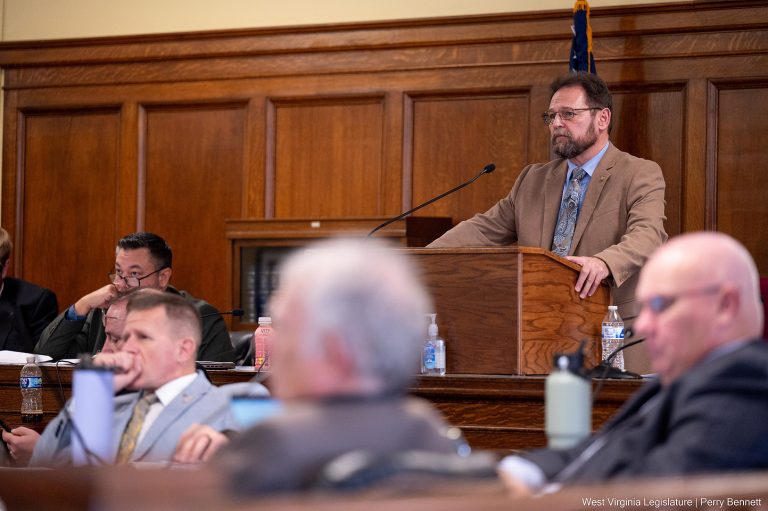
House Education Hears Public About School Nutrition

The House Education Committee heard three bills this afternoon.

Senate Bill 745 would change the requirements for school nutrition programs. This bill would require that no more than 10% of daily calories be served in a school meal, would prohibit specific ingredients from being provided to children, and would also require ingredient lists to be posted on the school’s website. This bill was advanced to markup and discussion.

This bill would prohibit the following ingredients:

  • Titanium dioxide
  • Butylated hydroxytoluene (BHT)
  • Butylated hydroxyanisole (BHA)
  • Tert-butylhydroquinone (TBHQ)
  • Sodium benzoate
  • Propyl gallate
  • Azodicarbonamide
  • Aloe vera
  • Propylparaben
  • Potassium bromate
  • Butylparaben
  • Acetaldehyde
  • Propylene oxide
  • Ethoxyquin
  • Acrolein
  • Aspartame
  • Sucralose
  • Acesulfame K
  • Diacetyl
  • Octyl gallate
  • Dodecyl gallate
  • Calcium bromate
  • Calcium sorbate

Senate Bill 913 would remove the annual report requirement for the WV Research Trust Fund. This bill was advanced to markup and discussion.

Senate Bill 1064 would redefine “long-term substitute” for public schools. This new definition is, “Long-term substitute” means a substitute employee who fills a vacant position that the county superintendent expects to be a permanent position…” This bill was advanced to markup and discussion.

House Gov. Org. Advances Two Bills to Markup and Passage

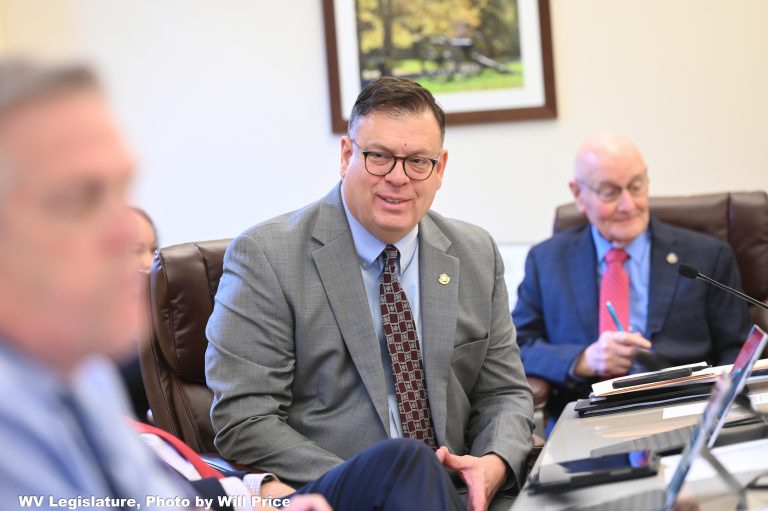
The House Committee on Government Organization met this afternoon.

Committee Hearing

Senate Bill 553 would allow contractor licenses to be transferred to an immediate family member (a spouse, child, sibling, or parent) if the person receiving the license is involved in the management or operation of the business. The individual must employ individuals who meet the minimum qualifications for applicants for examination and licenses.

Senate Bill 1059 would allow agreements between solid waste motor carriers and their commercial customers with terms of more than one year.

Senate Passes Budget Bill on Day 51

The Senate met on Thursday morning with a light and procedural agenda.

The Senate body received messages from the House, adopted Senate Resolution 57, advanced all bills on first reading, and received reports from Senate committees.

The Senate also advanced Senate Bill 250, known as the “Budget Bill,” that was amended and reported to the House of Delegates for consideration.

Senate Resolution 57 would designate the month of March as the American Red Cross Month. The Resolution states “those who serve with the American Red Cross Central Appalachia Region help light the way during emergencies, whether it’s delivering shelter, food, and comfort after disasters; providing safe, lifesaving blood for patients facing conditions like cancer, childbirth complications, and traumatic injuries; assisting military members, veterans, and their families with 24/7 global support.”

Afternoon Meetings:

Military at 12:30 p.m. in Room 208W

Health and Human Resources at 1 p.m. in Room 451M

Finance at 3 p.m. in Room 451M

Judiciary at 3 p.m. in Room 208W

Morning Meetings for March 6:

Finance at 9 a.m. in Room 451M

Judiciary at 9 a.m. in Room 208W

The Senate is adjourned until 11 a.m. tomorrow.

House Completes Action on Two Bills

The West Virginia House of Delegates advanced Senate Bill 607 and Senate Bill 690 to third reading.

Senate Bill 607 would authorize airport authorities under state law to use project delivery methods in accordance with the Federal Aviation Administration. This bill would allow airports in West Virginia to plan and construct airport infrastructure projects funded through the Federal Aviation Administration’s Airport Improvement Program.

Senate Bill 690 would expand the options the Division of Highways has for highway projects and modify the money limits for the Highway Design-Build program. In addition to the changes to the Highway Design-Build program, this bill would also allow the Commissioner of Highways to enter into agreements that include the Construction Manager/General Contractor contracting procedures.

In addition to the passage of bills, House Bills 4022 and 4749 completed legislative action and were sent to the Governor.

Committee Meetings, Today, March 5

Committee Meetings, Tomorrow, March 6

The House is adjourned until 11 a.m. Tomorrow, March 6.

College Campus Safety Bill Advances in Senate Education

The Senate Education Committee met Thursday morning and advanced several bills concerning college campuses, student safety, public school transcripts, and higher education agencies.

House Bill 4395 would require school systems in West Virginia to investigate allegations that a school employee has jeopardized the health, safety, or welfare of a student, even if the employee resigns or transfers before the investigation is completed.

Principals would have to report allegations to the county superintendent within 24 hours. Meanwhile, the state superintendent would keep a record of individuals investigated, suspended, or dismissed for conduct potentially harmful to students.

The bill was reported to the full Senate with a recommendation of passage.

House Bill 4592 would allow state colleges and universities to create detailed campus safety maps to help first responders during emergencies.

The maps would display building layouts, including rooms, hallways, stairwells, entrances, and the location of safety equipment such as automated external defibrillators and trauma kits.

The bill was reported to the full Senate with a recommendation of passage, first being sent to the committee on Finance.

House Bill 5012 would clarify rules for transferring or reassigning school employees.

Under the bill, county superintendents could still assign or transfer teachers and other school staff, provided approval is obtained from the county board of education. However, no transfer could be made for arbitrary, capricious, or retaliatory reasons.

Senator Michael A. Oliverio II (R – Monongalia, 13) proposed an amendment that would ensure that a transfer cannot take place until the following year to ensure that the employee can apply for another position.

The amendment was adopted.

The bill, as amended, was reported to the full Senate with a recommendation of passage.

House Bill 5089 would require public schools to accept transcripts or academic records from public charter schools, private schools, homeschool programs, microschools, and HOPE Scholarship programs when placing students in the appropriate grade or awarding credit.

The Legislative Oversight Commission on Education Accountability would be required to provide an annual report on students who return to public school after attending a previous education program.

The report would include the students’ demographic information, such as age, race, county, and grade level.

The bill was reported to the full Senate with a recommendation of passage.

House Bill 5354 would update the rules for state higher education agencies.

The state would authorize several rules from the West Virginia Higher Education Policy Commission, related to the Mental Health Loan Repayment Program and an Administrative Exemption rule.

These programs are intended to help support mental health professionals and address administrative policies within the state’s higher education system.

The bill was reported to the full Senate with a recommendation of passage.

House Passes School Aid Funding Modification Bill

The West Virginia House of Delegates advanced several bills this morning, including the following:

House Bill 5453 would modify the school aid funding formula. This bill would revise the base amount of funding for the next three years and establish additional funding for special needs students. In addition to changes to funding, this bill also establishes the legislature’s oversight power in case of maladministration.

Delegate Gary G. Howell (R – Mineral, 87) proposed an amendment that would establish a floor for the previous funding years. In Howell’s amendment, the allowance of money cannot be less than the previous year’s funding. This amendment passed with a vote of 49 to 43.

House Bill 5074 would allow for the allocation of existing funds in the Medical Cannabis Program Fund. After the bill was amended on the floor, this bill would allocate $3 million to the Supreme Court of Appeals to establish a child protection program, $20 million to Ibogaine research, and $5 million to the Division of Primary Care to expand/enhance services addressing homelessness.

Delegate Michael Hite (R – Berkeley, 92) and Delegate Ryan Browning (R – Wayne, 28) proposed an amendment to allocate the $20 million to Ibogaine research. This is split by $10 million to Marshall University and $10 million to West Virginia University. This amendment was adopted with a vote of 47 to 46.

Delegate Evan Worrell (R – Cabell, 23) proposed an amendment to allocate $5 million to the Division of Primary Care to expand and enhance services for the homeless community. This amendment was adopted with a vote of 59 to 34.

From July 1, 2026, the funding in the Medical Cannabis Program Fund of $38 million would be distributed as follows:

  • 15% to the Office of Medical Cannabis
  • 15% to the Department of Agriculture for medical cannabis testing at West Virginia State University.
  • 20% to the Fight Substance Abuse Fund
  • 10% to Marshall University for cannabis research.
  • 10% to West Virginia University for substance abuse research.
  • 10% to the Supreme Court of Appeals for a child protection commission.
  • 20% to the Division of Administrative Services for grants to train agencies, drug diversion programs, and other crime and addiction programs.

House Bill 5687 would reduce the severance tax rate on metallurgical coal from 5% to the following:

  • 4.5% for the Fiscal Year of 2027
  • 4% for the Fiscal Year of 2028
  • 3% for the Fiscal Year of 2029 and onward.

Committee Meetings, Today, March 4

Committee Meetings, Tomorrow, March 5

The House is adjourned until 11:00 a.m. Tomorrow, March 5.

Age Verification for Online Material and Cold Case Bills Advance Senate Judiciary

The Senate Judiciary Committee met on Wednesday afternoon and advanced two bills regarding a multi-jurisdictional cold case task force within the State Police and limiting minors from accessing certain content.

House Bill 4799, known as the Leah Hickman Memorial Act, would establish a statewide Cold Case Task Force within the West Virginia State Police.

A cold case is defined as any investigation into a qualifying crime, a missing person, or unidentified human remains where all investigative leads have been exhausted, and the crime remains unsolved. Other definitions regarding the bill can be found in code: §15A-12-9.

The task force would focus on investigating and prosecuting unresolved cases and operate under an executive board made up of state and local law enforcement leaders.

This bill allows cooperation with federal, state, and local agencies, creates a dedicated fund to support operations, and requires data sharing through the West Virginia Fusion Center.

The bill was reported to the full Senate with a recommendation of passage.

House Bill 4412 would hold commercial websites and apps legally responsible if they allow minors to access pornography or other sexual material defined in the bill as harmful to minors.

If more than one-third of a site’s content includes sexual material harmful to minors, the site would be required to verify that users are 18 or older using, using a government ID, digital ID, or another approved age-verification system.

Companies would not be allowed to keep personal information collected only for age checks.

A parent, guardian, or other person legally allowed to act on behalf of a minor could sue the commercial website or app that publishes or distributes the material. If it fails to verify age or improperly keeps, uses, or shares personal information collected during the age-verification process.

Senator Ryan W. Weld (R – Brooke, 01) proposed a conceptual amendment that would add clean-up language and add child pornography under the cause of action section in the bill.

The amendment was adopted.

The bill, as amended, was reported to the full Senate with a recommendation of passage.

Senate Passes 32 Bills on Crossover Day

The Senate met on Wednesday morning and advanced 32 bills on Crossover Day.

Senate Bill 420 would establish the West Virginia First Energy Act.

The act would require utilities to do the following:

  •  Coal Use: Coal plants must hit a 69 percent utilization rate; gas plants back them up.
  • Plant Closures: Utilities need PSC and PEA approval before retiring or reducing any coal or gas plant.
  •  Renewables: Wind and solar projects are limited unless they don’t raise rates or hurt reliability.
  •  Fuel Security: Utilities must keep a 30-day fuel supply for emergencies.
  •  Oversight: Utilities submit annual operational plans covering fuel, upgrades, and maintenance for review. `

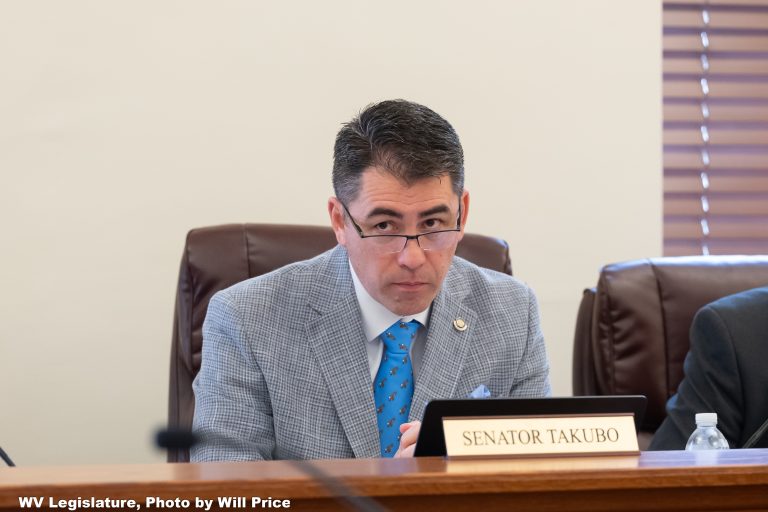
Senator Tom Takubo (R – Kanawha, 17) questioned whether the bill functions more as a mandate than a policy framework, warning it could lead to unintended consequences.

He stated that tying rate recovery to a required utilization target and restricting cost recovery for certain energy sources could ultimately increase electric bills if utilities are required to run higher-cost coal units rather than relying on market-based generations.

He also expressed concern that the bill narrows future flexibility by limiting when utilities may retire or decommission coal or natural gas plants, potentially “handcuffing” long-term energy planning as markets and technology evolve.

Senator Chris Rose (R – Monongalia, 02) stated that the bill is not a mandate, but a reliability measure intended to protect West Virginia’s energy independence.

He stated that the legislation would push back against what he describe as a continued “war on coal” by ensuring coal-fired plants remain operational and competitive.

He argued that by setting a 69 percent utilization goal and requiring regulatory approval before plant retirements, it would provide stability, preserve jobs, and prevent over-reliance on out-of-state or intermittent energy sources.

Senate Bill 590 would make it a criminal offense to perform an adult cabaret where it could be seen by a minor.

The bill defines “adult cabaret performances” as a performance in a location other than an adult cabaret that features topless dancers, go-go dancers, exotic dancers, strippers, male or female impersonators who provide entertainment that appeals to the prurient interest, or similar entertainers, regardless of consideration.

A first violation would be a misdemeanor, while a second offense would be a felony punishable by up to five years in prison and a $25,000 fine.

Supporters of the bill state it provides clear rules for adult entertainment venues, helping local authorities regulate safety while protecting community standards and public decency.

Senator Joey Garcia (D – Marion, 13) raised concerns that the language of the bill could leave too much for the courts to interpret. He questioned whether the bill might go beyond protecting children and instead regulate public expression, including theater performances like Shakespeare, where male actors play female roles, potentially putting public entertainment at risk.

Senate Bill 641 would update West Virginia’s Aboveground Storage Tank Act.

The bill sets rules for classifying and regulating tanks near public water sources, creating Level 1 and Level 2 tanks based on size, location, and contents. Existing tanks in newly designated zones get nine months’ notice before new rules apply. Most small or industrial tanks are exempt but must still register and post signs.

“This bill weakens standards for clean drinking water,” stated Senator Mike A. Woelfel (D – Cabell, 05), noting that some aboveground storage tanks contain hazardous materials like lead, and argued that lowering protections puts West Virginians at risk. He stated that although he supports natural gas industries, he warned that this approach to water safety is a mistake for the state.

Supporters of the legislation state that it strengthens oversight by regulating tanks based on their risk profile. They note that exempted tanks aren’t considered hazardous, while both Level 1 and Level 2 tanks remain regulated and must have secondary containment. They also state that the bill provides relief from regulations for small “mom and pop” business owners and natural gas operators in West Virginia.

Senate Bill 963 would require a full court hearing before someone can be barred from having guns under a protective order. The hearing must include the respondent, their lawyer, and clear evidence that they pose an immediate danger.

The bill allows the respondent an automatic appeal if their firearms are restricted. All other parts of the protective order, such as banning abuse, harassment, stalking, or threats, would stay in effect.

The gun restrictions may only be applied when the court finds convincing evidence of immediate danger to the petitioner and cannot be used for punitive purposes.

Senator Ryan W. Weld (R – Brooke, 01) raised concerns about domestic violence victims being at risk due to the legislation. Noting that between the filing of an emergency protective order and the full hearing, petitioners face a 5 times higher likelihood of being a victim of domestic violence or killed. “In the name of domestic violence, I rise in opposition to the bill,” he stated.

Supporters of the bill state that the legislation protects respondents’ legal rights while still allowing courts to act in cases of confirmed domestic violence.

Senate Bill 805 would allow the Mothers and Babies Pregnancy Support program to cover the expenses associated with the abortion pill reversal.

The West Virginia Mothers and Babies Pregnancy Support Program is a state program housed within the Bureau for Public Health that provides funding to pregnancy help organizations across the state and will not provide funding to any abortion industry organizations.

The bill defined “abortion pill reversal” as the use of progesterone by a licensed health care provider for the purpose of counteracting the effects of ingested mifepristone as part of a chemical abortion.

The term “chemical abortion” is defined as the use or prescription of an abortion-inducing drug dispensed with the intent to cause an abortion. Further definitions in the bill can be found in code: §16-66-1.

The bill is intended to allow women who decided no longer to follow through with an abortion to reverse the abortion using the medication.

It has not been proven by a major medical organization or by scientific evidence that the medication reverses abortions. Members of the body stated witnessing and hearing successful stories of women using the medication to reverse an abortion.

Senator Joey Garcia (D – Marion, 13) raised concerns that the bill is politicizing healthcare. He noted that the American Congress of Obstetricians and Gynecologists described these procedures as “unproven” and “unethical” and could lead to heavy bleeding or other complications if medication is not taken as intended.

Supporters of the bill state that they have witnessed and heard successful stories of women using the medication to reverse an abortion and have faith in its positive impact.

All bills on third reading passed the full Senate and were sent to the House of Delegates for consideration.

Afternoon Meeting:

Banking and Insurance at 2 p.m. in Room 451M

Judiciary at 3 p.m. in Room 208W

Morning Meetings for March 5:

Education at 9:30 a.m. in Room 451M

Government Organization at 9:30 a.m. in Room 208W

The Senate is adjourned until tomorrow at 11 a.m.

Blue Envelope Program Bill Advances in Senate Transportation and Infrastructure

The Senate Transportation and Infrastructure Committee met Wednesday morning and advanced four bills regarding communication between law enforcement and community members, Gold Star Family license plates, automobile dealers, and the Division of Motor Vehicles.

House Bill 4053 would establish the Blue Envelope Program.

This program is designed to promote inclusivity and foster communication between law enforcement and community members who have a condition or disability that may require additional accommodations or awareness.

Individuals with autism spectrum disorder, dementia, or intellectual and developmental disabilities would receive a blue-colored envelope.

Each Blue Envelope would have the following:

  • State the diagnosis of the individual and provide directions for law enforcement officers for best practice when interacting with the individual.
  • Driver’s communication needs and recommendations for law enforcement officers with interaction techniques.
  • Blank area where the individual or their emergency contact may add additional noteworthy comments pertaining to the individual’s needs or requested accommodation, and contact information of the emergency contact person.
  • Be a sufficient size to fit into the glove compartment of a motor vehicle and be able to hold a driver’s license, vehicle registration card, vehicle insurance card, and other related documents.
  • Have printed directions instructing the driver to place their proof of vehicle registration and insurance in the envelope and provide such envelope and their driver’s license to law enforcement if they’re involved in a traffic stop or traffic accident.

The West Virginia State Police shall not store or collect information identifying any person who has requested an envelope.

The bill was reported to the full Senate with a recommendation of passage, first being sent to the committee on Health and Human Resources.

House Bill 4437 would provide one free Gold Star Family license plate to Gold Star parents in West Virginia.

The bill would expand existing military plate provisions to ensure parents of fallen service members receive the same benefit already available to Gold Star spouses.

Under the bill, a qualifying Gold Star Parent, defined as a mother or father of a veteran eligible for a Gold Star lapel pin under federal law, would be exempt from all registration fees for one personal vehicle plate.

Gold Star spouses would continue to receive the same exemption, and applicants would still be required to provide proper documentation to verify eligibility.

The bill was reported to the full Senate with a recommendation of passage.

House Bill 4881 would modify the process for automobile dealers, licensed automobile auctions, motor vehicle repair facilities, and towing companies seeking titles for abandoned or junked vehicles left on their property.

The bill would remove the existing loan value limitation currently included in the statute.

Under current law, a business may only obtain a certificate of title if the vehicle’s loan value is $9,500 or less. This bill would eliminate that cap, allowing eligible businesses to apply for a title and registration regardless of the vehicle’s value.

The bill was reported to the full Senate with a recommendation of passage.

House Bill 4976 would clarify the requirements that must be met before the Division of Motor Vehicles approves and produces special organizational license plates.

An organization would be required to submit a formal application, a proposed plate design, and collect at least 100 completed applications for Class A vehicles or 50 for Class G vehicles before production could start.

The bill was reported to the full Senate with a recommendation of passage.

Senate Judiciary Advances Bills on Crimes Against Athletic Officials and Veteran-Owned Businesses

The Senate Judiciary Committee met Tuesday afternoon and advanced two bills regarding crimes against athletic officials and veteran-owned businesses.

House Bill 4999 would strengthen protections for athletic officials and participants and establish penalties for assault or battery against them.

The bill specifies that officials, referees, coaches, school administrators, and team members are all covered. It sets fines and jail terms, allows schools to ban offenders from events for at least a year, and treats violations as trespassing, while players are exempt from actions within the rules of the game.

The bill was reported to the full Senate with a recommendation of passage.

House Bill 5227 would update business reporting requirements in West Virginia, including annual and biennial report fees, late fees, and procedures for filing with the Secretary of State.

The bill would provide a four-year fee exemption for veteran and active-duty member-owned businesses, establish an official veteran-owned business logotype, allow fee waivers at certain entrepreneurship events, and ensure that delinquent filings can result in suspension or revocation of business registration until resolved.

The bill was reported to the full Senate with a recommendation of passage.