

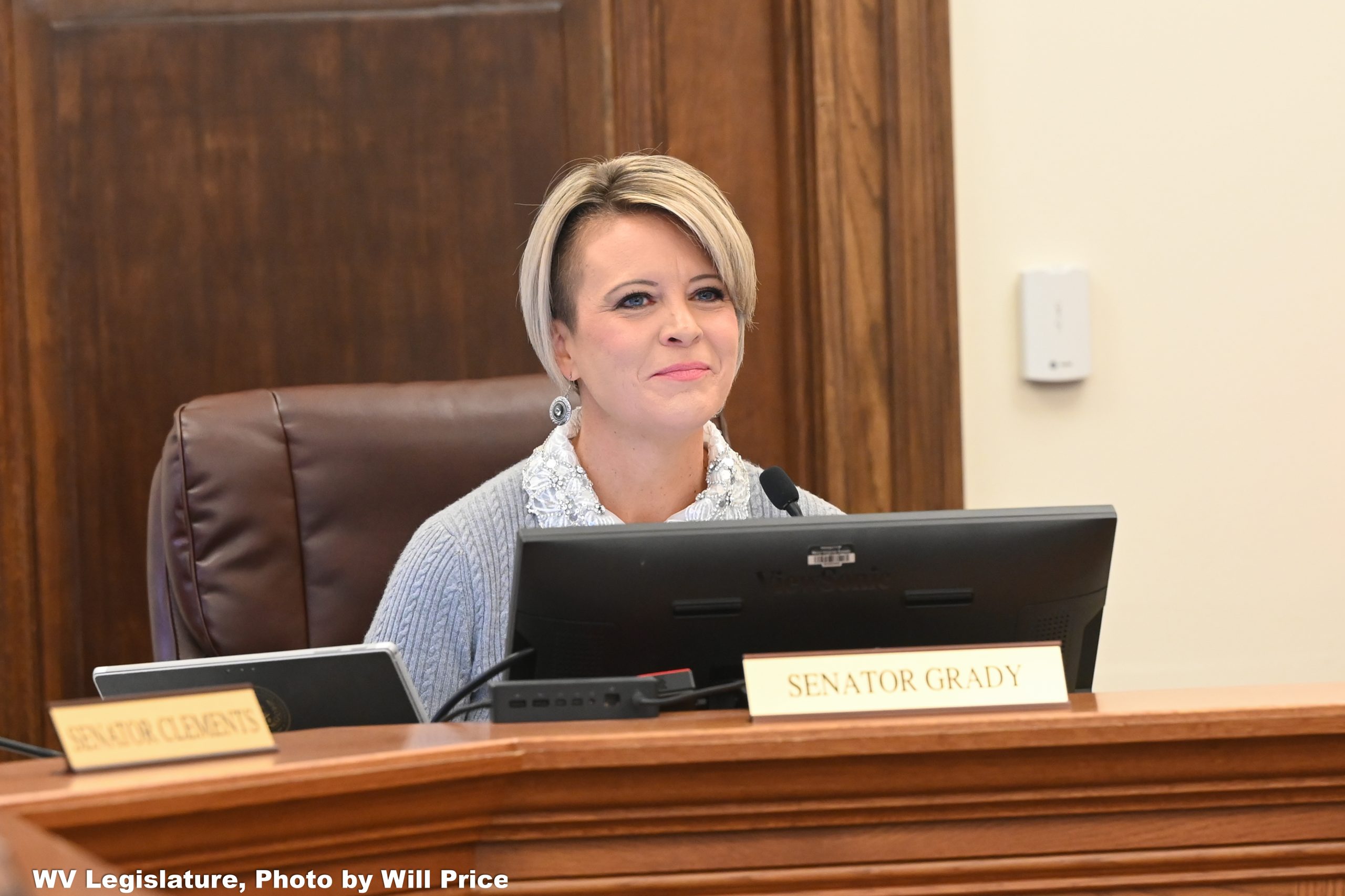
The Senate Education Committee met Tuesday afternoon and advanced three bills regarding emergency situations for teachers, senior citizens’ education, and financial aid for post-secondary education.
House Bill 4798 would authorize wearable panic alert systems in West Virginia schools under “Alyssa’s Law.”
The devices would allow school personnel to directly contact 9-1-1 and trigger campus-wide lockdown notifications during emergencies, contingent upon available funding.
The bill directs state education officials to set implementation rules. It allows county boards to distribute devices and requires annual training. The bill also mandates coordination with local law enforcement for security access. It creates a school safety fund for equipment costs and sunsets in 2029.
During testimony on House Bill 4798, Lori Alhadeff, mother of Alyssa, shared a personal plea for the legislature. She recounted the loss of her 14-year-old daughter in a school shooting and emphasized the life-saving potential of wearable panic alert devices, stating that if the bill passes and the devices are in every school, “Alyssa will be saving so many lives.”
The bill was reported to the full Senate with a recommendation of passage.
House Bill 5110 would lower the age for tuition and fee waivers at West Virginia colleges from 65 to 60.
This bill would allow seniors to take courses for credit or audit at reduced rates, depending on residency and classroom availability.
The bill requires schools to set rules for priority registration, additional fees like labs or parking, and tuition for credit courses at 50% of normal resident rates. The program applies to in-person, online, and other distance learning courses.
The bill was reported to the full Senate with a recommendation of passage.
House Bill 5212 would modernize West Virginia’s financial aid programs, streamline eligibility, and expand support for part-time and workforce-focused students. It also clarifies rules for loans, scholarships, and repayment requirements.
The bill would connect financial aid more closely to high-need job sectors, reduce administrative complexity, and create a more coordinated system for students and institutions across the state.
The bill was reported to the full Senate with a recommendation of passage, first being sent to the committee on Finance.
