Monday, April 6, 2026
Home Blog Page 127

House Legislation (2/10/21-2/25/21)

As of Friday, February 26, 2021, 766 bills have been introduced to the House. Of those bills, 24 have passed and advanced to the Senate.

House Bill 2001 establishes the Jumpstart Savings Program.

House Bill 2003 clarifies the authority and obligations of the Governor and Legislature relating to declared state of emergencies and preparedness.

House Bill 2005 provides healthcare costs transparency to West Virginians and regulates out-of-state and non-network facility providers.

House Bill 2006 transfers the West Virginia Contractor Licensing Act from administration and regulation by the Division of Labor to regulation under the provisions of professions and occupations in chapter 30 of WV Code. The Division of Labor would continue to perform inspections. The bill continues the prerequisites to obtaining building permits and mandatory written contracts for certain work. The board is authorized to grant reciprocity and provide training. The bill also restricts municipalities, local governments, and counties from requiring a license at their jurisdictional level to perform contracting work.

House Bill 2007 provides occupational licenses and other authorizations to practice to qualified applicants from other states.

House Bill 2008 changes requirements for licensing elevator mechanics, HVAC, electricians, and plumbers.

House Bill 2009 limits the use of wages and agency shop fees by employers and labor organizations for political activities. It prohibits employers from intimidating employees to make political contributions or engage in political activity. It also prohibits employers from withholding or diverting employee’s pay for political activities, unless given written authorization.

House Bill 2011 eliminates any hour requirement for part time personnel in professional services with or without administrative duties during a working year.

House Bill 2012 adds virtual public charter schools as an option and would increase the total of number of potential public charter schools

House Bill 2014 specifies that the Legislature is to appropriate federal funds by the state constitution. It limits the gubernatorial authority to spend federal funds without the appropriation of the Legislature.

House Bill 2019 reorganizes and re-designates the Development Office as the Department of Economic Development and the Tourism Office as the Department of Tourism.

House Bill 2094 allows for the juvenile restorative justice program to include other offenses. It also states that the offender can only complete the program once.

House Bill 2184 creates a new crime and sets penalties for exposing government representatives to fentanyl or other harmful drugs or chemical agents.

House Bill 2253 sets penalties for violating the State Lottery Act, relating to forgery, and counterfeiting of lottery tickets.

House Bill 2260 removes the requirement that Health and Human Resource contracts with child-placing agencies be submitted to the Purchasing Division. Instead, the agency would develop requirements for performance-based contracts, which would be used for child placement.

House Bill 2262 changes who reports and reviews the controlled substance monitoring databases.

House Bill 2263 updates the regulations and regulates the reimbursements of pharmacy benefit managers. It expands the freedom of consumer choice for pharmacies and pharmacy benefit managers.

House Bill 2264 expands the definition of hospital services.

House Bill 2325 removes the requirement for barbers and cosmetologists to complete continuing education to renew their licenses. The bill also prevents the Board of Barbers and Cosmetologists from regulating the use of beauty products that are commonly available as retail, consumer products.

House Bill 2358 updates the meaning of federal adjusted gross income and certain other terms used in West Virginia Personal Income Tax Act.

House Bill 2359 updates the meaning of the federal taxable income and certain other terms used in the West Virginia Corporation Net Income Tax Act.

House Bill 2366 requires agencies proposing rules that would adjust fees or other special revenues to provide a fiscal note to the committee.

House Bill 2372 allows pre-candidacy papers to be filed the day after the general election.

House Bill 2500 establishes a statewide uniformity for auxiliary container regulations.

Legislating During COVID-19

The Legislature has convened for the first session of the 85th Legislature.

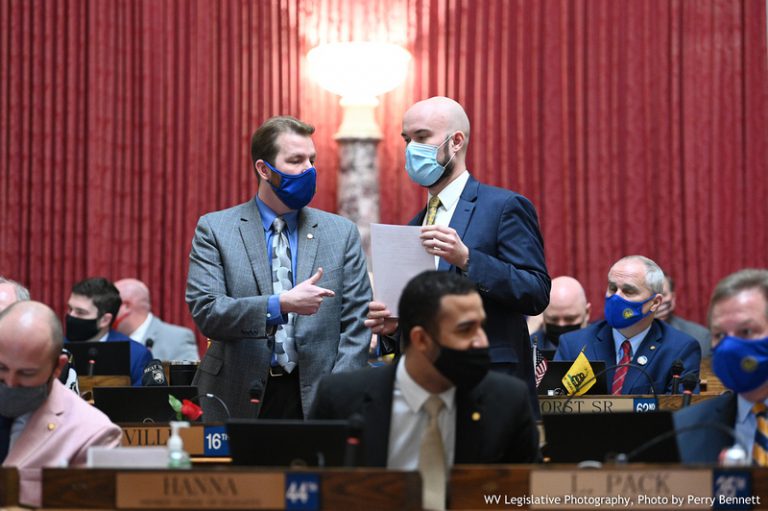
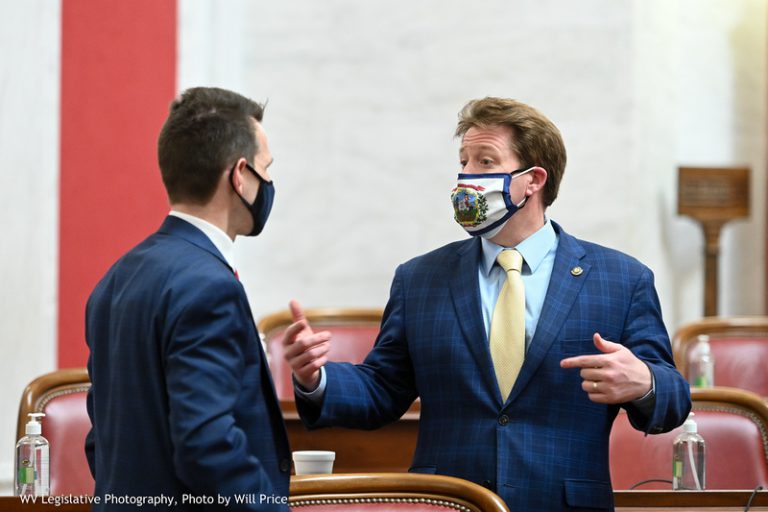
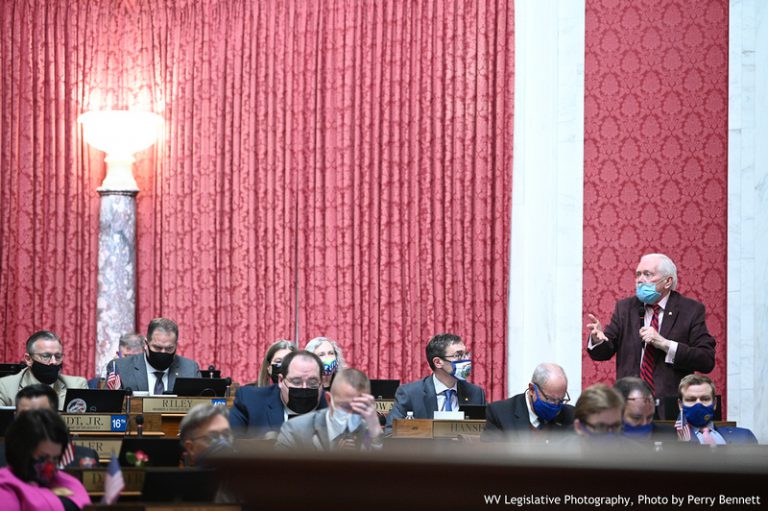
In the midst of the COVID-19 pandemic, the West Virginia Legislature has assembled with new guidelines in place. Each chamber has released its own set of guidelines.

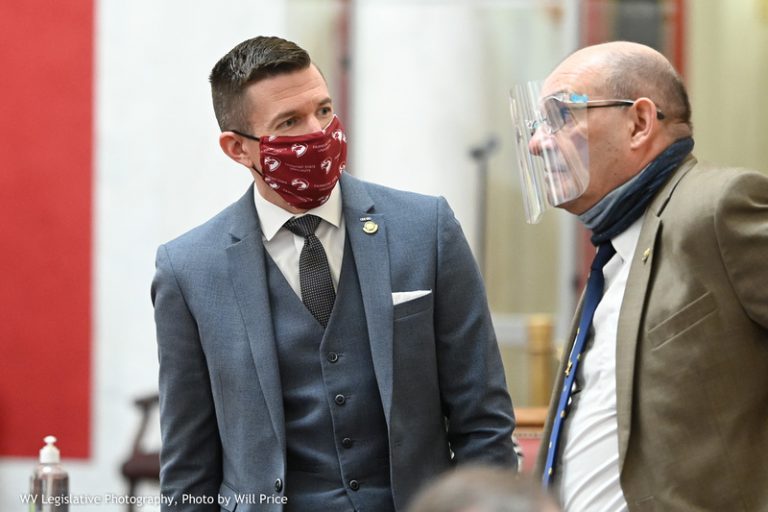
Both, the House and the Senate require all persons within the chambers to wear a face covering, which may only be removed when recognized to speak, or when actively eating or drinking. Only essential staff and members are permitted to be on the floor of the chambers.

The House galleries are reserved for members requiring additional space due to safety concerns in the north and the south galleries and for the media in the rear gallery. The Senate galleries are reserved for guests in the rear gallery and the media in the north and south galleries. All floor sessions in both chambers will be live-streamed with audio and video.

“This is a legislative session unlike any other due to the constraints of COVID,” House Speaker Roger Hanshaw said. “We have made several adjustments to be sure we can carry out our obligations while keeping everyone involved as safe as possible.”

House committees will be held only in the largest rooms available to allow for extra space. For the House, all committee meetings will be live-streamed with audio. For the Senate, all committee meetings will be live-streamed with audio and video.

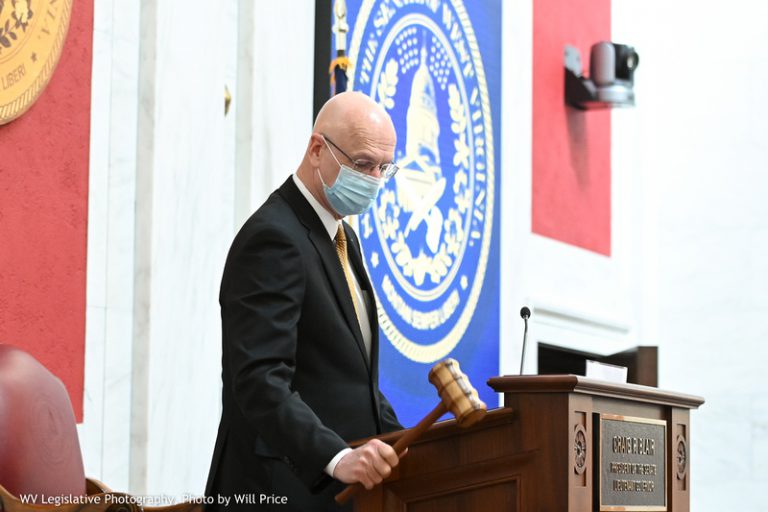
“It has been an adjustment this year, but the Senate was already equipped with technology that enables us to video stream and archive all of our committee meetings and floor sessions,” said Senate President Craig Blair. “This year, we integrated the capability to host meeting participants remotely and have them be a part of the live stream as well, which helps keep the public safe and our members and staff safe by minimizing the number of people in our committee rooms.”

Physical access to the Capitol is limited this session. However, constituents and advocacy groups can still set up meetings with legislators and be given access. Legislators and staff must notify Capitol Police about the meetings. Masks are required to enter the building and temperature checks will take place upon arrival.

“I am doing my best to spend time with folks from the district back home via phone, social media, and video chats,” Senate Minority Leader Stephen Baldwin said. “It is incumbent on us to find ways to be in direct contact with citizens since we’re voting on legislation that affects the lives of every citizen.”

House Minority Leader Doug Skaff stated that the minority are sharing information on social media and setting up zoom meetings with constituents.

“We are doing our best to make the legislative process as open and transparent – and safe – as we can,” Skaff said.

To stay connected with the West Virginia Legislature, you can:

House Health Advances Three Bills

0

Today, the Committee on Health and Human Resources advanced three bills.

House Bill 2024 would expand the use of telemedicine by allowing medical personnel to participate in telemedicine, ensure parity between telemedicine and in-person visits, and restrict the ability of medical professional boards to apply additional restrictions to telemedicine. The committee substitute of this bill incorporates parts of Senate Bill 1. Senate Bill 1 was removed from the agenda and House Bill 2024 advances to the House.

House Bill 2368 would allow visitation by family, hospice and/or clergy to patients at health care facilities during the pandemic. It also protects those facilities from lawsuits and administrative complaints that could arise by allowing patients visitation.

House Bill 2093 would allow West Virginia veterans to utilize the services of medical foster homes approved by the US Department of Veteran’s Affairs. It also exempts the caretakers from having to submit to a duplicate background examination through the WV CARES program.

Senate Unanimously Passes Three Bills

The Senate unanimously passed three bills during Thursday’s floor session.

Senate Bill 7 would limit political activity by public employees while in the process of carrying out the duties of their job. The legislation would make it illegal for any public employee to discuss or wear items dealing with political candidates, political party or elections while wearing a uniform, while on duty, and/or in a state-owned vehicle.

Senate Bill 42 would create the Zombie Property Remediation Act of 2021. The legislation deals with abandoned homes and structures. It would authorize a municipality to start a foreclosure proceeding earlier, so the city could take hold of these properties and re purpose or demolish them before they deteriorate.

Senate Bill 396 puts limitations on nuisance actions against fire department or EMS fixed sirens.

These bills move to the House of Delegates for consideration.

Also on Thursday, the body adopted Senate Resolution 9, designating February 25, 2021, as Fairmont State University Day.

The Senate is adjourned until Friday, Feb. 26 at 11 a.m.

There is a full Senate committee schedule this afternoon. Check out the Legislature Live page for streaming.

Health will meet at 1 p.m. in 451M.

Government Organization will meet at 2 p.m. in 208W.

Education will meet at 2 p.m. in 451M.

Judiciary will meet at 3 p.m. in 208W

Finance will meet at 3 p.m. in 451M

House Bill 2372 Moves to Senate

Today, the House passed House Bill 2372.

House Bill 2372 will allow successful candidates to file pre-candidacy papers the day after the general election, just as current unsuccessful candidates can.

Six bills were on second reading today including, Senate Bill 11 and Senate Bill 12, which were both amended on second reading.

Five bills were read for the first time, including Senate Bill 272 which passed the Senate yesterday. Senate Bill 272 is similar to House Bill 2590, which was moved from the House Special Calendar today to the House Calendar. Senate Bill 272 simplifies the criteria for independent contractors and sets separate standards of independent contractors from employees.

Committee Meetings

Today

The House is adjourned until 11 am tomorrow, February 26, 2021.

Several House Committees Meet Wednesday Afternoon

0

Four bills advanced from House Committees this afternoon.

House Bill 2671 advanced from the Committee on Senior, Children, and Family Issues. House Bill 2671 would update the current statute relating to the financial exploitation of an elderly person, protected person, or incapacitated. The bill includes possible criminal penalties for the violation of a financial exploitation protective order.

House Bill 2327 advanced from the Committee on Workforce Development. House Bill 2327 would repeal the current law that makes prime contractors liable for the failure of subcontractors to make proper payments for workers’ compensation coverage.

House Bill 2256 advanced from the Committee on Political Subdivisions. House Bill 2256 would stop the collection of municipal user fees from state and county employees.

House Bill 2222 advanced from the Committee on Technology and Infrastructure. House Bill 2222 would prohibit vehicles from driving slow in the left lane of a roadway or interstate highway for more than a mile and a half without completely passing another vehicle except under certain circumstances.

Senate Passes Intermediate Court of Appeals

The Senate has once again passed a bill that would establish an intermediate court of appeals in West Virginia.

After a roughly hour-long debate on the Senate floor Wednesday, the bill passed on a 19-15 vote.

The issue has been debated for many years after it was recommended by a 2009 judicial review panel. The legislation has been passed several times in the Senate, only to fail in the House of Delegates.

Senate Bill 275 would establish an intermediate court to review civil cases between the circuit court and Supreme Court levels. It would also adjudicate workers compensation cases and final orders from family court.

Judges on the court would be appointed to staggered terms to fill out the court initially, with regular elections to follow. The court would have a northern and southern district, each with three judges. As written currently, court proceedings would take place in already-available public buildings. The Senate estimates that the court will cost between $8 and $9 million once it is fully functional.

The bill moves on for consideration in the House of Delegates.

The Senate is adjourned until tomorrow, Feb. 25 at 11 a.m

Streaming of afternoon meetings is available on our Legislature Live page.

Economic Development will meet at 2 p.m. in 208W.

Agriculture and Rural Development will meet at 3 p.m. in 208W.

Pensions will meet at 3 p.m. in 451M.

Judiciary will meet at 4 p.m. in 208W.

Finance will meet at 4 p.m. today and 9:30 a.m. tomorrow in 451M.

Juvenile Restorative Justice Bill Goes to Senate

Today, the House of Delegates passed two bills to the Senate.

House Bill 2094 relates to the restorative justice program. The bill allows for the program to include other offenses. The juvenile restorative justice program is a voluntary option for the victim and offender, where the victim is in control. They enter the program with the focus of repairing the harm through communication and mediation. The bill also states that the offender can only go through the program once.

House Bill 2184 creates a new crime and sets penalties for exposing government representatives to fentanyl or other harmful drugs or chemical agents. It states that if there is no injury, then the charge is a misdemeanor. However, if there is injury, the charge is a felony with a two-to-five-year prison sentence and a $2,000 fine.

One bill was read a second time and 6 bills were read for the first time including, Senate Bill 12 and Senate Bill 14. Both passed the Senate yesterday.

Committees

Today

Tomorrow

The House is adjourned until 11 am tomorrow, February 25, 2021.

House Banking and Insurance Advances Four Bills

0

Today, the House Banking and Insurance Committee moved four bills forward.

House Bill 2681 allows the Insurance Commissioner to move general funds of the Insurance Commission into the Workers’ Compensation Old Fund to reduce any deficit balance of the Old Fund. The Insurance Commissioner stated that transfer is needed because the deficit is beginning to increase after funding sources were removed in 2016, 2017, and 2018. The current deficit is $63 million. The bill advanced to the Committee on Finance.

House Bill 2682 replaces the requirement that certified mail is required to send notice that insurance producers and adjusters have failed to meet continuing education requirements. The bill allows for notice to be sent by e-mail or by regular mail. Using certified mail currently costs the commission between $6,000 and $7,500 a month. The bill advanced to the Judiciary Committee.

House Bill 2695 consolidates the Inspector General Position and the Director of the Insurance Fraud Unit position into one position. According to the Insurance Commissioner, the positions are identical roles. The savings of this consolidation would be $108,000 a year. The bill advanced to the Committee on Government Organization.

House Bill 2634 provides that state insurance providers must provide coverage for 20 visits per event for physical therapy, occupational therapy, osteopathic manipulation, a chronic pain management program, and chiropractic services when prescribed by a health care practitioner. The bill advances to the Health and Human Resources Committee.

Senate Bill 277 Advances to House Floor

0

House Judiciary Committee advances two bills from the committee.

Senate Bill 277 – the Covid-19 Jobs Protection Act – provides immunity from civil liability for damages for an injury resulting from exposure to COVID-19 on the premises owned or managed by another person.

Several amendments were offered and rejected. The bill moves to the floor.

House Bill 2628 allows for ATMs to be in areas where racetrack video lottery machines are located. Currently, ATMs in these locations are prohibited.

The bill was amended to no longer accept checks in exchange for or purchase of game credits or coins. The bill moves to the floor.