
Saturday, April 4, 2026
Home Blog Page 18

House Judiciary Advances Foster Children Transparency Bill

The House Judiciary and subcommittees discussed several bills this morning.

Judiciary

House Bill 4466 would extend the public intoxication code to include being under the influence of narcotics. This bill was advanced to the floor.

House Bill 4695 would increase the criminal penalty for anyone guilty of sexual assault on a minor. This bill was advanced to the floor.

House Bill 4725 would allow a court to order a change in the animal’s place of custody and to order the animal euthanized if it is in the animal’s best interests or for public health and safety. The euthanasia of the animal must be based on a sworn testimony of a licensed veterinarian or animal control officer. This bill was advanced to markup and discussion.

House Bill 4749 would guarantee that foster children age 13 and older are notified of and supported in attending court hearings, with legal counsel present and an explanation of the outcome. This bill was advanced through the process and sent to the House floor.

House Bill 4801 would define permissible expenditures for municipalities and counties. This bill was advanced to markup and discussion.

House Bill 4962 would create legal procedures for handling drug-related nuisances and penalties. These procedures would allow property owners to take steps to prevent the use of their property for the manufacturing, usage, sale, storage, or distribution of drugs. This bill was advanced to markup and discussion.

Senate Bill 207 would clarify the sheriff’s compensation for the collection of taxes. This bill was advanced to markup and discussion.

Legal Services

House Bill 5101 would create the Joanna Phillips Domestic Violence Prevention Act. This act would create and increase penalties for certain domestic violence offenses and change bail requirements for domestic violence. This bill was reported to the Judiciary.

House Bill 4865 would provide a program allowing election official trainees to be appointed as election officials. This bill was advanced to markup and discussion.

House Bill 4881 would remove the requirement that the loan value of a motor vehicle be less than $9,500 to allow an automobile dealer, licensed automobile auction, motor vehicle repair facility, or towing company to obtain the title and registration for the abandoned motor vehicle. This bill was advanced to markup and discussion.

Homeland Security

House Bill 4996 would create mandatory bail conditions for people charged with making terrorist threats against a school. This bill was advanced to markup and discussion.

House Bill 4997 would prohibit persons convicted of felony terroristic threats towards schools or children from residing within 1,000 feet of a school. This bill was advanced to markup and discussion.

Courts

House Bill 4098 would reinstate jury rights to citizens with felony convictions if the felony convictions have been expunged. This bill was reported to the Judiciary.

House Bill 4850 would provide online training for people to become Executors/Executrixes of an Estate. This bill was advanced to markup and discussion.

House Bill 4999 would change the criminal and administrative penalties for assault or battery on athletic officials and participants, including, but not limited to, players, scorekeepers, coaches, and referees. This bill was advanced to markup and discussion.

House Honors Former Delegate Doug Skaff

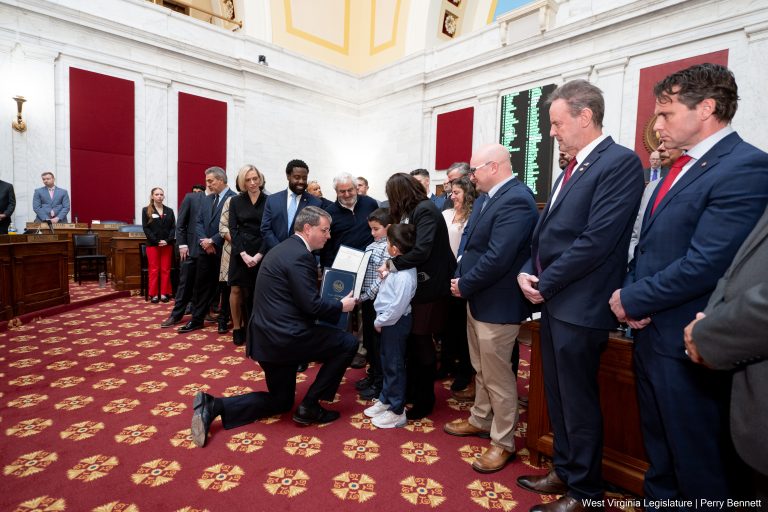
The West Virginia House of Delegates honored Delegate Douglas John Skaff Jr. this morning.

House Resolution 9 passed unanimously to honor the life of Douglas John Skaff Jr. and express the condolences of the legislative body to his family and friends.

In addition to the passage of House Resolution 9, the House advanced House Bills 4606 and 4696.

House Bill 4606 would allow judicial officers, when determining bail, to use residency status. In the bill, this is described as including, but not limited to, if they are a resident of the state, they have ties to the community, or if they are a flight risk.

House Bill 4696 would update the language in the Abandoned Mines Lands and Reclamation Act to allow the Department of Environmental Protection office to be able to receive federal funding.

Bills introduced can be found here.
Resolutions introduced can be found here.

Committee Meetings, Today February 5

Committee Meetings, Friday February 6

The House is adjourned until 11:00 a.m. Friday, February 6, 2026.

Senate Education Advances Bills On Holocaust Learning and Women’s Sports

Senate Education met Thursday morning and advanced two bills regarding women’s sports and Holocaust learning.

Senate Bill 502 would establish the Women’s Collegiate Sports Protection Act.

The bill would provide permanent funding and incentives to protect women’s college sports at public NCAA Division one colleges in West Virginia.

It would offer endowments, state matching funds for savings, and tax credits for private donations while ensuring compliance with Title IX.

The bill was reported from committee and will be sent to the committee on Finance.

Senate Bill 633 would establish the West Virginia Commission on Holocaust Education.

This bill would update and reorganize the West Virginia Commission on Holocaust Education to ensure the continuation of Holocaust education as firsthand survivors become fewer over time.

The bill states that the original statutory framework must be revised because of the loss of Holocaust survivors, eyewitnesses, and liberators who previously participated in the Commission.

The West Virginia Holocaust Education Commission’s new members would include:

  •  Ex Officio: Education, Human Rights, Veterans’ Affairs leaders
  • Community/Civil Rights: Jewish, interfaith, and civil rights representatives
  • Educators/Scholars: K-12 teachers, college reps, Holocaust experts
  • Public Members: Experts in history, ethics, or human rights
  • Optional: Up to 2 extra voting members and non-voting advisors (students, scholars, and community leaders)

The bill was reported to the full Senate with a recommendation of passage.

House Energy and Public Works Hear Two DOH Related Bills

The Committee on Energy and Public Works met this afternoon.

Markup & Passage

House Bill 4011 would facilitate the implementation of third-party certification of mass balance attribution to promote waste reduction practices by enabling the use of recycled material in feedstock for new products.

Committee Hearing

House Bill 4976 clarifies the code regarding license plate production.

House Bill 4983 allows the Department of Commerce to adopt rules governing microgrid districts and high-impact data centers.

House Bill 4993 allows green flashing warning lights to be used by the Division of Highways and other vehicles at the discretion of the Commissioner of Highways.

House Bill 4994 would modernize and clarify the rules governing timelines and responsibilities for the Division of Highways during utility relocation projects. It’ll require coordination between utility companies and DOH.

Senate Judiciary Advances Second Amendment Reaffirmation and Protection Act

The Senate Judiciary Committee met on Wednesday afternoon and advanced two bills regarding creating felony penalties for threats using electronics and the Second Amendment Reaffirmation and Protection Act.

Senate Bill 478 would establish the Second Amendment Reaffirmation and Protection Act.

This bill would require that if federal gun laws such as the National Firearms Act (1934), Gun Control Act (1968), or the Firearm Owner’s Protection Act (1986) are repealed by Congress or deemed unconstitutional by a court, West Virginia law automatically protects people’s right to own and use guns without restrictions being placed despite federal law restrictions.

This bill would prevent state agencies or local government from enforcing or funding any firearm regulations that reflect federal gun laws that have been repealed or ruled unconstitutional.

State and local officials would be prohibited from replacing former federal firearm restrictions with new state or local rules.

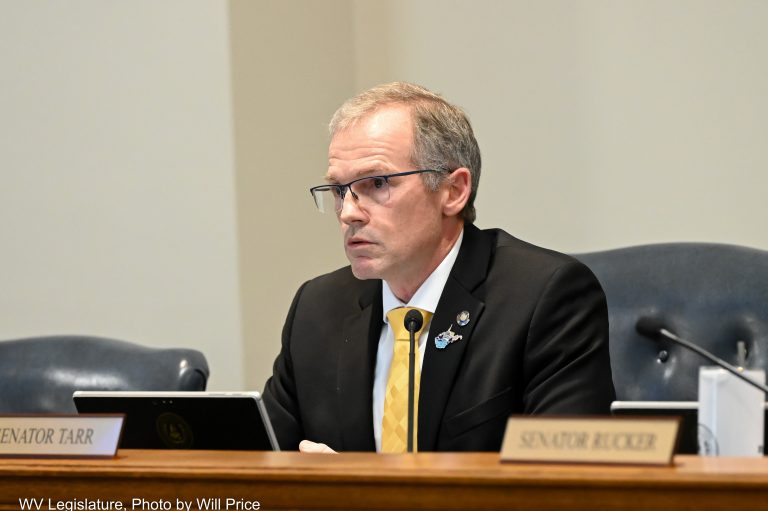
Senator Eric J. Tarr (R – Putnam, 04) proposed a conceptual amendment to remove language in the bill referencing a “cause of action”, citing concerns that it could expose West Virginia taxpayers to legal liability and increased litigation costs.

Opposing members of the body argued that the cause of action serves as the bill’s enforcement mechanism, allowing individuals to protect their constitutional rights if infringed upon by the federal government.

Following the discussion, the Senator’s amendment was rejected.

The bill was reported to the full Senate with a recommendation of passage.

Senate Bill 473 would create felony penalties for criminal threats made through electronic devices.

This bill would change current law by making it a felony instead of a misdemeanor for using phones, tablets, computers, gaming devices, or other electronic devices to harass, threaten, or intimidate individuals, especially when those threats involve violence.

Violent threats made through an electronic device must cause one of the following to happen for it to be a felony:

  •  An evacuation of any building, place of assembly, or facility of public transportation
  • Serious public fear, panic, or disruption
  • Or is made with reckless disregard for the risk of causing serious public harm or inconvenience.

The individual would be guilty of a felony and serve 2-10 years in a state correctional facility.

Senator Ryan Weld (R – Brooke, 01) proposed an amendment to the language of the bill, adding the term “with the intent” to the legislation, to acknowledge that if an individual makes a threat, they must have the intention to do harm as well.

The amended section would read:

“Any person who uses a computer, mobile phone, personal digital assistant, gaming device, or other electronic communication device with the intent to threaten to commit any crimes of violence against another person or persons.”

The Senator’s amendment was adopted.

The bill, as amended, was reported to the full Senate with a recommendation of passage.
House Judiciary Debates Absentee Ballot Bill

The House Judiciary Committee and its subcommittees advanced several bills this morning.

House Bill 4053 would establish the Blue Envelope Program. The Blue Envelope program would assist communication between law enforcement officers and individuals with autism, dementia, or intellectual and developmental disabilities during a motor vehicle-related interaction. This bill was advanced to the floor.

House Bill 4179 would create a felony charge for individuals who assault police officers or police dogs. This bill was advanced to the floor.

House Bill 4345 would establish a protocol for preserving records and evidence in missing persons cases that are unresolved after one year by making them digital and being housed at the West Virginia Fusion Center. This bill was advanced to the floor.

House Bill 4468 would require any court or state records that contain identifying information of a victim or an arrest remain confidential. This bill would require the name and address in a criminal complaint be confidential. This bill was advanced to the floor.

House Bill 4600 would require absentee ballots mailed in to be received by 8:00 p.m. on the day of the election to be counted. This bill was advanced to the floor.

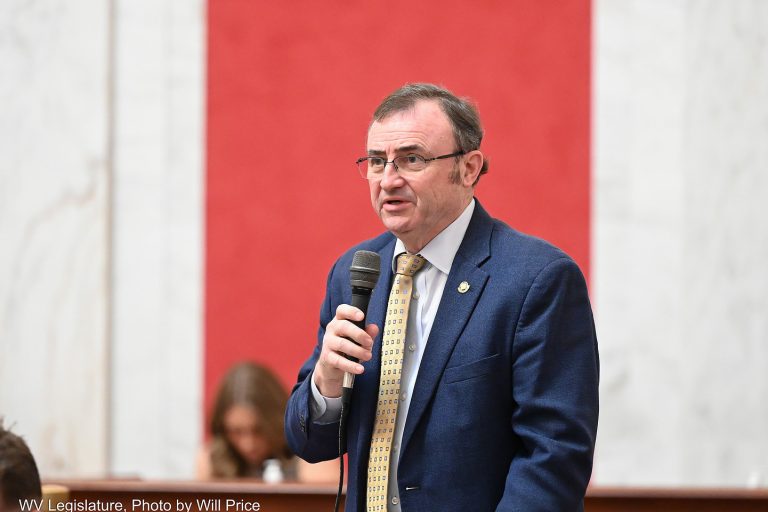
In discussion of this bill, Delegate Shawn Fluharty (D – Ohio, 5) shared concerns about this bill with the impact it will have on rural areas in the state and how this bill is based off a conspiracy.

Delegate Jim Butler (R – Mason, 18) spoke in favor of the bill that it increases voter confidence and fair results on election day. Butler said this would also increase the amount of time for votes for seven days.

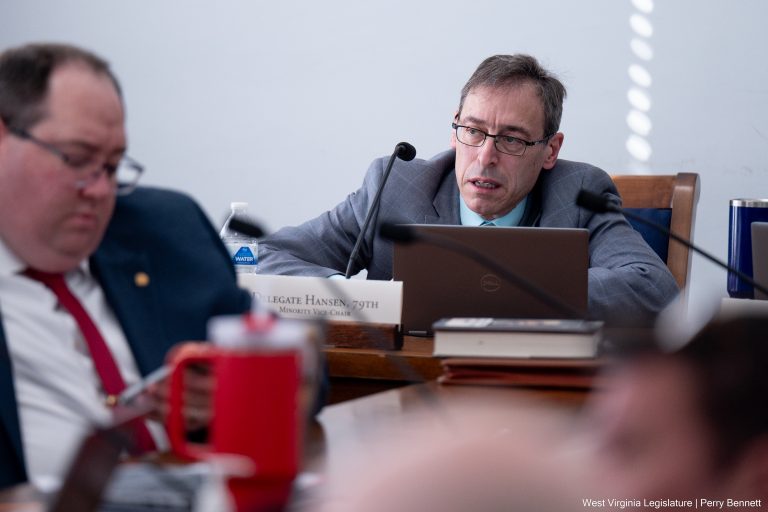
In response, Delegate Evan Hansen (D – Monongalia, 79) said this does not increase the amount of time, this decreases the amount of time for voters by seven days. Hansen said this bill would result in fewer ballots being counted that are cast by the elderly, by the sick, and by military personnel.

Hansen said. “No testimony was provided by a county clerk or anyone that says this is an issue. This is a bill that will disenfranchise West Virginians.”

Delegate Mark Zatezalo (R – Hancock, 2) spoke in favor of the bill. Zatezalo said the deadline for voting in-person is election day and does not see a problem with this bill to set that ground rule for absentee ballots.

House Bill 4893 would increase the penalties for contempt of court in a magistrates’ court. This bill was advanced to the floor.

House Bill 4466 would extend the public intoxication code to include being under the influence of narcotics. This bill was advanced to markup and discussion.

House Bill 4695 would increase the criminal penalty for anyone guilty of sexual assault on a minor. This bill was advanced to markup and discussion.

Courts

House Bill 4725 would allow a court to order a change in the animal’s place of custody and to order the animal euthanized if it is in the best interests of the animal or public health and safety. The euthanasia of the animal must be based on a sworn testimony of a licensed veterinarian or animal control officer. This bill was advanced to Judiciary.

House Bill 4098 would reinstate jury rights to citizens with felony convictions if the felony convictions have been expunged. This bill was moved to markup and discussion.

Legal Services

House Bill 4801 would define allowed expenditures for municipalities and counties. This bill was reported to Judiciary.

House Bill 5101 would create The Joanna Phillips Domestic Violence Prevention Act. This act would create and increase penalties for certain domestic violence and change bail requirements for domestic violence. This bill was advanced to markup and discussion.

Senate School Choice Advances Academics in Rural Schools Act Bill

The Senate School Choice Committee met on Wednesday afternoon and advanced two bills regarding requirements for private, parochial, or church schools and the Academics in Rural Schools Act.

Senate Bill 683 would remove certain requirements from kindergarten, preschool, or school education programs operated by a church, parochial, or private school.

This bill would require church-run kindergartens and preschools to be exempt from childcare licensing, certification, approval, and registration requirements; recognized by the state education department under policy 2330.

Some of the following requirements schools would NOT be exempt from include:

* Fire and building safety codes
* Health department rules
* Background checks
* General child safety laws

Senate Bill 63 would create opportunities for the Academics in Rural Schools Act.

This bill would create an application for establishing a new public charter school, convert a public school into a public charter school, or establish a program conversion public charter school.

Each application shall contain the following to be considered:

* A mission statement, including a specialized academic focus.
* Detailed description of the public charter school’s proposed program.
* Student achievement goals for the program.
* Data using plan from student evaluations and assessments.
* Chosen methods of evaluating whether students are attaining the skills and knowledge for specific goals.

The bill is intended to support rural communities by providing access to local schools and preventing unnecessary consolidation while offering financial support to in-person charter schools serving geographically remote areas.

Both bills were reported to the full Senate with a recommendation of passage, first being reported to the committee on Finance.

House Education Lays Over A Bill and Hears Two Bills

The Education Committee met this afternoon.

Markup & Passage

House Bill 4440 permits law enforcement to issue citations to students in public schools and public charter schools caught with nicotine at school or during school events.

The bill was laid over for a couple of days due to questions and amendments needing to be worked out.

Committee Hearing

House Bill 4446 creates a pilot program in four counties that will provide Fire Fighter I and II to eligible high school and college students.

House Bill 4573 requires foster youth to receive a guide to available resources and counseling on education, job training, housing, healthcare, and independent living support before graduating from high school.

Senate Passes 3 Bills Wednesday Morning

The Senate convened on Wednesday morning and passed three bills related to adjunct teachers, certified public accountants, and the Legislative Oversight Commission on Health and Human Resources Accountability. The Senate also introduced bills 734-745 and adopted resolutions 26 and 27.

Senate Bill 155 would adjust the requirements for adjunct teaching.

The bill would allow adjunct teachers to fill vacant teaching positions, offer a program or class, or supplement a program or class currently being offered if no other certified teachers are available to do so.

For an adjunct teacher to fill a position or offer a new program or class, the following is required:

* At least four years of experience in the desired area, either through employment experience or a college degree.
* Submits a background check
* Has not been convicted of a felony or plead guilty or plead no contest to a felony charge or convicted or plead no contest to charges involving sexual misconduct with a minor or a student.

Senate Bill 532 would modify the qualification requirements for certified public accountants.

The bill would require the West Virginia Board of Accountancy to propose rules for legislative approval.

The board would be required to consider the qualifications of an individual without regard to the sequence in which experience, education, or examination requirements were attained.

Senate Bill 210 would modify the Legislative Oversight Commission on Health and Human Resources Accountability.

This bill would require various departments to prepare an annual performance plan that covers each program and activity, including the department’s goals, budgets, and operational processes, and report it to the Legislature.

Departments are defined in the bill as the Department of Health, the Department of Human Services, the Department of Health Facilities, the Office of the Inspector General, and all their bureaus, offices, and programs. All definitions in the bill can be found in code §16-29E-3.

All bills passed the full Senate and were sent to the House of Delegates for further consideration.

Afternoon Meetings:

School Choice at 1 p.m. in Room 208W

Substance Use Disorder and Mental Health at 1:30 p.m. in Room 218W

Banking and Insurance at 2 p.m. in Room 451M

Agriculture at 2 p.m. in Room 208W

Finance at 3 p.m. in Room 451M

Judiciary at 3 p.m. in Room 208W

Morning Meetings for Feb. 5:

Education 9:30 a.m. in Room 451M

Government Organizations at 9:30 a.m. in Room 208W

The Senate is adjourned until tomorrow, Feb. 5, at 11:15 a.m.

House Advances Recharge WV Act

The West Virginia House of Delegates advanced House Bills 4004, 4456, and 4484 to the Senate.

House Bill 4004 would establish the Recharge West Virginia Act. This act would support companies in West Virginia to be able to invest in their employees’ upskilling training. This bill would reimburse companies for upskilling their employees and also provide wage increases to said employees.

House Bill 4456 would grant privileges to local and state law enforcement, allowing other agencies from West Virginia or an adjoining state to temporarily provide assistance with investigations or criminal activity

House Bill 4484 would allow county commissions to have the same flexibility to sell or lease property as municipalities, such as using competitive bidding or a public auction. This bill was reported to the full House.

Bills introduced can be found here.
Resolutions introduced can be found here.

Committee Meetings, Today February 4

Committee Meetings, Thursday February 5

The House is adjourned until 11:00 a.m. Thursday, February 5, 2026.