

Friday, June 26, 2026
Home Blog Page 241

In the Senate

As of 4 p.m., Friday, March 3, 2017, the 24th day of the regular session of the 83rd Legislature, 516 bills have been introduced in the West Virginia Senate. Of those bills, 22 have passed this week and have been sent to the House for further consideration. Among those:

Senate Bill 4 would allow certain licensed professionals to donate their time to the care of the indigent and the needy and to allow them to gain credit for their time against continuing education requirements needed to maintain their license.

Senate Bill 5 would provide that an offense and conviction of driving a motor vehicle under the influence of alcohol or a controlled substance committed before January 1, 1990, or before the initial issuance of a commercial instructional permit by any state may not be considered an offense for lifetime disqualification of a commercial driver’s license.

Senate Bill 9 would regulate unmanned aircraft systems (drones) and provide criminal penalties for unauthorized operation of those systems.

Senate Bill 80 would equalize the criminal penalty for entering without breaking regardless of the time of day.

Senate Bill 125 would authorize the Health Care Authority to promulgate a legislative rule relating to the Hospital Assistance Grant Program.

Senate Bill 164 would change special load limits on traffic regulations to make it easier for trucks to carry telephone poles and not need special permits to do so.

Senate Bill 180 would prohibit the Public Service Commission from exercising jurisdiction over Internet protocol-enabled service or voice over Internet protocol-enabled service and transactions involving telephone company entities under common ownership.

Senate Bill 204 would require that persons appointed to fill a vacancy by the Governor have the same qualifications for the vacated office and receive same compensation and expenses for the office otherwise provided by law.

Senate Bill 214 would adopt the Uniform Electronic Legal Material Act to preserve and protect certain legal material in official electronic records that may be unavailable in physical form.

Senate Bill 231 would allow the State Board of Education to delegate its Medicaid provider status and subsequent reimbursement to regional education service agencies or county boards, subject to the county board determining that there is a net benefit and no detraction from the educational program of the county.

Senate Bill 225 would permit magistrates to conduct a proceeding for a temporary emergency protective order dealing with a temporary custody order entered by a family court.

Senate Bill 261 would increase the salary or wages of a judgment debtor, that may be exempt from execution by a judgment creditor, who is an employee of state, a state agency, or any political subdivision of the state, from 30 to 50 times the federal minimum hourly wage (then in effect).

Senate Bill 321 would provide minimum reporting requirements for employee information to the Consolidated Public Retirement Board.

Senate Bill 330 would make technical corrections to the definitions of the West Virginia Workplace Freedom Act, as well as repeal provisions relating to the statutory construction of the act.

Senate Bill 337 would allow the Division of Corrections to hire a person as a Correctional Officer no matter their placement on the correctional officer register.

Senate Bill 345 would allow hunting and trapping throughout the state on Sundays.

Senate Bill 346 would exempt any motor vehicles which are engaged exclusively in the nonemergency medical transportation of Medicaid members from the jurisdiction of the Public Service Commission.

Senate Bill 347 would modernize the Physician Assistants Practice Act by altering the make-up of the Board of Medicine to include a second physician assistant, allowing physician assistants to prescribe Schedule II and Schedule III drugs in certain circumstances, eliminating the need for a recertification exam once the physician assistant is board certified and allowing physician assistants to be reimbursed at the same rate as physicians and advance practice registered nurses.

Senate Bill 349 would repeal outdated code related to the Department of Corrections.

Senate Bill 410 would permit the West Virginia Division of Natural Resources identification tag to be used to identify a trap.

Senate Bill 426 would repeal the Division of Natural Resources’ legislative rule relating to the Litter Control Grant Program.

Senate Bill 439 would clarify that because Salem Correctional Center lies in two counties, and the Courts of both Counties have expressed concern regarding venue, that venue shall lie in Harrison County for all actions.

Additional Senate Bills

Senate Bill 6 would create the Tim Tebow Act to permit students instructed at home, by a private tutor or enrolled in a private, parochial or church school or a school operated by a religious order, who do not attend a school that is a member of the West Virginia Secondary School Activities Commission to participate in extracurricular athletic or other extracurricular activities at a school that is a member of the commission.

Senate Bill 16 would repeal a tax credit provided for wind power projects.

Senate Bill 27 would permit home-based, micro-processing foods to be sold at farmers markets. The bill establishes permit requirements and limitations, inspection standards and permits fees.

Senate Bill 47 would exempt employers that have as one of their primary purposes or objectives to discourage the use of tobacco products by the general public or whose principal business is the operation of a health care facility that provide treatment to patients with life threatening illnesses caused by or related to the use of tobacco products from discriminating against tobacco users.

Senate Bill 70 would change human trafficking from a criminal offense to a felony offense and provide new penalties for certain actions.

Senate Bill 175 would permit the practice of direct primary care that is sought outside of an insurance plan, or outside of the Medicaid or Medicare program.

Senate Bill 186 would adjust the date upon which children become eligible for certain school programs and school attendance requirements.

Senate Bill 208 would modify the crime of fleeing the scene of an accident involving injuries. It also increases criminal penalties when there is a death proximately resulting from the accident.

Senate Bill 227 would allow a person to carry a firearm for self-defense in woods and in state parks, state forests, wildlife management areas and on state rail trails in general, but with limitations for rifles and shotguns in certain areas.

Senate Bill 251 would create a pilot program to establish school-based mental and behavioral health services for students and families as an alternative to the standard disciplinary measures.

Senate Bill 293 would provide a $2,008 increase in the annual salary of employees of the Division of Corrections.

Senate Bill 348 would prohibit local authorities from allowing parking along U.S. or primary state highways when doing so reduces flow of traffic to less than one lane of traffic moving in each direction.

Senate Bill 380 would create a two-year pilot program permitting recreational vehicles on designated roads and trails in Cabwaylingo State Forest after purchase of special permits.

Senate Bill 410 would permit the West Virginia Division of Natural Resources identification tag to be used to identify a trap.

Senate Bill 423 would allow group homes in West Virginia with greater than four members to continue to offer services to up to eight current residents by seeking either a waiver to allow these services or a state plan amendment.

Senate Bill 445 would amend the definition of an “abused child” to include children conceived as a result of a sexual assault.

Senate Bill 485 would provide loan insurance for commercial loans used for the expansion of broadband service to unserved or underserved areas.

Senate Bill 493 would provide an increase in compensation for conservation officers.

Senate Bill 499 would dedicate half of the annual severance tax on Marcellus and Utica natural gas to retired public employees.

Senate Bill 503 would create a Library Facilities Improvement Fund to support construction, maintenance and improvement projects for library facilities.
Human Trafficking Bill passes House on Third Try

Increasing Reports Shine Light on Issues

West Virginia legislators strive to create legislation to establish and strengthen criminal offenses relating to human trafficking. HB 2318 would create a felony offense of patronizing an individual to engage in commercial sexual activity. This is the third year legislation of its kind has been introduced in the state’s Legislature, because previous legislation had technical issues.

Human trafficking reports have been on the rise in the United States. Higher reports are related to hotlines and a textlines emerging to reach out to victims, as well as more states creating tougher penalties for the crime.

Sen. Ed Gaunch, R-Kanawha, sponsored similar legislation in the past.

“The topic has continued to grow in importance,” Gaunch said. “It’s a sign of our time, we all get comfortable in our surroundings and pretend it isn’t happening.”

Reports show there are between 20 and 30 million people enslaved in the world today. Eighty percent of human trafficking victims are female and 50 percent are children.

Gaunch said it’s affecting more and more people every year, and needs attention called to it while providing solutions like the legislation introduced again this year.

Human trafficking takes many forms: domestic servitude, forced labor, sex trafficking, bonded labor, forced marriage, and child labor.

Human trafficking is the third largest international crime industry, behind illegal drugs and firearms trafficking. It reportedly generates $32 billion a year and $15.5 billion is made in industrialized countries.

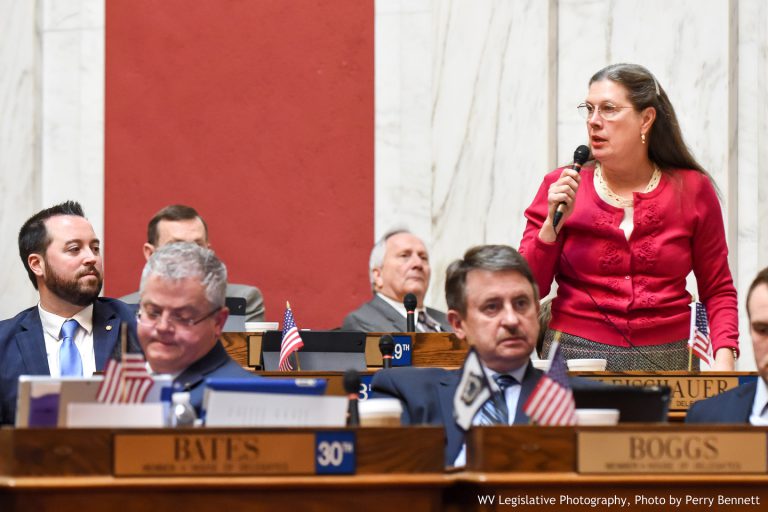
Delegate Barbra Fleischauer, D-Monongalia, is the lead sponsor on this year’s legislation, HB 2318.

“The thought is you can sell a drug once, but you can sell a person many, many times. It’s a very gruesome thought,” Fleischauer said.

Human trafficking is on the rise in West Virginia because the state is lagging in stronger laws related to the subject. West Virginia is susceptible to human trafficking because of its interstates, poverty and unemployment rates, drug issues, the number of children in foster care, and the number of children subject to abuse and neglect.

“We still have a long way to go, this is the first step in the process. We know of human trafficking cases, but haven’t had any prosecution,” Fleischauer said.

According to proponents of the bill, its passage would lead to more prosecutions related to this crime.

Fleischauer said the next step would be counseling for the victims.

Bills Related to Kidnapping and Drug Violations Approved by Senate Judiciary

0

The Senate Judiciary Committee has approved three bills to be reported to the floor with the recommendation that they pass.

SB 206 would expand the definition of kidnapping to including taking or gaining custody of, confining or concealing another person by force or threat of force; or by duress, fraud, deceit misrepresentation or enticement.

Lead sponsor for the bill Senator Ryan Weld (R – Brooke) said there was too much “wiggle room” in the language of the original definition that would not adequately protect those threatened with kidnapping.

SB 220 would create a new felony offense for a drug delivery that results in the death of another person and providing a felony criminal penalty.

Senator Robert Karnes (R – Upshur) said he was concerned that the bill might interfere with a current law enacted in 2015 from SB 523 that grants limited immunity from prosecution for certain misdemeanor offenses for a person who seeks emergency medical assistance for someone who is experiencing a drug or alcohol overdose.

Committee counsel Tom Smith ensured the bill would not conflict with the current rule.

Senator Charles Trump (R – Morgan), Chair, took SB 219 off of the agenda at the start of the meeting to be discussed at a future date.

The next meeting for the Judiciary was not announced.

House Passes Bill to Increase Penalties relating to Controlled Substances

0

Today in the House passed six bills, which will now go to the Senate for further consideration and sent one bill back to committee for further evaluation. 

HB 2364 prohibits electioneering during early voting periods in and around early voting locations to the same extent as is currently prohibited at polling places on election day. 

HB 2619 adopts the National Association of Insurance Commissioners’ Risk Management and Own Risk Solvency Assessment Model Act for implementation by West Virginia insurers so that they are better equipped to assess their financial condition and remain solvent. 

HB 2630 authorizes the Board of Medicine and the Board of Osteopathic Medicine to share stag when efficient and practical to do so.

HB 2648 increases the minimum sentence by three years for individuals convicted of manufacturing, delivering, or transporting controlled substances in the presence of a minor.

HB 2651 requires nationally normed standardized achievement tests to be administered to nonpublic students the ages of seven and seventeen. It also requires that the test administrated be published or normed within ten years from the date of administration.

HB2684 imposes penalties for repeat violations of the prohibition on driving under the influence on a suspended license by persons under the age of 21. 

HB 2502 was referred to the Judiciary Committee. This bill would permit a licensed professional in another state to apply for licensure in West Virginia, if certain conditions are met.

Committee Meetings Today

 Judiciary: 2:15 p.m. in 410M

Committee Meetings Monday, March 6

Judiciary: 9 a.m. in 410M

Sub-Committee on Higher Education: 9:30 a.m. in 434M

Roads and Transportation: 1 p.m. in 215E

Finance: 2 p.m. in 460M

Education: 2:30 p.m. in 434M

Gov. Org.: 3 p.m. in 215E

Senate Passed Three Bills Today

The Senate passed three bills today. The bills were SB 4, SB 410, and SB 439.

Senate Bill 4 would allow licensed professionals donate time to care of indigent and needy in a clinical setting. It was amended by Senator Takubo (R – Kanawha) on third reading and then passed as amended.

Senate Bill 410 would relate to marking traps with a DNR identification tag.

Senate Bill 439 would relate to venue for civil and criminal actions at Salem Correctional Center.

Bills on second reading were SB 209, SB 221, SB 224, SB 263, SB 400, SB 429, SB 436, and SB 445.

Senate Bill 224 was attempted to be amended by Senator Jeffries (D – Putnam). The amendment was not adopted after much discussion between Senator Trump (R – Morgan), Senator Ojeda (D – Logan), Senator Facemire (D – Braxton), and Senator Romano (D – Harrison).

Senate Bills 501-516 were introduced as well.

The following committees meet at the following times:

Judiciary at 1 p.m. in 208W.

Select Committee on Tax Reform at 9 a.m. in 451M on Monday.

Confirmations at 10 a.m. in 208W on Monday.


The Senate is adjourned until 11 a.m. on Monday.

Senate Confirmations Hear from Former First Lady Manchin

The Senate Confirmations Committee has heard from former first lady Gayle C. Manchin in a hearing relating to her appointment to serve as Secretary of the Department of Education and the Arts.

Manchin said she is ready to “streamline” the Department in order to meet budget demands by combining offices and reducing the number of employee positions.

She said she believes the Department plays a significant role in serving the citizens of the state by giving them a chance to engage in lifelong learning.

“I believe government is all about public service,” Machin said, “And providing them [citizens] the very best opportunities from birth to death.”

Manchin also said the arts should not be defunded in the proposed budget bill because they contribute to the economic growth of the state by encouraging its citizens to confront complex issues in creative ways, which she said the state needs now more than ever.

Manchin was First Lady from 2005 to 2010 during her husband’s first term as governor. Her husband is current U.S. Senator Joe Manchin.

The committee also heard from Cheryl Schreiber on her appointment to serve as a member on the West Virginia School of Osteopathic Medicine Board of Governors for a term ending on June 30, 2020.

Confirmations will meet Friday, March 10 at 10 a.m.

House Gov. Org. Discussed Six Bills

0

Today, House Gov. Org. met and discussed six bills. They included HB 2690, HB 2631, HB 2503, HB 2628, HB 2540, and HB 2554.

HB 2690 would terminate the West Virginia Board of Registration of Foresters while preserving essential protections against misrepresentations by unqualified persons in the commercial practice of forestry. Originally the bill stated that unexpended funds would be transferred to the General Revenue Fund, but there was an amendment that would transfer the funds into the State Road Funds in an effort to better West Virginia Roads.

HB 2631 would prevent dismissal of complaints that exceed time standards for disposition when then accused causes delay that results in the time overage. 

HB 2503 would update the rulemaking authority of the Board of Osteopathic Medicine.

HB 2628 would clarify and strengthen the duties and powers of the Board of Medicine and the Board of Osteopathic Medicine with regard to evidence of serious misconduct by licensees and applicants for license under their respective jurisdictions.

HB 2540 would permit a person to practice his or her profession for seven days for a charitable function. There would be a special license given to the person if certain qualifications were met. 

HB 2554 would transfer the West Virginia Contractor Act from administration and regulation by the Division of Labor to regulation under the provisions of professions and occupations in chapter 30 of code. 

Senate Finance Approves Two Bills

0

The Senate Finance Committee has approved two bills to be reported to the floor with the recommendation that they pass.

SB 185 would allow spending units to designate the fund which the proceeds from the sale of surplus property must be deposited when the fund that was used to purchase the property is no longer in existence.

The bill was first reported from Senate Government Organization with the recommendation that it pass.

SB 365 would maintain the solvency of the Unemployment Compensation Fund and extend the time period for borrowing funds from the Revenue Shortfall Reserve Fund for the Unemployment Compensation Fund to September 1, 2018.

The committee’s next meeting has not yet been announced.

Senate Judiciary Approves Three Bills

0

The Senate Judiciary Committee has approved three bills to be reported to the full Senate with the recommendation that they pass.

SB 358 would permit a timeshare managing entity to foreclose upon its statutory lien for assessments in the manner of sales under trust deeds. It provides for the naming of a trustee by the managing entity to carry out the sale and require notice.

Tom O’Neill spoke on behalf of the Land of Canaan Vacation Resort in favor the bill’s passage.

SB 338 would amend the Medical Professional Liability Act by adding a definition for “occurrence,” provide for a preference of venue, establish an attorney’s fees schedule based upon the amount recovered, establish the effective date and provide for severability.

President of the West Virginia Association for Justice Jane Peak was present to answer questions from the committee.

SB 173 would provide exemptions that would differentiate autocycles from having to adhere to motorcycle requirements.

Senator Robert Karnes (R-Upshur) proposed an amendment to only apply certain requirements to those under the age of 18, which the committee adopted with 11 yeas and 4 nays.

DMV Director of Vehicle Services Michael Maggard was present to answer questions from members.

The bill was reported out of Senate Transportation and Infrastructure prior to appearing before the committee.

Five Bills passed in House today, one postponed one day

0

Today, the House of Delegates passed five bills and postpone one for a day. Bills passed were HB 2740, SB 231, HB 2329, HB2620, and HB 2646. HB 2648 was postponed until tomorrow. 

HB 2740 is a supplemental appropriation bill; it draws funds from the surplus balance of the General Revenue to supplement funding for public defenders.

SB 231 provides that State Board of Education may delegate its Medicaid provider status and subsequent reimbursement to regional education service agencies or county boards subject to the county board determining that there is a net benefit and no detraction from the educational program of the county. 

HB 2329 makes it unlawful to produce, manufacture, or possess fentanyl. 

HB 2620 creates a central repository of drug overdose information in West Virginia; it establishes the reporting system requirements.

HB 2646 terminates the Women’s Commission and discontinues its functions. 

HB 2648 would increase the minimum sentence by three years for individuals convicted of manufacturing, delivering, or transporting controlled substances in the presence of a minor. 

Committee Meetings Today

Senior Citizens Issues: Right after session in 215E

Health and Human Resources: 3:30 p.m. in 215E

Prevention and Treatment: 4:30 p.m. in 215E

Committee Meetings Tomorrow

Judiciary: 8:30 a.m. in 410M

Finance: 9 a.m. in 460M

Sub-Committee on K-12: 9 a.m. in 434M

Gov. Org.: 9 a.m. in 215E

The House is adjourned until 11 a.m. tomorrow.