Thursday, April 9, 2026
Home Blog Page 50

Senate Gets 2025 Regular Session Underway

The State Senate, under the new leadership of President Randy Smith (R-Preston), convened just after Noon today to begin the work of the 2025 Regular Legislative Session.

The body began by hearing a short address by State Supreme Court Justice Charles S. Trump, IV, regarding President Abraham Lincoln’s birthday and his impact on our country and state.

Following those remarks, the Senate received the resignation of Sergeant-at-Arms David Lavender and unanimously electing Stephen Walker of Kanawha County to the same position.

The body adopted Senate Resolution 3, which creates the Select Committee on Substance Use Disorder and Mental Health for the 87th Legislature.

Finally, the Senate introduced bills 1-299 on day one. Those bills were referred to the appropriate committees for consideration.

The Select Committee on Substance Use Disorder and Mental Health held its first meeting at 1 p.m. in 451M.

UPDATE:

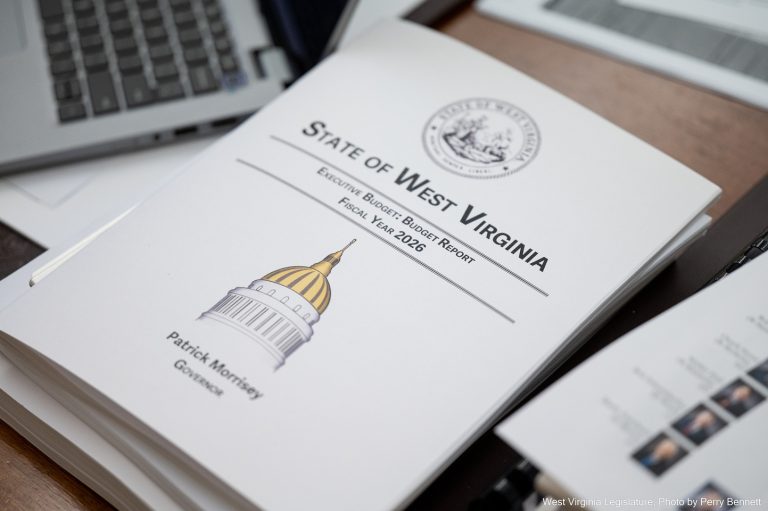
Following the Governor’s State of the State Address Wednesday evening, the Senate convened briefly to introduce the Budget Bill. The legislation has been referred to the Finance Committee.

The Senate is adjourned until tomorrow, Feb. 13, at 11 a.m.

Meetings for Feb. 13, 2025:

Finance at 9:30 a.m. in 451M

Judiciary at 3 p.m. in 208W


House Adopts New Rules for the 87th Legislature

The House of Delegates convened for day 1 of the 60-day legislative session.

Senate Concurrent Resolution 4 was adopted. The resolution amends the Joint Rules of the Senate and House of Delegates.

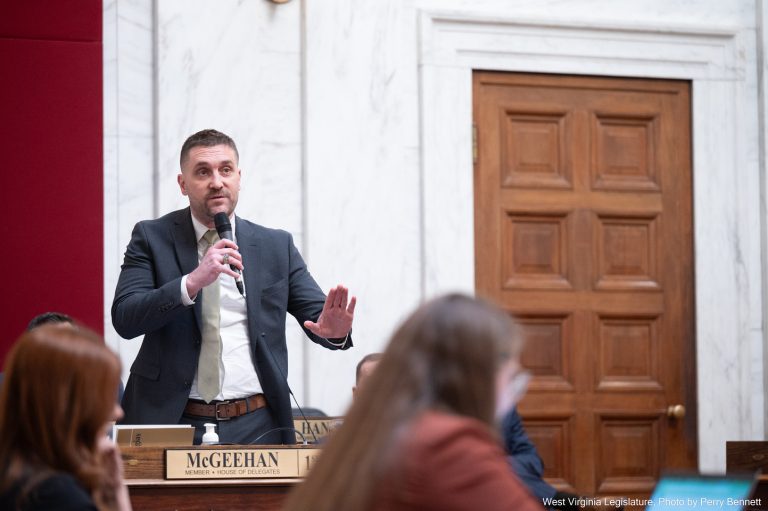
House Resolution 1, the Rules of the House of Delegates, was debated extensively. Nine amendments were offered to the resolution; all were rejected.

For a quick summary of House Resolution 1, please see this post.

The biggest change to the House Rules is the committee process and structure. The House has six standing committees: Finance, Education, Judiciary, Government Organization, Health and Human Resources, and Energy and Public Works. Each standing committee has three subcommittees, except for the finance committee, which has four. Each bill will spend two days in each committee. The first day will be the “hearing” day, where the bill is presented to the committee, explained by the sponsor, and individuals will be invited to speak to the bill. On “mark-up” day, the process will be similar to now. Amendments will be provided, and discussion will happen before a recommendation is made. Amendments must be submitted to committee clerks two hours before the committee meeting. This does not apply to committee substitutes.

Another clarification in the changed rules is that former members, who are now lobbyists are not permitted to be on the floor during session.

The House is in recess until 6:30 p.m.

Committee Meetings, Today February 12

Committee Meetings, Tomorrow February 13

Committee Meetings, Friday, February 14

The House returned to session for the Joint Assembly for the Governor’s State of the State Address.

The House is adjourned until 11 a.m. tomorrow, February 13, 2025.

Rules Committee Advances House Resolution 1

0

The House Rules Committee met this morning to consider House Resolution 1.

The resolution updates the House rules, which are already the House’s practices and includes new changes. Some changes were for language and clarification purposes.

Some of the changes include:

  • Speaker determines the membership, chair, and vice chair or standing committees and subcommittees.
  • The speaker refers bills and resolutions to the appropriate committee.
  • The clerk holds all official records of the House.
  • The deputy clerk may attend proceedings if the clerk is unavailable.
  • Signs, banners, placards, and similar demonstrative devices are prohibited in the House Chamber while in session.
  • When calling the point of order, members must state the specific rule and provision.
  • When a member is speaking, no person may pass between the member and the Speaker.
  • Clarifying a member recognized to ask or answer questions does not count as speaking on the question.
  • An explanation of a vote may be submitted in writing within one day after the core to the clerk. The explanation will be recorded in the journal.
  • A motion to table a secondary motion does not affect the primary motion.
  • Reports from standing committees can be received at any time during the session.
  • Updated types of committees from four to five to include subcommittees.
  • Six Standing Committees with Sub Committees and duties are explained.
    • Education
      • Education Choice
      • Public Education
      • Higher Education
    • Energy and Public Works
      • Economic Development
      • Energy & Manufacturing
      • Environment, Infrastructure, and Technology
    • Finance
      • Appropriations
      • Banking and Insurance
      • Investments
      • Revenue
    • Government Organization
      • Agriculture, Commerce, and Tourism
      • Government Administration
      • Local Government
    • Health and Human Resources
      • Health Care Regulation
      • Human Services
      • Public Health
    • Judiciary
      • Court
      • Homeland Security
      • Legal Service
  • The Committee on Rules and Duties are explained.
  • Instead of public hearings, public officials, public employees, and private individuals may appear before the committee to submit information regarding the subject before the committee.
  • Prepared statements shall be submitted to the committee clerk.
  • Achieved Audio for Legislative Session.
  • Removal of reference to Economic Impact Statement.
  • Media must have a correspondent’s card and take a seat before the session begins. If a press member leaves the camber, they may not return until the House is at ease or in recess.
  • Cell phones shall not be used to make calls while in session. To make calls, individuals must exit the Chamber.


Three amendments were offered and rejected. The resolution will be reported to the full House for consideration.

David Cannon Takes Oath of Office

This morning, Delegate David Cannon was sworn in as a member of the House of Delegates. Cannon was appointed to fill the vacated seat of Darren Thorne, who was appointed to the Senate. Clerk Jeff Pack administered the oath of office.

Cannon, who was serving as Hampshire County Commissioner, accepted this appointment to have a boarder role in the county.

Delegate D. Cannon represents the 89th District, which includes parts of Hampshire and Morgan counties.

Senator Darren Thorne was in attendance for the swearing-in ceremony.

INTERIM REPORT: Joint Committee on Health

0

Today, the Joint Committee on Health met for a presentation on Certificate of Need (CON).

First, the committee heard from the West Virginia Healthcare Authority. A volunteer board, through the authority, is responsible for final decisions regarding certificate of need applications, determining reviewable requests, and reviewing any optional violations. The CON process takes anywhere from 60 days to several months. In 2024, the authority processed 35 applications.

The West Virginia Hospital Association presented next. The Association explained that 75 percent of patients are covered by government programs, Medicaid, Medicare, and PEIA. These programs pay below the costs of private insurance. The Association stated that these lower payments restrict the ability to recruit and retain providers. The Association noted that CON is not a barrier to expanding healthcare services. It was stated that West Virginia’s ruralness and sparse populations make it difficult to ensure economically viable services. The Association noted that existing hospitals have expanded services, three hospitals have opened in the last three years, and support programs are available for community needs.

West Virginia is one of 38 CON states. The Association stated that in the last six years, CON has modernized care in the state with more diagnostic care, increasing outpatient care, and exempting birthing centers and hospital services on existing campuses from CON.

Next, a researcher from the Knee Center at West Virginia University provided a presentation on CON studies. He explained that the original goal of CON was to prevent over-providing services such as ambulance services, radiation, hospice, substance abuse treatment services, psychiatric care, and burn care.

He mentioned that the CON process can take months and cost thousands of dollars. In 20 of the CON states, the boards allow 13 incumbents to sit on the board, but WV does not. The boards allow competitors to weigh in on the CON process in most states. CON has a formula including percent utilization. Utilization percentage can prevent CON applications from being approved when hospitals have extra empty beds, competitors can refuse transfers, and differential rules.

According to the researcher, data from 448 tests associate negative results in CON states, including higher spending per service, diminished availability of services, and diminished quality of service. He stated that CON has not affected employment or wages, except for a CEO who received a pay cut. He stated that hospitals do not close with the repeal of CON.

The Pacific Legal Foundation presented that in the last five years South Carolina, Oklahoma, and Montana have all repealed CON. This year several bills have been introduced across the United States for CON repeal. Many states are struggling with an aging population and restrictive healthcare. The Foundation stated that repeal has seen more hospitals open and stay open. Repealing CON has allowed for more clinics, which has allowed nurses to complete clinical hours. Some states have passed legislation exempting rural areas from CON since more services are needed there. The Foundation spoke on the cost-shifting being a myth and that it assumes everyone who needs care is already getting care, which is not true. Although health care is not a free market, it responds to free market principles.

Finally, a presenter from the Cardinal Institute spoke on CON requiring all new and existing healthcare providers to receive permission from a government agency to build, expand, offer new, or update provided services. To the Institute, CON limits the expansion of healthcare. West Virginia has CON moratoriums with few exemptions. CON requires patients to travel farther for care and causes rural areas to struggle with access to care. Patients may travel out of state because it is closer than an instate hospital. Application fees in some states can be $1,500 to $35,000. The presenter noted that without CON hospitals saw higher ratings and that there were lower post-surgery complications.

Anne Charnock Sworn Into Senate

Anne Charnock (R- Kanawha) took her oath of office in the Senate chamber this afternoon, filling the vacancy in West Virginia’s 17th Senatorial district, which covers much of Kanawha County.

She replaces Eric Nelson, who resigned after being named Secretary of Revenue in Governor Patrick Morrisey’s administration.

Surrounded by various family members, friends and supporters, Charnock swore the oath as administered by West Virginia Supreme Court Justice Charles S. Trump, IV, with her sister Jane Charnock holding the Bible.

There were several elected officials and dignitaries on hand to support Charnock at today’s ceremony. That list includes: Senate President Randy Smith (R-Tucker), Speaker of the House of Delegates Roger Hanshaw (R- Clay), Delegate J.B. Akers (R-Kanawha), Senator Mike Stuart (R-Kanawha), State Auditor Mark Hunt and former West Virginia Supreme Court Justice Brent Benjamin.

Charnock is a former judge on the Municipal Court of Charleston, serving for over 12 years. She has led an impressive career as an attorney, serving as a hearing examiner for multiple state and local agencies, a child advocate attorney, assistant counsel for the WV Republican Party, and as the owner of Charnock & Charnock in Charleston.

Kevan Bartlett Sworn Into Senate

T. Kevan Bartlett (R- Kanawha) took his oath of office in the Senate chamber this afternoon, filling the vacancy in West Virginia’s 8th Senatorial district, which covers the western part of Kanawha County.

The seat was left vacant after Mark Hunt resigned following his election as State Auditor.

Surrounded by his wife Linda and a host of other family members and supporters, Bartlett swore the oath as  administered by West Virginia Supreme Court Justice Tim Armstead. Senate President Randy Smith (R-Tucker) and Majority Leader Patrick Martin (R-Lewis) as well as former Senators David Sypolt and Charles Trump were on hand to support Bartlett. State Treasurer Larry Pack was also in attendance.

Bartlett, a Sissonville native, served in the West Virginia House of Delegates on a temporary basis in 2019, representing the 39th district.

Bartlett is the pastor of Maranatha Baptist Church in Charleston.

Delegate Ian Masters takes oath of office.

Today, Delegate Ian Masters (R-Berkeley) was given his oath of office in Charleston by House Clerk Jeff Pack. Delegate Masters represents the 91st Delegate District in Berkeley County and was appointed by Governor Patrick Morrisey to fill a vacancy in that office.

House Speaker Roger Hanshaw and Delegate Matthew Rohrbach were also in attendance for the Friday afternoon ceremony.

Hanshaw Elected Speaker During Organization Day of 87th Legislature

Today at noon, the West Virginia House of Delegates convened for the first session of the 87th Legislature. The Secretary of State presented the election results from the 2024 elections to the Clerk. The Clerk determined a quorum of 91 of the 99 members. Justice Dan Greer administered the Oath of Office to those members.  An additional delegate arrived before the Speaker’s election and was sworn in as a member, making a quorum of 92.

During the Speaker’s election, Delegates Kelly and McGeehan nominated Roger Hanshaw, R-Clay. Delegates Lewis and Fluharty nominated Delegate Sean Hornbuckle. Roger Hanshaw won and was sworn in as Speaker.

Speaker Hanshaw took a few moments to thank the members, his opponent, and his family. He asked members to reflect on the last 10 years over the next month. The Speaker spoke of the investments in people, hospitals, and higher education and the expansion of infrastructure and healthcare services. He announced that West Virginia has the highest percentage of inward migration in America.

The Speaker said the grand challenges remain across the United States, not just here. Even though there have been investments in healthcare, West Virginia still has some of the poorest health outcomes in the developed world. Even with investments in raises, the state still is not offering competitive salaries compared to other states. Despite increased funding for infrastructure, some people do not have access to much-needed infrastructure. Improvements have been made, but there is still work to do.

Speaker Hanshaw said the future is bright, and he is looking forward to working with Governor Morrissey since his agenda aligns with the Legislature to help people choose West Virginia as a place to live, work, and raise a family.

Clerk Steve Harrison retired after five terms as Clerk of the House. Speaker Hanshaw and Delegate Jeff Campbell nominated former delegate Jeffrey Pack. Pack was elected and sworn in as the Clerk.

Ed Hart was nominated as Sergeant-at-Arms by former Sergeant-at-Arms and Delegate Marshall Clay and Delegate Mike DeVault. Hart was elected and sworn in as Sergeant-at-Arms.

Robert Stewart was nominated as Doorkeeper by Delegates Ellington and Vance. He was elected and sworn in as Doorkeeper.

Three resolutions were adopted by the House today.

House Concurrent Resolution 1 raises a Joint Assembly to open and publish election returns.

House Concurrent Resolution 2 invites the Governor to deliver an address to the Legislature during a Joint Assembly.

House Concurrent Resolution 3 allows the Legislature to adjourn until February 12, 2025, at noon.

The House recessed until the Joint Assembly at 2 p.m. The Senate and the Justices of the Supreme Court of Appeals joined Delegates. The Secretary of State provided the election returns to the Speaker and President. The elected Constitutional Officers are:

  • Patrick Morrisey, Governor
  • Kris Warner, Secretary of State
  • JohnJBMcCuskey, Attorney General
  • Larry Pack, Treasurer
  • Mark Hunt, Auditor
  • Kent Leonhardt, Commissioner of Agriculture

Governor Jim Justice provided his farewell address.

The House continued with its business after the Joint Assembly dissolved.

Senate Concurrent 1 is the joint rules of the Senate and House of Delegates.

Senate Concurrent 2 authorizes contingent expenses of the two bodies.

House Resolution 1 is the House Rules; it was referred to the Select Committee on Rules.

House Resolution 2 authorizes the printing and distribution of Acts of the Legislature, Journals of the House of Delegates, the Publication of the Legislative Manual, and the authorization of travel payments and other expenses.

House Resolution 3 authorizes the appointment of employees for the first regular session of the 87th Legislature.

House Resolution 4 declares a vacancy in the 91st delegate district of the West Virginia House of Delegates due to the failure to take the Oath of Office by the Delegate Elect as required by Article VI, Section 16 of the West Virginia Constitution.

House Resolution 4 led to a debate on whether the resolution was constitutional.

Those opposing the resolution argued that while they agreed the delegate elected to the district should not be a part of the body, the proper way to go this would be a motion to expel. The reasoning given was that the delegate-elect did not refuse to take the oath of office, which is what is in Article VI, Section 16. The opposition fears a legal battle about declaring the seat vacant could arise and that it could cause an issue for the other delegate-elects who could not be here today.

Those supporting the resolution argued that the delegate-elect cannot be here to take the oath of office. Supporters stated that while others are not here, they could be if it were not for incidental circumstances. The reasoning provided was that the delegate-elect is unable to be here for legal reasons and therefore should be disqualified from being seated.

The two sides did not agree on the definition of a member. Those opposing stated that one is a member of the House after being elected and certified. Those supporting stated that to be a member of the House one must be elected, certified, and take the oath.

House Resolution 4 was adopted, declaring the 91st district seat vacant.

The House is adjourned until noon on February 12, 2025.

87th Senate Convenes, Randy Smith Elected President

The West Virginia Senate convened a one-day organizational session for the 87th Senate today at Noon.

Senator Donna Boley (R – Pleasants, 03) presided over the beginning of the session as the Senate’s longest continually serving member.

Following the presentation of certified election results by Secretary of State Mac Warner, and the swearing in of newly elected senators by Supreme Court Justice Tim Armstead, members of the Senate nominated and elected Senator Randy Smith (R – Tucker, 14) by acclamation to serve as President of the Senate.

After the election of Smith as President, Lee Cassis was reelected Senate Clerk, David Lavender was reelected Sergeant-at-Arms and Jeffrey Branham was reelected Doorkeeper. All were unanimously approved.

The Senate also adopted several resolutions relating to the Senate Rules and other organizational matters.

The body recessed around 1:30 p.m. to join the House of Delegates for a farewell address by Governor Jim Justice in the House Chamber.

The Senate is currently adjourned until members reconvene Feb. 12, 2025, at Noon for the start of the First Regular Session of the 87th Legislature.