
Tuesday, June 2, 2026
Home Blog Page 7

House Passes Vape Safety Act

Today in the House of Delegates, House Bill 5437 passed.

House Bill 5437, the Vape Safety Act, would require those operating a vape or smoke shop to obtain a license from the ABC Commissioner. The annual license fee would be at least $1,200. The funds collected from fees will be split between the ABC Enforcement Fund and the Agricultural Fees Fund. The bill limits where a vape or smoke shop may open, preventing locations within 300 feet of childcare facilities, public or private schools or colleges, public parks or libraries, government buildings, a residence, another vape or smoke shop, or bars. The bill also places regulations on signage, advertising, and labeling.

Opponents expressed concerns about regulating an industry that should be handled at the local level. Proponents believe this bill will protect children and remove bad actors.

Additionally, House Bill 4006, the WV Aerospace and Advanced Manufacturing Growth Act, was passed. The Act would establish a program to encourage the attraction, development, construction, operation, maintenance, manufacturing, and expansion of the aerospace economy and its facilities in West Virginia. It would also create the West Virginia Aviation and Aerospace Job Development Investment Grant Program. Additionally, the bill creates the WV Aerospace MRO Workforce and Aviation Maintenance Education Act. The bill was amended to clarify that eligible institutions include public community and technical colleges, CTCs with aviation maintenance training, and any four-year higher education institution.

The House completed legislative action on House Bills 4215 and 4575. On House Bill 4433, the House concurred with additional amendments.

The House is adjourned until 10 a.m. on Monday, March 2.

Committee Meetings, Today February 27

Committee Meetings, Monday March 2

Death Penalty Bill Advances Senate Judiciary

0

The Senate Judiciary committee met Thursday afternoon to move several bills to the full Senate.

Senate Bill 1037 would allow the death penalty only in cases where a defendant is convicted of both first-degree murder and first-degree sexual abuse of a child under 12 in the same proceeding.

The bill outlines capital trial procedures, requires prosecutors to file a formal notice seeking the death penalty, mandates that at least two aggravating factors be proven beyond a reasonable doubt, and provides for automatic appellate review if a death sentence is imposed.

“There are situations where somebody can be executed, and you got the wrong person,” stated Senator Joey Garcia (D – Marion, 13). He stated that this bill opens the door for the death penalty to potentially become an option for various crimes. “I am proud that we are one of the states that for a long time have not had the death penalty,” he stated.

Others supporting the bill emphasized the significance of the death penalty for severe crimes.

“We have to ensure that the death penalty is only for the worst of the worst,” stated Senator Scott  Fuller (R – Wayne, 05). He made the case that certain individuals cannot be rehabilitated and that the death penalty is the appropriate response.

The bill was reported to the full Senate with a recommendation of passage, first being sent to the committee on Finance.

Senate Bill 1008 would change the statute of limitations for asbestos and silica claims, clarifying when a lawsuit can be filed.

The bill specifies that claims begin when a person is diagnosed, discovers facts prompting a diagnosis, or dies from a related condition, distinguishes noncancerous and cancer-related claims as separate actions, and sets limits on suing manufacturers of mining equipment based on federal specifications.

The bill was reported to the full Senate with a recommendation of passage.

Senate Bill 1026 would make intentionally disrupting a religious service, whether in person or online, a felony, while disruptions of other lawful meetings remain misdemeanors.

The bill defines disruption to include any act that interferes with the service or any gesture, display, or statement that outrages the congregation’s sensibilities, and it specifically covers disruptions at tax-exempt places of worship as well as virtual services conducted via video or teleconference.

Senator Ryan Weld (R – Brooke, 01) proposed an amendment Striking the last sentence starting with any officer and ending with good behavior.

“people meeting for the worship of God”

The bill was reported to the full Senate with a recommendation of passage.

Senate Bill 499 would require that any driver involved in a crash that results in death must undergo a toxicology test, ensuring authorities can determine whether drugs or alcohol played a role.

This bill, also called Erin’s Law, sets penalties for drivers who knowingly leave the scene of a crash causing injury or death, ranging from misdemeanors to felonies, and includes license revocation for at least one year upon conviction.

The bill was reported to the full Senate with a recommendation of passage, first being sent to the committee on Finance.

Health Committee Advances ALS Care Service Act

0

House Health and Human Resources met this afternoon.

Markup & Passage

House Bill 5004 would require health coverage for Pediatric Acute-Onset Neuropsychiatric Syndrome (PANS) and Pediatric Autoimmune Neuropsychiatric Disorders Associated with Streptococcal Infections (PANDAS).

House Bill 5327, the West Virginia ALS Care Services Act, would establish a program and fund to help people with Amyotrophic Lateral Sclerosis (ALS). The Act would require the Department of Human Services to provide care service coordination and support, as well as access to technology, medical equipment, and ramp loan programs. The bill would also require the Department of Human Services to facilitate access to specialized multidisciplinary ALS Clinics.

House Bill 5563 would create the West Virginia Timely Transplant Referral and Veteran Care Coordination Act. The bill requires transplant referrals to be sent within 3 days, establishes automatic clinical referral triggers based on organ evaluation, and requires written confirmation of referral status to the patient or family members within 7 days.

House Bill 4772 requires the Bureau of Medical Services to verify the death of Medicaid enrollees and remove them from the rolls. The bill requires data matches with official death records and mandates the termination of eligibility upon proof of death.

House Bill 5260 expands the approved forms of medical cannabis to allow for lozenges and gels.

Committee Hearing

House Bill 4965 allows a patient who has received prior authorization from the Public Employees Insurance Agency for treatment of a medical condition to receive an alternative covered treatment for the same condition without additional prior authorization, provided the alternative treatment is medically appropriate and does not exceed the cost of the originally authorized treatment.

Senate HHR Advances Bills on Nicotine Products, Chemotherapy, and Juvenile Substance Disorder

0

The Senate Health and Human Resources Committee met Thursday afternoon, advancing bills on chemotherapy, prohibiting certain foods in West Virginia, the Alternative Nicotine Product Regulatory Act of 2026, and juvenile substance abuse treatments.

Senate Bill 4852 would prohibit the use of certain food additives in West Virginia, effective in 2028.

The following substances are not permitted in food manufactured on or after January 1, 2028, include:

* Butylated hydroxyanisole.
* Propylparaben.
* FD&C Blue No. 1.
* FD&C Blue No. 2.
* FD&C Green No. 3.
* FD&C Red No. 3.
* FD&C Red No. 40.
* FD&C Yellow No. 5.
* FD&C Yellow No. 6.

The bill establishes a civil penalty of up to $500 per individual food item for knowingly manufacturing, selling, or offering for sale food that contains one or more of the listed additives.

Senator Patricia Rucker (R – Jefferson, 16) proposed an amendment clarifying that dietary supplements will not be considered food.

The amendment was adopted.

The bill, as amended, was reported to the full Senate with a recommendation of passage, first being sent to the committee on Judiciary.

Senate Bill 1000 would establish the Alternative Nicotine Product Regulatory Act of 2026.

The bill aims to regulate the manufacturing, labeling, marketing, and sale of alternative nicotine products to protect public health and prevent marketing to minors.

The bill defines “Alternative Nicotine Products” as any noncombustible product that contains nicotine, and that is intended for human consumption, whether chewed, absorbed, dissolved, ingested, or consumed by other means.

The bill seeks to ensure the safety and security of alternative nicotine products manufactured for sale in the state.

Senator Rucker proposed an amendment that would remove the directory from the code, due to all the regulations in place stating the directory is no longer necessary.

The amendment was rejected.

The bill was reported to the full Senate with a recommendation of passage.

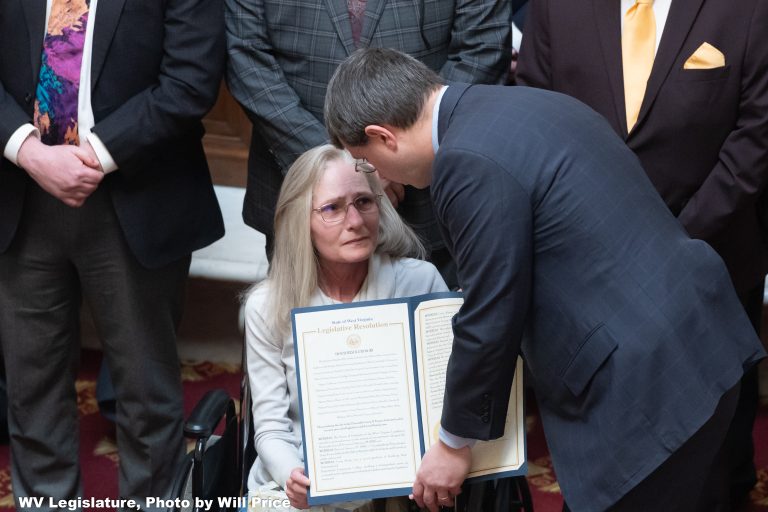
House Bill 4089, known as “Jessica Huffman’s Law,” would require health insurers in West Virginia to cover scalp cooling for cancer chemotherapy patients.

Jessica Huffman testified in front of the committee and shared her personal experience and the emotional impact of losing her hair during treatment.

She explained that despite feeling strong and capable, losing her hair made her feel as though others pitied her and viewed her as less confident and credible. She emphasized the social significance of having hair for working mothers, professionals, and others battling cancer.

Huffman stated that the scalp cooling system is FDA-approved and that the treatment can cost between $2,000 and $3,000 for a full chemotherapy course.

The bill was reported to the full Senate with a recommendation of passage.

Senate Bill 114 would establish a paid parental leave pilot program for eligible state employees.

The bill proposes up to 12 weeks of paid leave for full-time state employees following the birth or adoption of a child between July 1, 2026, and July 1, 2028. Employees would receive 90% of their average weekly wage, capped at $1,000 per week.

The Department of Labor would oversee the program, report its findings to lawmakers, and the pilot would sunset on December 31, 2029.

The bill was reported to the full Senate with a recommendation of passage, first being sent to the committee on Finance.

Senate Bill 1012 would permit the development of additional juvenile substance use disorder treatment beds in Cabell County.

Under current law, new licensed substance abuse treatment beds generally cannot be added in counties that already have more than 250 beds. This bill creates an exception allowing a certificate of need to be issued in Cabell County for up to 60 additional inpatient treatment beds dedicated to individuals 17 years of age or younger.

“We have a lot of youth in West Virginia who need services like this. Unfortunately, that need wasn’t fully considered when bed limits were set. Hopefully, this marks the beginning of recognizing just how urgent the need has become,” stated Senator Scott Fuller (R – Wayne, 05).

The bill was reported to the full Senate with a recommendation of passage.

Senate Approves 5 Educational Leave Days Within Excused School Absences

The Senate passed 13 bills during a late-morning floor session on Thursday, including one that would allow up to five “educational leave days” per school year to be considered “excused absences,” for each student.

Under Senate Bill 1020, students would not be penalized for missing school on these days as long as they are for legitimate educational purposes. In order yo qualify, parents or guardians would submit a note within three days of the student’s return to school explaining how the days were used.

The State Board of Education would create a rule to define what constitutes an educational leave day. School officials could deny these days if the explanation doesn’t meet the defined criteria.

Additionally, the legislation clarifies that absences for participation in certain student organizations like 4-H, FFA, and other state-recognized groups, as well as school-approved activities and college visits, are not subject to the existing 10-day limit for excused absences, effectively allowing more flexibility for these types of absences.

The bill now heads to the House of Delegates for further consideration.

Also of note on Thursday, Senator Mike Woelfel (D-Cabell, 05) made a motion to reject Senate Bill 966 on First Reading. This bill would modify the requirements for home schooling in West Virginia by removing the need for parents to have specific qualifications, such as a GED, high school diploma or post-secondary degree, to teach their children at home.

The legislation would also eliminate the requirement that home-schooled children must be instructed in the same subject areas as public schools, specifically removing the mandate for instruction in reading, language, mathematics, science, and social studies.

Additionally, the bill would change the assessment options for home-schooled students, allowing parents to select alternative academic assessments and removing the requirement for standardized testing in specific subjects or for a certified teacher to review a portfolio in those subjects.

Woelfel and other supporters of the rejection motion noted that while the vast majority of home school teachers do an excellent job educating their kids, there are some that game the system and would take advantage of no regulation or oversight. They argued for the simple guardrails that are currently in place.

Opponents of the rejection motion cited studies showing the majority of home school students are well prepared for college and that home schooling is a family matter that does not need government regulation. Senator Eric Tarr (R-Putnam, 04) also correctly pointed out that if the motion to reject was defeated, the bill could still be amended on second or third reading.

The motion to reject the bill failed on a 24-10 vote.

UPDATE: 

The Senate reconvened at 4:45 to receive additional committee reports and read select bills a first time.

The Senate is adjourned until tomorrow Feb. 27, at 11 a.m.

Morning Meetings for Feb. 27:

Judiciary at 9 a.m. in 208W

Gov. Org. Advances Bills Exempting Employees from Classified System

0

The Committee on Government Organization met this afternoon.

Committee Hearing

House Bill 5403 would provide reasonable minimum safety standards for fully enclosed buildings participating in the state’s agritourism program.

House Bill 4176 would allow youth hunters to take one antlered deer during the Special Youth Deer Season.

House Bill 5364 reforms the state board and commissions system by eliminating unnecessary, expired, or outdated boards. The bill shifts essential functions of several boards or commissions to various agencies or entities. It reduces the number of members on several continuing boards and commissions. Finally, it modifies or eliminates several reports from various boards or commissions.

House Bill 5087 establishes the Interstate Cosmetology Licensure Compact.

Markup & Passage

House Bill 4025 exempts new hires and promoted employees within the Departments of Health Facilities, Department of Human Services, and Department of Health from the classified civil service system and the state grievance process, effective July 1, 2026.

House Bill 5441 terminates the State Personnel Board. It defines the role of the director and the Division of Personnel, and transfers all State Personnel Board responsibilities to the Division. The bill eliminates the exemptions for the Department of Transportation, State Tax Division, and Bureau of Social Services. It exempts transferring new hires and promoted employees within the Department of Transportation into the classified-exempt system. These employees are exempt from the grievance board.

House Bill 5622 modifies city charters to align local elections with state elections.

House Passes Bill Prohibiting Law Enforcement Cameras on Private Land

The House of Delegates passed several bills today, but also postponed six by one day. The bills postponed are House Bills 4006, 4148, 4395, 4471, 4981, and 5613.

A few of the bills passed today:

Senate Bill 84 prohibits law enforcement from installing a surveillance camera on private land without the property owner’s consent or a valid search warrant.

House Bill 4483 makes changes to the code relating to funeral services licensure and administration, as well as updates apprenticeship standards.

House Bill 4962 declares violations of controlled substances laws may create a public nuisance, allowing the county or municipality to take action to abate the nuisance and seek assistance from the court.

House Bill 5012 allows for transfers of school personnel during the school year to schools in need.

Resolutions introduced can be found here.

Committee Meetings, Today February 26

Committee Meetings, Tomorrow February 27

House Finance Passes Two Originating Bills

0

The House Finance Committee this morning.

Markup & Passage

House Bill Originating provides for revenue bonds for improvements at the Culture Center.

House Bill 4001 would create a nonprofit corporation formed by the Governor to promote economic development, job creation, job retention, job training, and the recruitment of businesses to WV.

House Bill 5353 would bring virtual currency kiosks within the purview of money transmission licensure. The bill sets disclosure requirements and transaction limitations for new and existing customers.

House Bill 5088 increases the West Virginia Natural Resources Police Officer Retirement System accrued benefit for members who retire after July 1, 2029. The bill provides funding for the benefit.

House Bill 4010 provides a statutory framework for lending state funds to local airports for hangar construction to enhance economic development in the state.

House Bill 5515 revises outdated provisions of the code relating to the administration of workers’ compensation claims.

House Bill 5438 would modify the foundation allowance to improve instructional programs.

House Bill Originating – Hope Scholarship would amend the Hope Scholarship to require payments four times a year instead of twice.

An amendment was offered to set an income cap at five times the Average Gross Income. The amendment was ruled not germane.

Another amendment was offered to insert a tier award so that families making $75,000 or less get full award, families making $75,000 to $100,000 would get 75 percent of the award, families making $100,000 to $125,000 would qualify for 50 percent of the award, families making $125,000 to $150,000 would qualify for 25 percent of the award, and families making over $150,000 would be ineligible for the Hope Scholarship. The amendment was ruled not germane.

Another amendment was made to allow out-of-state virtual schools to remain eligible, while making brick-and-mortar schools ineligible. The amendment was ruled not germane.

The originating bill was advanced to the House floor.

The Committee is in recess.

Senate Judiciary Continues to Advance Child Welfare Bills

The Senate Judiciary Committee met Wednesday afternoon and evening, advancing three child protection-related bills, continuing the body’s theme this week of addressing West Virginia’s child welfare issues.

Senate Bill 937 establishes a community-based child welfare system program in West Virginia, beginning with a phased implementation in Berkeley and Jefferson Counties and Bureau for Social Services Region IV, with further expansion requiring legislative approval.

While the Bureau for Social Services would retain exclusive authority for initial intake of abuse and neglect reports, investigations, and emergency safety decisions, responsibility for ongoing case management, service coordination, and court-related functions would be transferred to contracted community-based providers after the initial investigation is complete.

Under the legislation, these providers would be required to meet specific qualifications, and the system would use a case-rate payment model with shared-risk provisions, allowing providers to retain savings from improved outcomes while assuming some cost responsibility.

The bill emphasizes performance-based contracts rather than prescriptive staffing, sets caseload expectations, and requires training aligned with department standards. The Bureau for Social Services would maintain oversight of contract compliance, performance, fiscal accountability, and data reporting, and contracted providers would have protection from civil damages for good-faith actions unless there is gross negligence or willful misconduct.

An evaluation report on child safety, fiscal performance, and provider capacity would be submitted to the Legislature within 18 months of implementation.

Senate Bill 459 would amend the Best Interests of Child Protection Act of 2022, aiming to ensure that courts consider the importance of a child maintaining meaningful contact with their step-siblings when making decisions about what is in the child’s best interests.

The “best interests of the child” is a legal standard used in family law cases, such as custody disputes, to guide judicial decisions.

This bill would add step-siblings to the existing list of relationships that are considered important for a child’s well-being and stability, alongside parents and half-siblings.

House Bill 4749 expands the rights of foster children and children in kinship placements, which are arrangements where a child is placed with relatives.

Specifically, for children aged 13 and older, the legislation adds three new rights: the right to be notified in a timely manner about any court hearing that could legally affect them, the right to attend such hearings, and the right to have the results of these hearings explained to them by their guardian ad litem (a court-appointed representative for the child) or legal counsel.

The bill also clarifies that if a child’s in-person attendance at a hearing is not practical or in their best interest, alternative attendance methods like virtual participation may be used, with a preference for the child’s wishes if feasible and beneficial.

All three bills were sent to the full Senate with the recommendation of passage.

House Health Advances Five Bills to Markup & Passage

0

The House Health and Human Resources Committee met this evening.

Markup & Passage

House Bill 5466 renames the intervention and prevention program for domestic abuse.

Committee Hearing

Senate Bill 645 would prohibit out-of-network emergency medical services agencies from balance billing a covered enrollee in a health insurance plan for ground ambulance services. The bill establishes the minimum payment an insurer must make to an out-of-network emergency medical services agency for ambulance services. The bill requires the insurer to pay out-of-network emergency medical services agencies directly and to promptly pay clean claims.

House Bill 5004 would require health coverage for Pediatric Acute-Onset Neuropsychiatric Syndrome (PANS) and Pediatric Autoimmune Neuropsychiatric Disorders Associated with Streptococcal Infections (PANDAS).

House Bill 5327, the West Virginia ALS Care Services Act, would establish a program and fund to help people with Amyotrophic Lateral Sclerosis (ALS). The Act would require the Department of Human Services to provide care service coordination and support, as well as access to technology, medical equipment, and ramp loan programs. The bill would also require the Department of Human Services to facilitate access to specialized multidisciplinary ALS Clinics.

House Bill 5563 would create the West Virginia Timely Transplant Referral and Veteran Care Coordination Act. The bill requires transplant referrals to be sent within 3 days, establishes automatic clinical referral triggers based on organ evaluation, and requires written confirmation of referral status to the patient or family members within 7 days.

House Bill 4772 requires the Bureau of Medical Services to verify and remove deceased Medicaid enrollees. The bill requires data matches with official death records and mandates the termination of eligibility upon proof of death.