

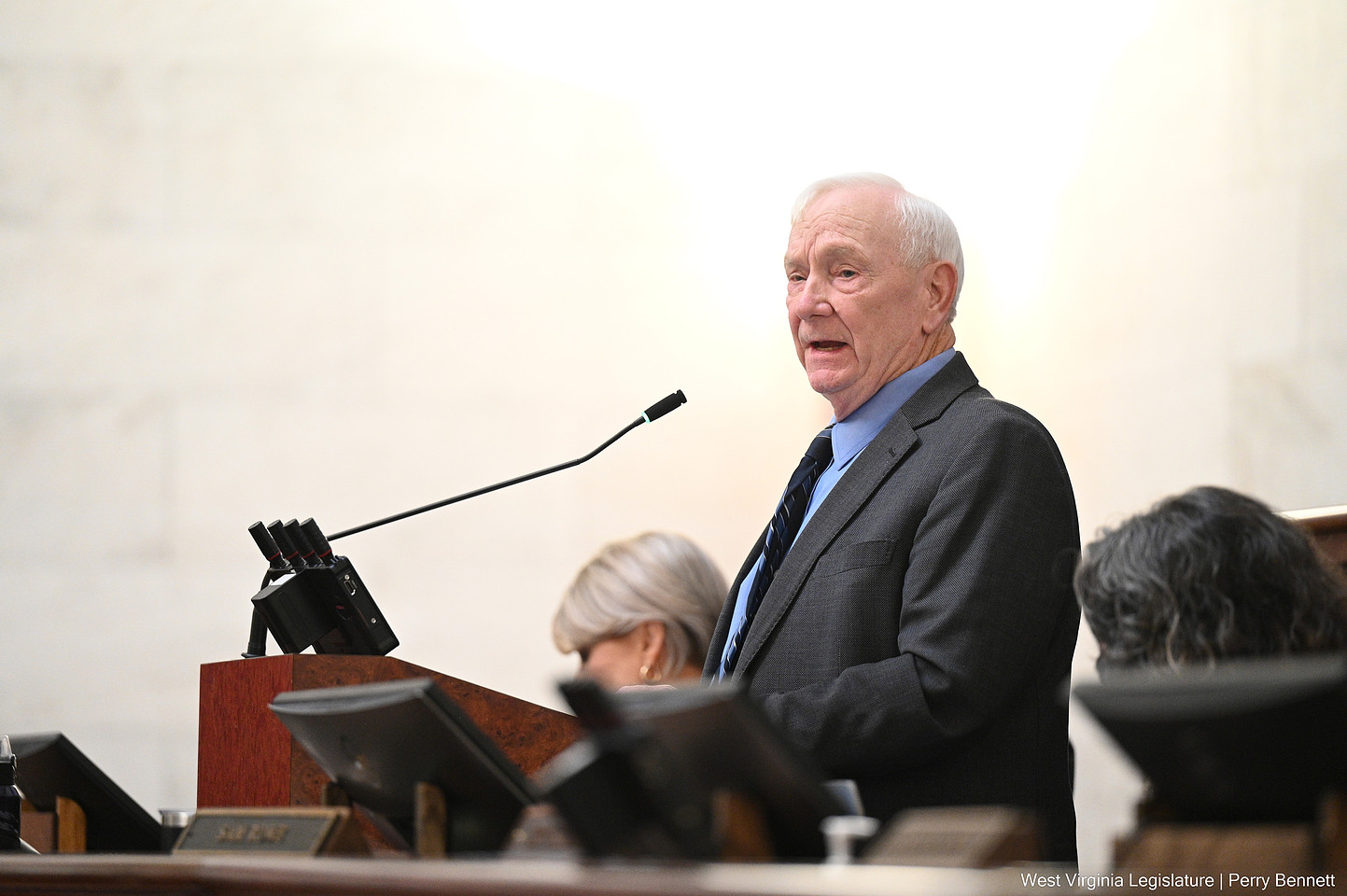
The Joint Education Committee met this afternoon to hear a presentation about proposed JROTC program expansion and proposed legislation from the State Board of Education.
The proposed JROTC expansion would create a Director of Army Instruction (DAI). This is usually done when a district has 5 JROTC programs, but because West Virginia’s rural, it has not been done. The proposal creates a DAI Team to provide direct oversight of Army JROTCs, general oversight of Air Force, Navy, and Marine Corps cadet command branches, a single point of operations for school district administration, and an operational hub.
The state’s ROTC programs would be split into two districts: East and West. Each district will have 10 schools.
The structure of the DAI is as follows:
* Director of Army Instruction
* Senior Operations Officers (SOO – East & West) (2)
* Senior Enlisted Operations/personnel manager
* Logistics Specialist – all logistics/operations and property accountability
* Administrative Assistant
The program will be funded through cost sharing with the US Army.
Next, the committee heard about the proposed changes to the school aide formula. The current model does not address students’ needs. Since the creation of the current model, public schools have changed, the way we educate has changed, and students’ needs have changed. The proposal provides weights for specific statuses (types or groups of students). Those weights dictate additional funding. The additional funding is restricted to the student group it was allocated to. For example, if a school receives extra funding for special education, those dollars must support special education.
Another change public schools have faced is a loss of 50,000 students in the last 10 years. Declining enrollment affects the formula because the formula is based on the number of students in the school. The proposed formula does not consider the lowest-populated county; instead, it provides a floor of 2,000 students.
Another issue with the current funding model is that it does not include required personnel.
The total cost of the proposal is $410 million, with $190 million being allocated to special education.
