Committee on Agriculture and Rural Development – June 6, 2021.
The Agriculture and Rural Development Committee met during June interims. The Committee heard from Crescent Gallagher, the Communications Director for the Department of Agriculture, and Dwayne O’Dell, the Director of Governmental Affairs for the WV Farm Bureau.
Mr. Gallagher provided an update on the 2021 Farm Bill and the successes of the current administration.
He said the 2021 Farm Bill, the first of its kind in West Virginia, did a lot for the Agriculture Department. The bill was packaged up for easy passage and did the following:
- Updates to language related to the Agriculture Business Development Division
- Clarifies that raw milk could be used for animal food and the production of soap
- Updates on membership for animal care standards board (A big issue for the Department)
- Removes of permits for untreated garbage to swine
- Allows Conservation to receive water control grants
- Establishes a commercial fed law
- Establishes the Department of Agriculture as the sole body over farmer’s markets
- Expands the Fresh Food Act to include dairy
- Creates the Agriculture Development Act
 Due to relaxing regulations, farmer’s market registration has doubled. DOD Fresh, a program that brings fresh food into schools, was moved back to a WV company. Meat processing and slaughtering have seen an increase during the pandemic.
The USDA has provided grants for the Farm to School program. The department is working to do all it can to get as much fresh food into the schools.
With dairy being transferred to Agriculture, the agency plans to relax regulations to expand. Beehive registration has increased.
Mr. Gallagher stated that the agency has expanded programs but has not had an increase in funding. Therefore, the agency is doing more with less funding. The agency has reduced travel and vehicle purchases. The agency is also operating with seven fewer full-time employees.
The number one issue the agency faces is the labs at the Guthrie Center. The Center is an old military base with several issues. Being a lab, it should not have windows, it is outdated and lacks space for all employees. The agency has lost federal funding due to the lab facilities not being up to modern standards. After consulting with an architecture company, the department has determined they should rebuild the Center in Guthrie. The cost is estimated at $50 million. The agency has requested money from the CARES Act Funds and has received letters of support from state leadership as well as the Senators and a Congressman at the federal level. The lab facility is mostly federally funded, and the federal funds cannot be used for facility construction.
Mr. O’Dell provided an update from the WV Farm Bureau. He stated that the average American spends about 10% of their disposable income on agricultural products, although the producer receives a very small amount of that.
He stated that inflation is a major issue the industry is facing across the country and in the world market. He stated that West Virginia’s poultry industry is experiencing a labor shortage at the processing plant in Moorefield which is preventing them from meeting production schedules.
He noted there are droughts in the western US and South America. Droughts cause issues with grain production needed to feed livestock used in the agriculture industry. The hog industry is seeing record prices due to demand. The Chinese have been a major player in the hog market. The country experienced a reduction of about 30 percent in its production due to African swine fever.
Inflation is high. The consumer food price has increased over the last 12 months. This can be contributed to higher input costs, such as fencing and packaging prices.
It is expected that in the next two decades that 300 million acres will be transferred to the next generation or sold outside of current families. The USDA has a 30/30 program that will remove 30 million acres from agriculture production by 2030. This could have a significant impact on the agriculture industry, particularly the livestock industry. Current issues included losing land due to road and industry development.
Legislation
Right-to-Farm legislation has shown benefit to the state. It could help in the expansion of the poultry industry. West Virginia produces 90 million chickens per year, which is a significant level of production.
Senate Bill 61, the predator control program, is liked by the Bureau due to continued threats to livestock from coyotes. Currently, sheep and goat owners can participate. The Bureau would like to see the program expanded to beef livestock. There are 400,000 beef cattle in the state.
Agriculture is strong, but it does have challenges, including economic and the age of farmers.
Joint Legislative Oversight Commission on the Department of Transportation Accountability / Select Committee on Infrastructure – June 6, 2021.
Delegates and senators of the Joint Legislative Oversight Commission on the Department of Transportation Accountability / Select Committee on Infrastructure received a preview of a proposal to dedicate an additional $150 million to highway maintenance during this legislative interim meeting on Sunday evening (June 6). The bill transferring this money to highways passed during the special session on Monday afternoon (June 7).
Transportation Secretary Byrd White told the committee that the money will go toward 400 projects spread over all 55 counties. He described just short of 750 total miles of paving. Examples of the projects include select bridge projects, repairing slips on bus route and fixing slides on business routes. According to White, this money will accelerate the completion of these already-scheduled projects.
After highway and transportation officials approached Governor Justice, he proposed putting more money toward highways as it became clear the state will finish the finish the fiscal year with a surplus. With less than a month to go in the fiscal year, that surplus is projected to be roughly $400 million. This $150 million highway allocation will come from the state’s general revenue fund. Ordinarily, highway maintenance is paid for through the state road fund, which is funded through fuel taxes, taxes from vehicle sales and fees paid when vehicles are registered.
Highways Commissioner Jimmy Wriston mentioned that lawmakers had generally not dedicated general revenue dollars to highways until recently, but he and lawmakers agreed that it will become necessary in the future given the gas tax is likely to generate fewer dollars, as the population trends towards driving more fuel-efficient vehicles.
Parks, Recreation and Natural Resources Subcommittee – June 7, 2021.
The committee heard a presentation on June 7 regarding the feasibility of two bills (SB114 and SB394) that would provide free hunting and fishing licenses to West Virginia veterans and volunteer firefighters, respectively.
Frank Hartman of the West Virginia State Fireman’s Association explained that recruitment and retention of members continues to be a challenge and that this bill adds value to service and would likely incentivize people to become members or maintain their membership.
Veteran groups are also supportive of this legislation.
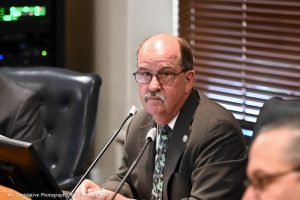 Division of Natural Resources Director Steve McDaniel is equally supportive of these bills in theory. However, in practice, he informed the committee that they would present a challenge for his agency.
“I think every veteran in West Virginia should have a free hunting and fishing license, the same for first responders, all are noble causes. But about 50 percent of us in here pay for hunting and fishing license every year and that is who pays for those free licenses,” said McDaniel.
McDaniel explained that when complimentary licenses are handed out, his agency is left with a reduction in funds to properly manage fish and wildlife resources throughout West Virginia.
McDaniel and various members of his staff gave a presentation to the committee regarding the costs and consequences of free license offers to various groups. The majority of DNR annual funding comes from federal excise taxes paid on firearms, ammunition, and archery equipment. A separate excise tax is paid on fishing tackle and motorboat fuel. The agency explained both programs called the Pittman-Robertson Wildlife Restoration Act for game management and the Dingell-Johnson Sportfish Restoration Act for fishing. Everyone pays the tax, but revenue from the tax is apportioned back to each state based on the number of hunting or fishing licenses sold annually. Each free license reduces the figure and as a result, negatively impacts the drawdown of federal money.
According to the presenters, the DNR’s budget for the current fiscal year is $63 million. However, only $15 million is from direct license sales, the rest is from various federal matching programs.
McDaniel closed by offering a creative way to fund a hunting and fishing license benefit for veterans and first responders. He suggested allowing veterans and first responders who purchase a lifetime hunting and fishing license (currently priced at $805) to write off the entire cost as a one-time exemption on state income taxes. In this scenario, the license is free to them, but would also count as a paid for license to help drawn down federal excise funding.
Joint Standing Committee on Pensions and Retirement – June 7, 2021.
The Joint committee on Pensions and Retirement heard a presentation from the Consolidated Public Retirement Board which was asked to consider about the possibility and feasibility of adding a third tier in the Public Employees Retirement System to include correctional officers, police officers and firefighters, 911 operators and other law enforcement groups with active PERS members.
As of July 1, 2020, there are 35,781 active PERS members. Of this amount, there are approximately 2,660 active PERS members that are public safety employees, 1,590 are correctional officers, 334 are police and firefighters, and 736 are 911 operators.
The new PERS Tier 3 would require separate assumptions and plan provisions compared to PERS Tier 1 and Tier 2. PERS Tier 3 could be modeled after existing West Virginia public safety defined benefit plans such as DSRS, EMSRS, MPFRS, and NRPORS. Also, the new PERS Tier 3 would require their own member and employer contribution rates, separate from PERS Tier 1 and Tier 2.
Potential PERS Tier 3 members would have to elect to join the new PERS Tier 3. Therefore, to avoid a new PERS Tier 3 with a small number of participants, minimum municipality and member participation rates should be considered as a requirement to implement a new PERS Tier 3.
If past service under PERS is included in the enhanced benefits under the potential PERS Tier 3, then special consideration should be made regarding employer and/or member contribution rates to pay for the enhanced benefits. Under 2005 West Virginia Pension Reform, unfunded enhanced active PERS benefits would have to be amortized over a ten-year period.
Joint Committee on the Judiciary – June 7, 2021.
The Judiciary Committee met on June 7, 2021, to discuss paid parental leave. The presenters included Liz Schindzielorz, the Senate Judiciary Counsel; Joe Thomas, the deputy director of the Division of Personnel; Brook Farber, deputy director, and William Jordan from the WV Division of labor; and Dr. Peter Shirley, director of the Division of Regulatory and Fiscal Affairs.
Ms. Schindzielorz noted the difference between the federal Family Medical Leave Act (FMLA) and the state Parental Leave Act (PLA). FMLA applies to birth, adoptions, fostering, health conditions, and military service needs. It can be paid or unpaid, depending on the employee’s accrued leave. The PLA only applies to public employees and is unpaid.
Schindzielorz studied trends from other states. Ten states and Washington DC have Paid Parental Leave Programs. Most states include some or all the private sector in the paid leave programs. For the public sector, the states are divided on who is included.
The programs often stipulate the minimum earnings in certain pay periods. The programs often differentiate between medical and family leave. Some states include organ donation, sexual abuse recovery, segregate pregnancies, and other categories. Frequently, the maximum amount of family leave that can be taken is 12 weeks. However, some states add weeks for pregnancy. The weekly benefits are typically a percentage of the employee’s wage or a percentage of the state’s minimum wage.
Mr. Thomas noted that the PLA is not a part of the DOP statute. However, they do have guidance information because they provide information to employees for FMLA. He stated to qualify for PLA the employee must be employed by the employer for 12 weeks. To qualify for FMLA, the employee must have been employed with the employer for 12 months.
Ms. Farber and Mr. Jordan noted that the Division of Labor has no rule-making authority related to the PLA. He said that in his time there they have only received one call about it. Once, the individual found out it was unpaid, they went another route for leave.
Dr. Shirley presented about Senate Bill 607, which would have provided a 12-week paid family leave for births and adoptions for state employees who had been employed for the last 12 months. He stated this program would only have been used if all sick leave and annual leave had been exhausted. The program had a fiscal note of $6.6 million. Currently, West Virginia only offers 12 weeks of unpaid leave.
Joint Committee on Finance – June 7, 2021.
State Deputy Revenue Secretary Mark Muchow told the Joint Committee on Finance during the June 7 interim meeting that all sectors of severance taxes are showing a significant increase in revenue in recent months.
Muchow, who noted the upturn began in January of this year, said that increases in revenue include severance taxes tied to natural gas prices, higher oil prices, in addition to a recovery in steam coal production in northern West Virginia and metallurgical coal production in southern West Virginia.
Muchow emphasized that the state has not returned to pre-pandemic levels of tax revenue, but the improvements of the last few months have been impressive in his view. West Virginia is currently down 12.2 percent compared to this time last year, but in December, the state was 50 percent down.
Given that severance tax revenues were nearly $200 million greater at this time two years ago, Muchow notes that the state has a long way to go.
“It all relates to those natural gas prices,” he said. “Higher natural gas prices means more steam coal use. Lower natural gas prices mean less steam coal use.”
Muchow noted the market for metallurgical coal has also been showing an increase in recent months with export markets increasing.
Also in the meeting, Ann Urling, Deputy Chief of Staff to Gov. Jim Justice, gave a presentation on parameters the state plans to use for spending its $1.355 billion portion of the American Rescue Plan (ARP) funds.
To date, West Virginia has received half of the $1.355 billion, more than $677 million, with the remainder coming later. Funds must be used for coronavirus-related expenditures, water and wastewater infrastructure, and broadband expansion. States have until Dec. 31, 2024, to appropriate the ARP funding. Projects must be completed by Dec. 31, 2027.
Urling said the state wants to use a data-driven methodology for approving ARP projects, with listening sessions scheduled across the state to give the public and stakeholders an opportunity to weigh in on ARP planning.
The U.S. Treasury Department issued rules and guidelines for ARP spending, expressing a mandate to state and local governments to develop strategic priorities for “inclusive economic development” focused on historically underrepresented regions.
Urling noted acceptable uses for ARP funds include public health expenditures, offsetting negative economic impacts due to pandemic, replacing lost public sector revenue due to pandemic, and providing premium pay for essential workers. Allowable infrastructure expenditures include water and sewer projects through the Environmental Protection Agency’s clean water and drinking water state revolving funds, and broadband projects for unserved and underserved parts of the state.
Urling explained that the state is using a third-party certified public accounting firm and a legal firm to guide government officials through the U.S. Treasury Department’s guidance for ARP dollars. The state also wants to create a mapping system to help identify spending needs and document how funds are spent.
Post Audit Subcommittee – June 7, 2021.
The Post Audit Subcommittee met on June 7, 2021. Auditor Patrick Renick presented on the WV Department of Environmental Protection Division of Mining and Reclamation – Special Reclamation Funds. Auditor Nathan Hamilton presented the 2020 Annual Volunteer Fire Department Report.
 During the presentation of the DEP report, it was noted that federal law requires West Virginia to establish a program to fund the reclamation of forfeited mining permit sites. Reclamation bond rates range between $1,000 and $5,000 per acre, covering 10 percent of reclamation costs. Other cost coverage comes from the Special Reclamation Funds which is funded through the Special Reclamation tax on mined coals.
Reclamation Surety Bonds total $927 million and can only be used when a mining company fails to perform reclamation and forfeits the bonds. Bonds are not available to the DEP to perform reclamation unless the permits are forfeited.
In the DEP report, the auditors found that the current per acre coal mining reclamation bond limits do not guarantee the solvency of the State’s Mining Reclamation Program. Since 2001, the program has seen increases in reclamation costs, which have devalued permit bonds. It is estimated that an additional $300 million in the Special Reclamation Funds are needed in the next 20 years to cover the reclamation cost for permits active as of June 2019. The auditor recommends that current rates be reviewed and adjusted to prevent the cost of reclamation from becoming a greater financial liability to the state.
Another issue is the lack of underwriting limits for surety bonds in the state. Surety bonds comprise 97 percent of the reclamation bonds issued in the state. Five companies are the sureties for 91 percent of all coal mining reclamation bond dollars in WV. Unlike other states, WV does not limit the amount of reclamation surety bond coverage a surety company may issue.
Post Audit provided the example of Indemnity National Insurance Company, which is the surety for 67 percent of the state’s mining reclamation bonds. Indemnity is also the primary surety for ERP, the coal company placed in receivership by the DEP to avoid bankruptcy and overwhelming the Special Reclamation Fund. The DEP provided $170 million in surety bond increases for Indemnity after the ERP lawsuit. Without underwriting limits, the state is at risk of financial liability to cover reclamation cost increases. The auditor recommends the Legislature consider amending the code by imposing maximum thresholds on the face value and total aggregate value of reclamation bonds permitted to be underwritten by a single surety company.
Of the 11 issues found, the third is that DEP is non-compliance with requirements for inactive mine status. While reviewing 100 applications for inactive status, auditors found 171 instances where federal requirements were not met. The auditor recommends that the DEP comply with all state and federal regulations, verify applications are complete and accurate, ensure permits do not exceed time limits and ensure all mine status categories are properly defined.
For the remaining issues and full report, click here.
The annual VFD Audit Report followed. In 2020, $22.5 million was dispersed to 427 volunteer and part-volunteer fire departments. Common findings at various VFDs were unallowable expenditures, unsupported expenditures, and commingled funds.
VFD examples presented to the committee included Logan County VFD#2, Jumping Branch- Nimitz VFD, and six other VFDs. Logan #2 had $69,094 in unallowable and unsupported expenditures and Jumping-Branch had more than $22,198 in unallowable and unsupported expenditures.
For the full report, click here.
Select Committee on Veterans’ Affairs – June 7, 2021.
The Select Committee on Veterans’ Affairs met June 7 to discuss various suicide prevention programs.
Randy Coleman from the Department of Veterans Assistance outlined the kinds of support that his organization gives to veterans. He noted that support for family is also a big key for veterans.
“When we think of our veterans, we often times forget their families. And it is a unit, it is a collective, cohesive unit that makes up that veteran, Coleman said. “To support that veteran and military community which most importantly the spouse and their dependents and that’s something that I think we as West Virginians in the state can do a much better job of and something that as we progress with the Legislature, we’re going to be able to do just that.”
Those who are passionate about the issue, say they want the Legislature’s help in bringing attention to the issue.
“After we figure out where we might possibly help, we’re going to suggest to the Legislature and to the Governor’s Office the best steps ahead, and see where we go from there,” added, Coleman.
Jerry Wood, Director of the WVU Office of Veterans Affairs discussed the declining population of veterans ages 18-54 in West Virginia. He emphasized the economic impact of missing out on this talented group of people and discussed strategies for recruitment, retention and job placement of veterans in this age group.
The Joint Committee on Health – June 7, 2021.
The Joint Committee on Health met on June 7, 2021. The focus of the meeting was local public health. Several individuals from various county health departments presented.
Mr. VJ Davis, the administrator of Preston County Health Department, presented on local public health funding and services. He noted the value of local health departments. He stated without it, this last year would have been even more difficult. Local health is the public health delivery system for all 55 counties. Local Public Health Departments connect with the community and create local business partnerships. Departments enforce regulations others cannot.
Currently, WV is receiving funds for local health in a way that has never been done before. Mr. Davis said this is a once-in-a-lifetime chance to look at WV public health and utilize grant money to make improvements. Local health departments receive funding from a variety of sources, including state aid, county commission, city government, board of educations, excess levies, fees for environmental permits and services, fees for clinical services, and grants-both governmental and non-governmental.
Local boards of health have three core (mandated) services which they provide: (1) Community Health Promotion- assessing needs and providing resources (2) Environmental Health Protection- disaster preparedness and (3) Communicable or Reportable Disease Prevention and Control. Local Boards of Health may offer enhanced services including, but not limited to adult services, cancer detection, cardiac services, dentistry, health checks, perinatal, women’s health, and pediatrics.
A Jay Root, administrator of Mineral County Health Department and vice president of WV Local Health Departments, presented on leadership, structure, and staffing of local health departments. He stated that chapter 16 of the WV code outlines public health. It establishes county commissions as the appointing authority over public health boards. The boards hire health officers and administrators. Boards also provide oversight of the program plan, organizational chart, and agency budget.
There are 18 local boards of health servicing 55 counties. Seven of the boards are combined county/municipal local boards of health and three are combined county local boards of health: Berkeley/Morgan, Mid-Ohio Valley, and Wetzel/Tyler. The boards tailor services to communities.
The staffing structures include five categories: administration, clinical, environmental, health promotion, and threat preparedness. The number of staff positions and types is dependent on individual health departments and the population served. Basic staffing includes a health officer, an administrator, a nurse, a sanitarian, and an office assistant. Enhanced staffing includes threat preparedness coordinator, health educator, public information officer, nurse practitioner, dentist, dental hygienists, and peer recovery coaches. Some roles may be blended, meaning one person takes on multiple roles.
Information Technology varies between departments. Several systems are used for local boards of health. For financial data, departments may use QuickBooks, crossroads, or another service. For electronic medical records, departments may use CureMD, InSync, Careficient, or Office Ally. Some departments still use paper medical records. For state data, departments use health space, health stat, chex out, VAMS, WV EDSS, WV Public Health Alert, WV REDI, WV SIIS, Survey Monkey, and wvOASIS.
Dr. Lee Smith, the executive director, and health officer for Monongalia County Health Department, presented on rules and communications. He noted that the missions of local health and hospital internal care are different. He said only 20 percent of quality and quantity of health comes from access to health care. The other 80% comes from other services like local health.
He said 99 percent of rules for local health come from legislation or acceptance of industry standards. The Department of Health and Human resources can create rules for local health departments as well.
Boards of Public Health are law enforcement. They enforce public health laws. If a local Board of Health refuses to enforce laws, the state’s public health officer can enforce them. However, if this happens, the local board will be fined.
In this past session, Senate Bill 12 modified code giving county commissions access to review current public health rules. New rules shall be reviewed by county commissions as they come about.
Dr. Smith noted that the interpretation of rules is very important for keeping all departments on the same page. The Bureau of Public Health distributes interpretations of all rules to local boards of health. Rule interpretations may also be presented at training and through task forces to make the community aware.
Dr. Smith noted this past year made communication between the Bureau of Public Health and local health departments was a priority and should continue to be enhanced. Local Health Officers communicate with the State Health Officer. During COVID-19, communications have been enhanced with DHHR Secretary and other stakeholders through weekly conference calls and zoom meetings.
Chad Bundy, the executive director for Harrison County Health Department, presented performance standards. Since 2000, Class A performance standards have been set between local health departments, DHHR, and the Bureau of Public Health. These standards come from WV State Code – specifically Chapter 16, WV administrative rules, and CDC guidelines.
Terri Harlan, the administrator for Fayette County Health Department, presented on local health’s response to COVID-19. Local Health Departments began organizing before it was announced that COVID-19 was a global pandemic. Communities were looking to local health departments to have the answers.
Local Health’s response included testing, investigating, contact tracing, quarantine monitoring, enforcing mandates for business closures and openings, vaccine planning and deployment, and public communication and education.
Joint Legislative Oversite Commission on State Water Resources – June 8, 2021.
The Joint Legislative Oversight Commission on State Water Resources met on June 8, 2021, to hear the 2020 Annual Water Resources Report. Laura Cooper presented the report.
Ms. Cooper gave an overview of the Water Resource Protection and Management Act, which was passed into law in 2004 and renamed in 2008. It created the State Water Resources Management Plan to access water resources in the state and prepare for the future. The plan was adopted in 2014. The provisions and recommendations of the Act and Plan are implemented in several programs at the WVDEP.
She presented the water resources availability in 2019. In 2018, the state saw a record-breaking average of 65 inches of precipitation. The average annual precipitation was back in a normal range in 2019 at 48 inches. She noted that the 2020 level remained below average. In certain areas like Charleston, precipitation was above average in 2020.
As for groundwater, the state saw an increase in 2019, but the level returned to normal in 2020. The state did see some periods of drought in 2020. Even with that, she noted that the state does have plenty of water availability and the agency is not concerned.
She reported on Large Quantity Users (LQUs), which are any persons who withdraw over 300,000 gallons in 30 days. This excludes farm use. In 2019, there were 394 LQUs reported. Mining withdraws gave decreased by 10.13 percent. However, industrial use withdraws have increased 34.9 percent. Withdraws for agriculture and aquaculture have increased54.81 percent. Consumptive use withdraws were up 4.12 percent in 2019.
July is the month with the highest need for water. September is the month the state sees a drop in monthly runoff available.
The agency is utilizing geographic information systems to identify locations of wells, coal mine aquifers, LQU withdrawals, springs, and more. They are using GIS to create maps and develop plans. The agency is working to make GIS available on mobile apps.
Joint Committee on Children and Families – June 8, 2021.
Foster care was the main topic of the interim meeting for the Committee on Children and Families. Legislators heard a range of suggestions for trying to improve the system.
Linda Watts, Commissioner for the state’s Bureau for Children and Families, told the committee that of the thousands of children in the system, 84 percent are in a “family-like” setting.
“We want that number to go higher, but we realize we’ve got to continue to build capacity around that,” she said.
She said 3,809 are with relatives, while 1,995 children are in child-placing agency homes.
Leadership at the Department of Health and Human Resources has decided to split the bureau that deals with child welfare issues into two, Watts said. She said a timeline is not certain at this time.
One will be the Bureau for Family Assistance and Support, which will administer family assistance programs.
The other will be the Bureau for Social Services, which will manage protective services.
The state’s foster care ombudsman, Pamela Woodman-Kaehler, presented findings from a report from her first several months on the job.
She told lawmakers that her office has received about 500 complaints since she was appointed to the ombudsman two years ago.
She said many parents expressed fear of speaking out or fear or retaliation. She said 90 percent of people who contacted the ombudsman’s office feared contacting anyone else because of their past experiences.
She noted that complaints are not just about the Department of Health and Human Resources but were about various stakeholders within the foster care system.
Many complaints were about communication issues such as unreturned calls, mixed messages or lack of constructive input. Other complaints were about treatment by the system, including distrust and fear.
Cammie Chapman, associate general counsel for DHHR, acknowledged all those concerns and issues, but defended her agency, noting that 90 percent of complaints were resolved by low- to mid-level interactions. “To me this means our staff was responsive,” she said.
She described ongoing efforts to recruit workers for the child welfare system, including increasing salaries and adding 202 positions.
Still, 90 percent of districts have vacancies, she said. Right now, there are 124 vacancies statewide.
Andrew and Amanda Tennant, a couple from Marion County, presented their firsthand experience with the foster care system, describing it as overwhelming. They described a lack of communication from the state, inconsistent visit schedules and an unnecessary amount of bureaucracy.
“It seems like foster parents are basically used for the purposes of ‘We have all these kids. There’s 7,000 kids in the system,” Tennant said. “But in so doing you’re relying on people who are volunteering. When volunteers step up and say I’ll do it, they’re then being walked all over.”
Joint Committee on Government and Finance – June 8, 2021.
The Joint Committee on Government and Finance met on June 8, 2021. Three committees were established Joint Redistricting Committee, Joint Mine Reclamation Committee, and the Parks, Recreation, and Natural Resources Sub-Committee. Several presenters provided updates on their agencies.
Secretary Mitch Carmichael provided a broadband update from the Department of Economic Development. He said new connections are now at 1500 homes. The broadband program’s goal is to provide last-mile broadband service. The target is unserved addresses, and the goal is to get these homes to access at least 25 Mbps download and 3 Mbps upload, which is the federal definition of broadband. The department plans to accelerate a 10-year program to 18 months.
The four programs are (1) existing network line extensions, (2) rapid wireless deployment projects, (3) major broadband infrastructure investments, and (4) local government matching broadband funding incentives.
GIS is being used to develop mapping and application portals.
Mark Muchow provided an update from the General Revenue Fund and State Road Fund. He stated that revenue was up because the extended income tax deadline was last month. Sales tax is at $148.8 million, 38 percent ahead of last year.
For the full report, click here.
Andy Osborne provided an update on Workforce. He stated the agency didn’t borrow as much over the last month because there was more money from employers. It is estimated 30,000 individuals currently receive regular employment or extended benefits. Last year, 193,000 people were drawing unemployment due to temporary layoffs.
Craig Slaughter provided the update for the Investment Management Board. He stated returns were at 25 percent or more for this fiscal year. The Board fears inflation rates, but Mr. Slaughter said it is not likely the rates will be anything near the inflation of the 1970s.
Reports from the Lottery Commission, PEIA BRIM and the Real Estate Division, DHHR, and Worker’s Compensation Board were provided to the committee during the June interims as well. Full reports will be posted here when available.
Joint Committee on PEIA, Seniors and Long Term Care – June 8, 2021.
The committee heard from Albert Wright of the WVU Health System, Bob Milvet, the CEO of Grant Memorial hospital, and Jim Kaufman, President of the West Virginia Hospital Association during the June interim meeting.
Kaufman thanked lawmakers for passing Senate Bill 398 during the regular session. The legislation, which went into effect on April 19, stipulates that no additional non-state entities can join PEIA. Non state entities currently make up 14 percent of PEIA. Kaufman believes the legislation will help with affordability going forward.
Much of the discussion centered around how out of state entities can negotiate with PEIA, while in state providers cannot. This causes in state reimbursement rates to be very low for in-state hospitals, which the speakers view as unsustainable long term.
Milvert and Kaufman discussed how recruiting physicians is a challenge for these West Virginia hospitals with low rates and that they would like to be able to negotiate with PEIA going forward. Lawmakers committed to looking at this issue over the summer.
It was also pointed out that some struggling state hospitals could opt out of taking PEIA in theory, but given the market, and with so many they serve using the insurance, it would be almost impossible in practice.
Legislative Oversight Committee on Regional Jail and Correctional Facility Authority – June 8, 2021.
The Committee on Regional Jails and Correctional Facility Authority heard from state officials regarding their concerns with the impending increase in the amount of money county governments pay to incarcerate people in the state’s jails during June’s meeting.
While state officials and lawmakers could not definitively say how much the new per diem would be, they shared concerns that the new rate will be more than the current $48.25 per inmate per day, putting further financial strain on county governments across the state, many of which are already more than $1 million past due on their jail bills under the current rate.
A law passed in 2018 will increase the rates at the end of June. That law kept the per diem rate artificially flat to save counties money.
West Virginia counties have saved a combined $15.7 million in the 2019 and 2020 fiscal years thanks to the flat rate, according to Mike Coleman, director of administrative services for the state Department of Homeland Security.
County governments also saved $18.8 million from a provision in the law that shifted the cost of incarceration from counties to the state beginning the day an incarcerated person is convicted of a crime, Coleman said.
The 2018 law stated the State Budget Office will calculate the per diem rate each year, based on the last three years’ worth of costs.
The most recent calculation, done in July 2020, the actual cost to incarcerate one person for one day in the state’s 10 regional jails is $54.88.
Cabell County Sheriff Chuck Zerkle told the committee that those savings will likely be wiped out entirely by the impending rate increase.
Cabell County has been the “epicenter” of the opioid crisis and likewise the epicenter of recovery, Zerkle said, noting there are 65 recovery facilities in Cabell County.
When he took office in 2017, Zerkle established a work group that includes a county prosecutor, a defense attorney, a victim’s advocate, and himself. The group takes looks at people incarcerated by Cabell County for non-violent misdemeanors.
“We finally got this thing down to where we can manage it,” Zerkle said. “You throw this increase on us and we’re looking at another third of a million. We’re clobbered and we need some help.”
Zerkle said the majority of the arrests made in Cabell County are by the Huntington Police Department, but the City of Huntington is not required by the state to pay the bill.
Zerkle said if municipalities were required to pay even a small portion of the jail bills that the county governments are responsible for managing, that could help with the cost of incarceration as well as jail overcrowding because city officials would be more likely to manage something if they faced their own financial repercussions.
Joint Committee on Technology – June 8, 2021.
The Joint Committee on Technology met on June 8, 2021. Several individuals presented at the meeting.
Brian Casto provided an overview of legislation and broadband development. In 2017, the first broadband bill, House Bill 3093, put the Broadband Council in code. In 2018, Senate Bill 445 and House Bill 4447 worked together to expand provision to allow broadband co-ops. In 2019, Senate Bill 3, a small wireless bill, was passed, providing infrastructure for 5G wireless deployment. In 2020, House Bill 4015, the Vertical Real Estate Availability Act, was enacted to allow the DOA to deal with the management of the state-owned vertical real estate, which is radio network and towers. This allows wireless technology to be mounted to state-owned vertical real estate and to be managed by the DOA. Also in 2020, House Bill 4619 allowed Public Service Commission to approve plans proposed by the electric utilities in the state to install middle-mile broadband fiber. This allowed broadband to be brought into unserved or underserved areas of WV. In 2021, House Bill 2002 revisits several issues in the past bills. It moved to the Office of Broadband to the Department of Economic Development.
John Webster from AEP presented on the middle mile broadband expansion into southern WV. AEP has applied with the PSC for a project in Mingo and Logan to invest $61 million to install 430 miles of fiber for 13,000 unserved customers. After approval, the AEP hopes to begin construction within six months, and then it would be a 24-month project. Last-mile providers can apply to utilize the fiber.
Alan McVey, the Cabinet Secretary for the DOA, and Josh Spence, the state’s Chief Information Officer, presented on cyber liability, risk control, and state technology needs. Technology infrastructure and services need to be modernized to protect from cyber risk. Technology needs to adapt to changes in the industry. Technology is now an interface where people live their lives.
Clayton Burch, the State Superintendent of Schools, presented about K-12 technology needs. This past year when education had to be online, more than half of the children did not have access or quality access to the internet. In September, nearly 1,000 Wi-Fi hotspots were placed in communities. In Jan, about 50,000 students were still online. There is a concern about the rate of failure due to technology deficiencies. The biggest impact was on the youngest learners.
Dr. Corley Dennison provided an update on a pilot program within Higher Education. Looking for new ways to reduce textbook costs for students. There has been a movement to provide free online resources instead of paid textbooks. The facility can use technology to find free or low-cost resources to provide students. WV is mirroring a program from GA, which provided grants to professors that used free or low-cost material. GA found for every dollar invested in a grand, students saved $12 in textbook expenses. WV’s program just started in the last year with a partnership with Philanthropy WV. Using money from private donations, the state has been able to provide grants to professors.
Economic Development Secretary Mitch Carmichael provided an update on the broadband expansion program. The focus is on utilizing ARPA funds for expanding broadband in the state. The department has structured four programs to rapidly deploy assets to provide broadband in unserved areas.
Legislative Oversight Commission on Health and Human Resources Accountability – June 8, 2021.
The Legislative Oversight Committee on Health and Human Resources Accountability heard a report from the state’s foster care ombudsman, Pamela Woodman-Kaehler, regarding a report covering her first few months on the job.
She said that the foster care system has plenty of ways to improve. She told lawmakers that her office has received about 500 complaints since she was appointed to the ombudsman position a little less than two years ago. Many parents expressed fear of speaking out or fear or retaliation. She said 90 percent of people who contacted the ombudsman’s office feared contacting anyone else because of their past experiences.
Some people view the system in terms of its authority, almost like law enforcement in a way, she said. She noted that complaints are not just about the Department of Health and Human Resources but were about various stakeholders within the foster care system. Many complaints were about communication issues such as unreturned calls and text messages, mixed messages or lack of input. Other complaints were about treatment by the system, including distrust and fear or condescension.
Ongoing efforts, she said, should focus on “taking the veil of secrecy off of what we do. Becoming a little less threatening and intimidating.”
The associate general counsel for DHHR, Cammie Chapman, acknowledged all those concerns and said officials are working through the issues. She said the child welfare system is stressed, not just here in West Virginia but nationwide.
Chapman noted that 90 percent of complaints were resolved by low- to mid-level interactions. However, there have been ongoing efforts to recruit workers for the child welfare system, including increasing salaries and adding 202 positions. Those efforts continue with salaries and number of positions studied over the next year. Still, 90 percent of districts have vacancies, she said. Right now, there are 124 vacancies statewide.
She also mentioned, in regard to a question on staff turnover, it is slightly complicated in a sense. The number of available positions has been increased so vacancy levels keep rising as well. But they are working to fill those positions.
Legislative Oversite Commission on Education Accountability – June 8. 2021.
The Legislative Oversight Commission on Education Accountability met on June 8, 2021.
 The Committee first received an update from Fairmont and Pierpont’s MOU. The Memorandum of Understanding is an agreement that the two entities will be awarded $3 million to separate. Dr. Mirta Martin stated certain infrastructure will be transferred to Pierpont like the Caperton Center. Pierpont has agreed to vacate Fairmont’s campus by June 30, 2021, with the exceptions of the veterinarian technician, culinary, and childcare programs, which will vacate by June 2022. Fairmont will give 2.5 million to Pierpont by July 1, 2022. Pierpont is also set to receive another 16 million from the institution.
Dr. Anthony Hancock provided an update from Pierpont. He said that separation is giving Pierpont flexibility in scheduling. He said the institution expects to expand its aviation enrollment to 130 students. Additionally, Pierpont is hoping to provide weekends and evening courses in aviation. The program has also been condensed into a 9-month program. Pierpont is looking to move the veterinarian technician program to Clarksburg.
Dr. Cynthia Persily presented on the process of creating a nursing pathway, which begins in high school and eventually leads to a B.S. in Nursing. Pathways integrate educational and technical standards. This was developed to address the need for nurses in the state. The workgroup was charged with getting information for the pathway to students entering the ninth grade in 2021. A student would be able to enter a nursing program with 13 credits or a semester ahead. The pathway needs funding to provide scholarships for students. The course work could be placed on WV ROCKS, which is the online coursework website to allow students at all schools to participate.
Several policies were presented to the commission including Policy 2330, Policy 2520.3C, Policy 3300, and Policy 5314. The WVSSAC also presented policy series 2 and series 3.
Forest Management Review Commission – June 8, 2021.
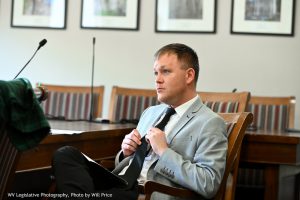 Tom Cover, Director of the West Virginia Division of Forestry, gave the committee an overview of his division during June’s meeting.
Cover discussed the agency’s budget and mentioned that raises over the last couple years have stabilized staffing and increased morale.
Cover mentioned the need for cell phone boosters in southern West Virginia as well as the need to replace an ageing fleet of trucks, most of which are 2008 models. Cover emphasized that newer trucks should have sirens and lights for safety purposes when responding to fires, tree falls and other such issues.
Cover said that the use of a drone has helped the division tremendously from an efficiency standpoint. From missing person searches to assessing fire damage, locating paths to fight fires, to finding gypsy moth and the spread of invasive species, drones have been invaluable to the agency according to Cover.
Joint Committee on Government Operations/ Joint Standing on Government Organization – June 8, 2021.
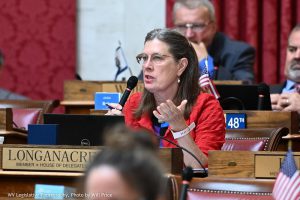 The Joint Standing committees on Government Organization and Government Operations met on June 8, 2021, to receive presentations from John Sylvia, the director of the Performance Evaluation and Research Division of the Legislature.
The Port Authority was reviewed and found to have no employees or future projects. It does not have funding or generate revenue. The Board of Directors for the Port Authority does not meet regularly. Since 2005, two projects had been pursued, one of which was determined infeasible in 2012. The other, Heartland Intermodal Gateway in Wayne County was determined feasible and cost nearly $30 million to construct. However, the facility has been dormant and continues to incur expenses to the State. It is scheduled to be sold at auction. The auditors determined that this facility should be sold to the highest bidder. Then, all outstanding invoices should be paid, and the Port Authority should be eliminated. For the full report, click here.
The Dual-title system of the Department of Transportation was reviewed. This audit examined the roles of the secretary of the DOT and the commissioner of the Division of Highways. The audit found that it would be difficult for one individual to serve in both roles and effectively meet the responsibilities of both. The state did hire a deputy commissioner/secretary to assist with the roles. If the dual role positions were separate, the salaries would be $95,000 for the secretary and $92,500 for the commissioner. The salary for the dual role is $120,000 and for the deputy is $100,000. The auditors recommended that the legislature should consider eliminating the dual-title provision and clearly outline the powers, duties, and responsibilities of the highways’ commissioner. The auditors also suggested that salaries may need to be revisited because the $92,500 and $95,000 were set into statute 12 years ago. For the full report, click here.
The next audit presented was on the Rehabilitation Environmental Action Plan (REAP) within the DEP. The audit found that the program has significant output: promotes proper tire disposal, litter control, and open dump elimination. However, the program does not effectively reduce municipal solid waste disposed of in landfills as required in the code. REAP also fails to prevent pollution. Several recommendations were made including restructuring REAP and requiring the Solid Waste Management Boards to conduct a study on ways to improve solid ways disposal in rural areas. For the full report, click here.
Several Chapter 30 licensing boards were reviewed. The Board of Examiners in Counseling was determined to be needed for public safety. It follows most provisions in Chapter 30 of the WV Code, but improvement is needed. The Board is financially self-sufficient and accessible to the public. The Board’s rules are not compliant with WV Code and case law because they allow it to deny licensure to applicants who have been convicted of a felony. The Board’s website needs improvement to enhance user-friendliness and transparency. The auditors did find that the Board was unaware that it put case counseling notes on its website that included diagnosis and prescribed medication. This put the state at risk. When notified, the Board did not comply with procedures to notify the Office of Technology. The Board does not have an encrypted website which means its data are not protected from interception or alteration. The recommendations include that the board consults with OT and the State Privacy Office to establish internal control regarding cybersecurity and consider an encrypted website and registering for a “.gov” domain. For the full report, click here.
Through legislation in 2015, a restricted provisional license was created to address a critical shortage of social workers in the state. As part of legislation to create this license, a performance audit was required by July 1. 2020. Therefore, PERD reviewed the Board of Social Work Examiners. DHHR’s provisional licensing program began in late 2016. Because of this, the Board of Social work extended its deadline to complete the training and sit for the national exam to June 30, 2020.
Auditors consulted with lawyers to determine that the June 3rd sunset date for the provisional license ends the program for new employees, not employees who have been in the training and are set to be completed by June 30, 2020. This would allow those 18 individuals to sit for the national licensing exam. While the Board did not agree with the recommendation, they did comply. For the full report, click here.
PERD also reviewed the Board of Hearing Aid Dealers. Auditors found that licensure of hearing aid dealers is still needed, however, the Board is inaccessible and provides limited public protection. The Board does not keep adequate licensee and financial records, nor does it have the funds to staff itself. PERD also found that the Board’s functions overlap with the Attorney General’s Consumer Protection Divisions and the Board of Speech-Language Pathology and Audiology. The auditor recommends terminating the Board of Hearing Aid Dealers and Fitters and transferring its responsibilities to the Board of Speech-Language Pathology and Audiology. For the full report, click here.
The Nursing Home Administrators Licensing Board was audited. Auditors found that the Board complies with most Chapter 30 provisions including being self-sufficient and appropriately investigating and responding to complaints. The Board also has a user-friendly website, and it promotes transparency. The auditor recommended that the Board be considered for inclusion in any multi-professional licensing agency created. Another recommendation is that Board Members and staff attend the State Auditor’s Seminar on Regulatory Boards as required by law. For the full report, click here.
PERD audited Jackie Withrow Hospital and found the hospital had the highest utility cost of any of the four long-term healthcare facilities in the state. The cost of maintenance and repairs is second only to Hopemont Hospital. The Hospital’s size is much larger than needed. The hospital only utilizes a portion of the building, even though it must maintain heating and cooling throughout. In 2013, it was determined that building a new building for the Jackie Withrow Hospital would cost less than completing the repairs to the current facility. In addition, long-term cost-savings through decreased operational and maintenance costs would be a benefit of a new smaller building. In the past few years, efforts have been made through legislation to modernize or construct a new facility or sell the hospital. However, none of this legislation made it into law. The auditor recommends the DHHR make a request to the legislature for the next budget for a size-appropriate facility. For the full report, click here.
PERD reviewed the Bureau for Children and Families allocation process for Child Protection Services Workers after a request from the chairs of the Joint Committee on Government Organization. Auditors found that the BCF allocates CPS workers based on the percentage of accepted CPS cases in a region and district. The agency does allow for some flexibility to move allocations if needed. The BCF does not directly utilize child population or poverty data for allocating workers. However, since these variables correlate to accepted CPS cases, the BCF is indirectly considering them. The agency does not consider vacancies or case backlog during the allocation process. PERD recommends the BCF should consider conducting a study to consider incorporating other variables that correlated with CPS referrals and accepted cases. During the 2021 session, House Bill 2620 was introduced to incorporate this recommendation. However, it did not get placed on the House’s Special Calendar. PERD also recommended that the BCF implement recommendations made in the 2019 Post Audit Review of CPS. For the full report, click here.



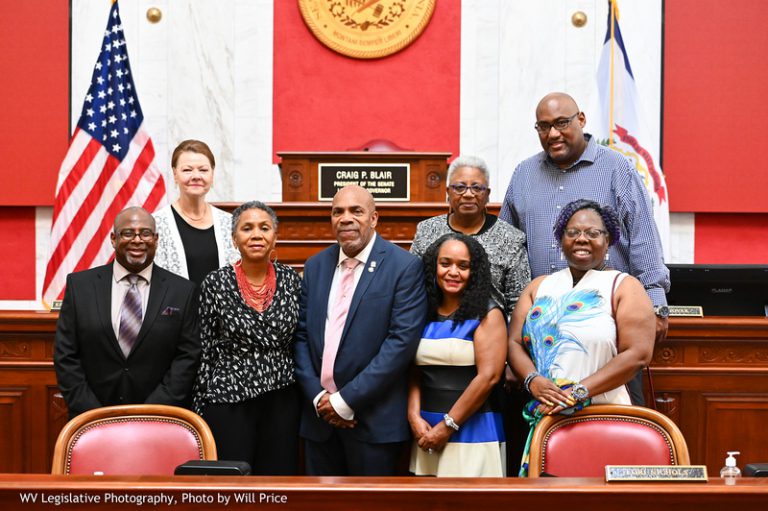
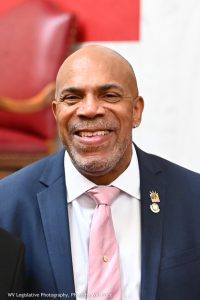 Owens Brown now represents West Virginia’s 1st Senate district. The Wheeling resident is the first Black man to serve in the West Virginia Senate. Senator Brown serves as the WV NAACP President, a role he has held since 2015. He also worked with the Education Association for 28 years. He also has experience working with grassroots organizations and served as a Special Delegate for the United Nations. He said his past roles have kept him involved in government and prepared him for this opportunity.

 technology to support a nationwide supply chain of valuable rare earth elements and critical minerals.
 July’s (most recently available figure) unemployment rate in the state sat at 5 percent, below the current national rate of 5.2 percent. That figure is slightly down from 5.1 percent in June and significantly down from 6.1 percent in May. The state’s unemployment rate reached a high of 9.5 percent in July 2020, when large sectors of the economy were shut down in response to the pandemic.
 increased 174 percent, failure to appear warrants increased 422 percent, shoplifting increased 52 percent, trespassing charges increased 36 percent, and vacant structure fires increased 400 percent since the number of treatment beds increased.
 repair rental housing or construct new multifamily rental housing developments in the four Most Impacted and Distressed (MID) disaster declared counties. Those counties are Clay, Greenbrier, Kanawha, and Nicholas. Three projects with 127 multifamily rental units are being completed and two projects have received authorization to use grant funds.
 The committee heard from the Public Service Commission and the Water Development Authority. Lack of water and sewer is a major issue in several areas of West
 conferencing units were only used to conduct arraignments and parole hearings
 According to Hardy, the previous Rainy Day Fund high was $955 million on June 30, 2014. He mentioned that this milestone will be impressive to those that rate the state’s credit.
 trafficking offenses, which can result in lesser criminal penalties, as well as hindering or delaying victims from getting vital services for trafficking survivors according to Boley-Rogers.
 The Committee heard from the Gas and Oil Association. Members of the association
 Licensed Dietitians, deeming the board duplicative. Auditors said the Board of Licensed Dietitians mirrors what the National Commission on Dietetic Registration already does.
 The committee heard from higher education with an update on COVID-19. The goals for
 The West Virginia Board of Education presented the minimum graduation requirements
 $7.17 billion project will allow public schools and libraries to offer Wi-Fi hotspots for students to take home to access broadband. The program also covers reasonable costs for laptops and tablet computers, as well as modems and routers.
 Documented issues in these settings include critical medication errors, failure to provide