
Saturday, April 4, 2026
Home Blog Page 139

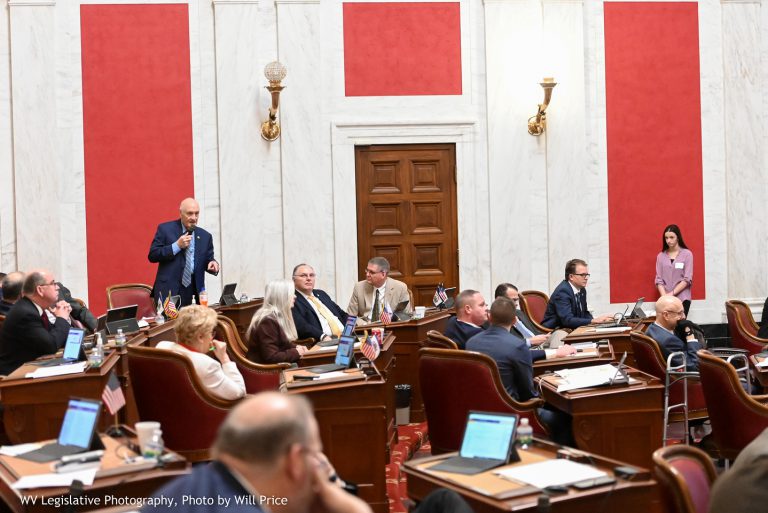
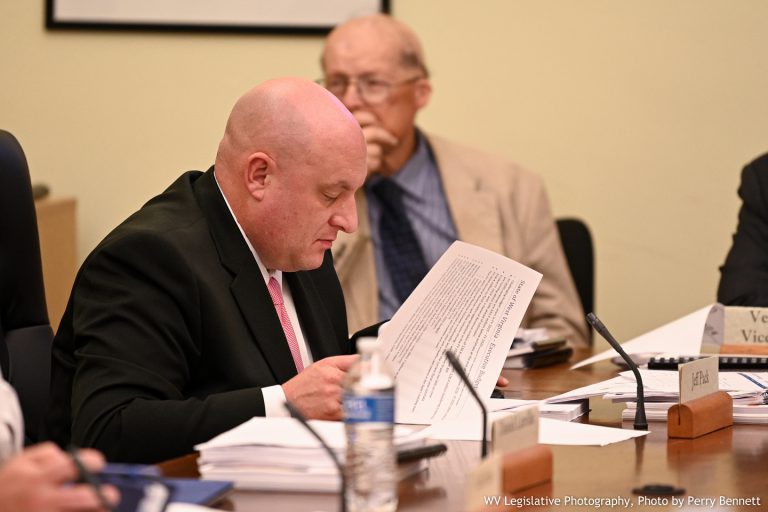
House Veterans Affairs Advances Defend the Guard Act

0

The House Veterans Affairs Committee advanced the Defend the Guard Act in its Tuesday meeting.

House Bill 2732 would require an official declaration of war by Congress before members of the West Virginia National Guard could be released from state control to participate in active duty combat.

Delegates mentioned constitutional concerns about the bill. Lead sponsor, Delegate Pat McGeehan, R-Hancock, also addressed the committee. McGeehan said close to a dozen other states have introduced similar legislation.

In a 15-7 vote, the committee advanced the bill, which now heads before House Judiciary.

The committee also advanced House Bill 4176, the West Virginia Intelligence/Fusion Center Act.  The facility has been in operation since 2008 and supports local, state and federal agencies to prevent and respond to criminal and terrorist activity in the state.

The strike and insert amendment, which was adopted, added safeguards and protections of civil liberties, required cooperation for the resiliency office, and changed references of the Department of Military Affairs and Public Safety (DMAPS) to the Department of Homeland Security. Counsel said the bill codified the center’s statutory authority.

The bill is second referenced to the Judiciary Committee.

The committee also advanced House Bill 4485, which reorganizes and re-designates DMAPS as the Department of Homeland Security. The bill also creates a state resiliency office, which is the product of recommendations from the Interim Flooding Committee

This bill also now heads to the Judiciary Committee.

Senate Judiciary Advances 4 House Bills, 1 Senate Bill

0

The Senate Judiciary met at 3:00 PM today and advanced five bills, four of which originated in the House. All of the bills will be reported to the full Senate with recommendation for passage.

HB 2497 extends and clarifies protections provided by the whistle-blower law. The bill provides that an employer cannot discriminate or retaliate against an employee for reporting corruption or otherwise illegal activity within the workplace. The bill does not alter current law but clarifies and specifies these protections.

HB 4166 prohibits certain sex offenders from supervising children. The bill establishes requirements for this prohibition and defines terms.

SB 279 requires dental insurance plans to honor an assignment made by the individual who is covered by the policy, regarding payments to a dentist or dental corporation for their services.

HB 4470 and 4466 were also passed and will be reported to the Senate.

Senate Passes Bill to Create Tim Tebow Act

The Senate met at 11:00 Am today to discuss the passage of 13 bills, four of which originated in the House of Delegates.

One bill of particular interest and debate in the Senate was SB 131, which creates the Tim Tebow Act. This bill allows homeschooled students or students enrolled in a private parochial school that is not a member of the Secondary Schools Activity Commission to participate in sports or other activities in schools belonging to that commission.

The Senate debated on this bill, several members raising concerns about the unintended consequences of the bill. Senator Paul Hardesty, D-Logan expressed his reluctant opposition to the bill because of it potentially leading to low-performing students to leave public schools and still participating in its sports.

Senator Mike Romano, D-Harrison, also rose in opposition to the bill, stating that this legislation could potentially interfere with the systems set in place by the SSAC.

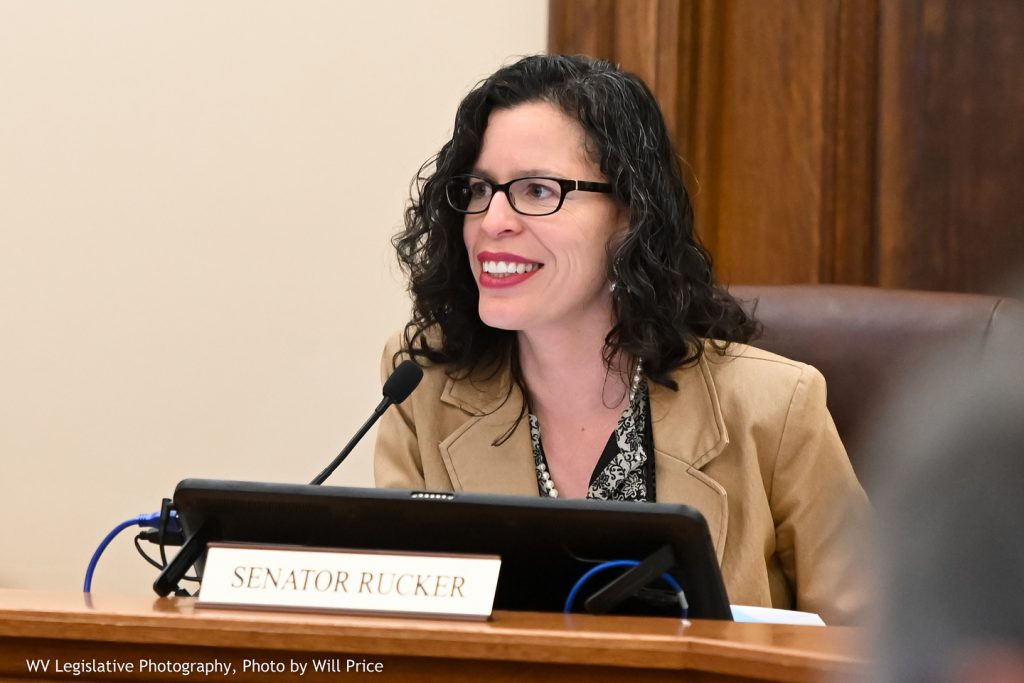
Others spoke in favor of the bill, saying that the Tim Tebow Act would be beneficial to students in providing opportunities previously unavailable to them. Senator Patricia Puertas Rucker, R-Jefferson, closed the debate by stating her support for the bill, saying that there was plenty of oversight for this bill and every student would have to meet the same standards as athletes enrolled in public school.

The bill passed 24-9 and will advance to the House for further consideration.

Four House bills were also passed Tuesday.

HB 2922 deals with requirements for a person found guilty of opiate or opioid possession to obtain a final order of dismissal. This excludes those found guilty of the possession of marijuana. The bill allows a court to require the successful completion of a drug court program or drug treatment program for the defendant to qualify for a final order of discharge or dismissal.

HB 3039 expands a court’s consideration of a child expressing a preference for one guardian in some child custody matters.

HB 4030 increases the age limit for a person to apply for original appointment as a firefighter to 40 years old for honorably discharged veterans of any US Armed Forces branch.

HB 4275 is a rules bundle that authorizes the Department of Military Affairs and Public Safety to establish rules concerning the Fire Commission.

Senate bills 97, 208, 517, 575, 607, 618, 654 and 657 were passed and advanced to the House.

Senate bills 747-751 were introduced and referred to the appropriate committees.

The Senate adopted Resolution 35, congratulating Gary Young for being West Virginia’s Outstanding Tree Farmer for 2020. The Senate also adopted Resolution 36, recognizing the 75th birthday of Smokey Bear. Two brief recesses were held for the presentation of these resolutions.

The Senate is adjourned until 11:00 AM tomorrow.

The Senate Judiciary Committee will meet at 3:00 PM today in room 208W.

The Senate Finance Committee will meet at 3:00 PM in room 451M.

The Senate Education Committee will meet following the last 3:00 meeting to adjourn.

The Senate Workforce Committee will meet at 9:30 AM tomorrow morning in room 208W.

House Passes Religious Freedom Bill

The House passed House Bill 4069 Tuesday, relating to religious freedoms in schools.

House Bill 4069 creates the West Virginia Student Religious Liberties Act. This bill provides that public school districts cannot discriminate against student’s religious beliefs. Students may express their religious views in schoolwork and pray during the school day without being penalized or rewarded. The bill also sets parameters for speakers at non-graduation and graduation events. This legislation cooperates with standards set forward by the federal government and the United States Constitution.

Six Senate Bills were passed, therefore completing action on these bills.

Nine bills were advanced to third reading. Eleven bills were advanced to second reading. Action for House Bill 4551 was postponed for one day.

Twelve resolutions were introduced. House Bills 4791-4954 were introduced. Today was the last day for the House to introduce new bills.

The House is adjourned until 11 a.m. Wednesday.

House Bill Reduces Cost for Concealed Carry Permit

0

The House Finance Committee advanced an originating bill reducing the application fee for a concealed carry weapon and removing the fee for veterans. This originating bill combines House Bill 2221 and Senate Bill 8 into one comprehensive bill.

Under this bill, the application fee for a concealed carry weapon is reduced from $75 to $25. The application fee for a provisional license is reduced from $25 to $15.

Previously, $60 of the application or replacement fees were to be received by the sheriff and deposited into a concealed weapons license administration fund. The full $25 or $15 will be deposited into this fund under this bill.

Additionally, under current law $15 from each application fee is deposited into the Courthouse Facilities Improvement Fund. The originating bill removes this language from code. The Courthouse Improvement Fund provides grants to all 55 counties in the state to fix courthouse facilities. This could be improving wheelchair accessibility, adding sprinklers or replacing broken facilities. Funding is provided for this under several different sections in code.

Previous application rules are still in effect.

The bill also exempts honorably discharged veterans of the armed forces from paying the application fee for concealed carry weapons. This law already applies to honorably retired law enforcement officers. Veterans that qualify for this exempted fee must still take all mandatory safety classes and meet the previous application criteria.

The bill will be reported to the full House with a recommendation of passage.

Senate Judiciary Advances Three Bills

0

The Senate Judiciary Committee met at 3 p.m. Monday, advancing three bills.

One bill, Senate Bill 732, authorizes fee payments and reimbursement for the expenses of attorneys who work on court teams or advisory groups of specialty courts established by the state Supreme Court of Appeals. The bill defines terms and specifies requirements for such reimbursement. The bill will be referred to the Senate Finance Committee for further consideration.

The committee also advanced Senate Bill 733, which allows a group to become a recognized political party if the group’s candidate for president or governor receives at least 1% of statewide votes.

Senate Bill 554 was also advanced, which requires a lessee to deliver a recordable release for terminated, expired, or cancelled oil or natural gas leases to the lessor within a specific time and without any cost. The bill also provides for a procedure to allow a lessor to serve notice to a lessee if the lessee doesn’t provide said release in a timely manner.

Senate Passes Bill Creating Intermediate Court

The Senate convened at 11 a.m. Monday to discuss the passage of 14 bills, three of which originated in the House of Delegates.

One bill was Senate Bill 275, which would create an Intermediate Court of Appeals. Sen. Charles S. Trump IV, R-Morgan, presented the bill and stated his support. Much debate from the Senate followed.

Several senators rose in opposition to the bill, many expressing that the creation of the Intermediate Court of Appeals was unnecessary, or that other issues should be prioritized and receive more funding in its place.

Sen. Mike Woelfel, D-Cabell, spoke against the bill, stating that this was a misuse of this year’s budget, and was too expensive to consider a priority.

Sen. Mike Romano, D-Harrison, also expressed concerns about the cost of the potential Intermediate Court system, asking the Senate to consider the accumulation of funds that would be directed to this court over the years. Romano also argued that the state Supreme Court of Appeals did not need this addition to the court system, and that there has been at least one instance where an Intermediate Court was deemed unnecessary and removed in one state.

Sen. Ryan Weld, R-Brooke, rose in support of the bill, stating that the expected cost of the Intermediate Court of Appeals was expected to drop significantly in the coming years. He also argued that the Intermediate Court was necessary and would represent a larger population than the Intermediate Courts that have been removed.

Trump closed debate by stating that the Supreme Court of Appeals is busier now than it has ever been. Trump said that the cost of the Intermediate Court of Appeals is reasonable and well worth the results. He said that he believes the Intermediate Courts would ensure that all civic cases are heard, and this would better the justice system in West Virginia.

The bill passed 18-14 and will advance to the House for further consideration.

Three House bills passed the Senate Monday. The Senate requested the House to concur before legislation is completed for these bills.

House Bill 2086 creates the Uniform Real Property Electronic Recording Act. This bill provides that any state law requiring a land document must be satisfied by an electronic form. The bill requires the Real Property Electronic Recording Standards Council create a legislative rule regarding the standards for electronic recording to be used by each county.

House Bill 4007 creates the Born Alive Survivors Protection Act, which requires that a medical professional perform life-saving measures for a child born alive after an abortion is performed.This legislation does not substantially change with current law but ensures that physicians use reasonable medical judgement when a child is born breathing.

House Bill 4058 updates the law concerning pharmacy benefit managers. The bill clarifies licensing requirements, terms and fees for the profession.

Senate bills 96, 195, 266, 573, 576, 600, 665, 670, 676, 678 were all passed today, and will advance to the House.

Senate bills 738-746 were introduced and referred to committees.

The Senate also adopted Senate Concurrent Resolution 29, which requests the DEA and USDA to create rules allowing the state to take custody of certain cannabis tests for testing.

The Senate is adjourned until 11 a.m. Tuesday.

The Senate Select Committee on Children and Families will meet at 4:30 PM in room 208W.

The Senate Committee on Military will meet at 10 a.m. Tuesday in room 208W.

House Bill Requires Financial Literacy Course in Schools

0

The House Education Committee advanced House Bill 2775, requiring high school students to take a one credit financial literacy course in order to graduate.

The State Board of Education requires 22 credits for high school graduation. This includes four math, four English, three science, four social studies, one art, one health, one physical education and four personalized education credits. Counties may choose to require additional credits for graduation, up to 28 total.

An amendment adopted in committee clarifies that this financial literacy course will not replace existing graduation requirements, it will add a credit instead.

The State Board of Education will develop standards for finance teachers and the course itself.

House Bill 2775 was reported to the floor as amended, with the recommendation that it do pass.

House Passes Eight Bills

The House convened at 11 a.m. to pass eight bills, including one relating to teachers in critical areas of need, and one relating to the sale of deadly weapons.

House Bill 4691 creates greater provisions for school systems to recruit and employ newly graduated and substitute teachers in areas of critical need. The bill extends the date upon provisions relating to the employment of retired teachers for areas in critical need until June 2025.

House Bill 4618 allows for the public display of deadly weapons for sale, for example in a window of a shop for advertising purposes. The bill includes any deadly weapon, machine gun, fully automatic weapon, rifle, shotgun or ammunition for sale.

Senate Bill 364 and House Bill 4069 were advanced to third reading. Nine bills were advanced to second reading.

Two resolutions were introduced. House Bills 4761-4789 were also introduced.

The House is adjourned until 11 a.m. Tuesday.

House Legislation Feb. 1-7

As of Friday, February 7, 2020, there have been 1,314 bills introduced in the House and 89 bills have been passed and now are before the Senate.

House Bill 2164 clarifies that appeals to the Supreme Court are a matter of right and that every party has an opportunity to be heard and to obtain a written decision on the merits of the appeal.

House Bill 2892 relates to searches and seizures of digital property. This bill defines the terms of “digital and virtual information.” This bill includes digital and virtual information in the definition of property that can be searched and seized under a warrant. If a warrant is issued for an electronic device, then the information that the item contains is also permitted to be searched.

House Bill 2967 phases in elimination of state excise tax on privilege of transferring property and replacing it with county excise tax on certain date.

House Bill 4012 transfers the West Virginia Contractor Act from administration and oversight by the Division of Labor to regulation under the provisions of professions and occupations in Chapter 30 of this code.

House Bill 4083 requires the West Virginia Parkways Authority to accept the use of credit and debit cards for paying tolls on the West Virginia Turnpike.

House Bill 4090 creates the Oil and Gas Abandoned Well Plugging Fund. This bill attempts to accomplish two goals. It would reduce the tax on oil and gas produced from low-producing wells to reduce cost of production, to keep these wells in service for longer. The bill will use the reduced amount of taxes to plug and reclaim orphaned oil and gas wells that are polluting the environment.

House Bill 4137 allows county voter registration records to be maintained and stored in a digital format.

House Bill 4161 make it illegal to scleral tattoo (tattoo on an eyeball) a person. The bill defines the term “scleral tattoo.” The bill reorders definitions so they will be in alphabetical order.

House Bill 4356 updates credentials for certified nurse anesthetists who cooperate with a physician or dentist. The administration of anesthesia may be provided by a certified registered nurse anesthetist (CRNA) in cooperation with an anesthesiologist. If no anesthesiologist is readily available, the administration of anesthesia may be provided by a certified registered nurse anesthetist, in cooperation with a physician or dentist.

House Bill 4412 relates to educational benefits for members of the U.S. National Guard. Under current law, West Virginia is responsible for paying tuition and fees for higher education for students who are members of the National Guard. This bill provides that the federal government will pay the tuition and fees first, rather than covering the remainder. This saves money from out-of-pocket costs for students that are members of the National Guard.

House Bill 4434 is to have a statewide study and report on the existing health care workforce, as well as the workforce needs of the next 15 years.

House Bill 4375 facilitates interstate practice of audiology and speech-language pathology with the goal of improving public access to audiology and speech-language pathology services.

House Bill 4378 relates to the revocation of teaching licenses and certificates. This provides minimum consequences for certain offenses and defines terms for grooming a student or minor.

House Bill 4395 removes the requirement that a veterinarian access and report to the controlled substance monitoring database.

House Bill 4410 permits directors and executive officers of a banking institution to borrow from a banking institution with which he or she is connected up to $25,000 or 5 percent of unaffected capital and surplus to a maximum combined amount of $500,000 without the prior approval of a majority of the board of directors or discount committee of the banking institution.

House Bill 4414 aims to develop a resource which families can use to monitor and track deaf and hard of hearing children’s early language acquisition and expression, and developmental stages toward English literacy. This resource is very important, because it will help children develop language skills by the appropriate age or will otherwise offer resources to ensure progress with expressive skills.

House Bill 4415 aims to improve the response to, protection and recovery of missing and endangered children in the state. This bill makes it easier for law enforcement to handle missing children’s cases. One part of this bill states the importance of interagency cooperation. This means that state agencies and schools must cooperate and assist with confidential information that will help law enforcement with each case. This bill also establishes a missing foster child locator unit program, which includes duties such as receiving reports of missing foster children, assisting law enforcement and completing screening once the child has been found.

House Bill 4438 provides a mechanism to allow licensing of advance deposit wagering.

House Bill 4559 extends the time limitation to 10 years for a plaintiff to bring a civil suit or personal action against a defendant who committed sexual assault or sexual abuse on the plaintiff when the plaintiff was a minor.

House Bill 4352 removes barriers to employment for individuals with criminal records who seek licensure or certification in an occupation governed by state laws, with certain exceptions and to reduce the number of hours of necessary experience to qualify for certain licenses.

House Bill 4380 updates the regulatory board review schedule.

House Bill 4444 establishes Medals of Valor for emergency medical service members, firefighters, and law-enforcement officers

House Bill 4453 expands the eligibility requirements for private investigator and security guard licensure, remove the increased application fee for a nonresident of West Virginia or a foreign corporation or entity, and limit the fee charged by the Secretary of State for renewal of licensure