Saturday, April 4, 2026
Home Blog Page 145

Senate Legislation Jan. 18-24

As of Friday, January 24, 2020, 623 bills have been introduced to the Senate. Of those bills, 20 have passed and advanced to the House for further consideration.

SB 16 creates the Protect Our Right to Unite Act. The purpose of this bill is to protect the privacy of people’s membership in a public agency.

SB 42 allows county boards of education to include faith-based electives in drug and violence prevention programs in schools.

SB 125 will prohibit victims in sexual assault cases from undergoing certain physical examinations. The bill was made to protect the privacy of these individuals and the argument was made that such examinations may not be sufficient for evidence in their case.

SB 144 makes it a misdemeanor to obstruct an officer of the law during an investigation. The bill establishes a penalty for this action.

SB 191 makes aggravated cruelty to animals a felony offense. The bill clarifies the different instances of animal abuse and specifies the civil penalties.

SB 217 requires the Department of Health and Human Resources to collaborate with the Workforce Development Board and the WV Division of Personnel for job placement.

SB 225 allows municipalities to enact Adopt-A-Street programs. These programs would encourage public awareness of littering by hosting volunteer-lead cleanups of streets.

SB 297 requires the Board of Education to create a course on family and consumer sciences in schools. Such courses would encourage independence and prepare students for everyday tasks such as cooking, house cleaning, home repair, budgeting, and time management.

SB 307 corrects a citation of code relating to tax liens.

SB 311 would make state and political subdivisions immune to liability for injury to people who perform voluntary community service ordered by a municipal court or magistrate.

SB 321 clarifies conflicts in the WV Code relating to tax collection and distribution.

SB 322 will allow for services to be bought by state contractors through prequalifications with prequalified vendors.

SB 323 authorizes Department of Administration to promulgate rules relating to legislation.

Legislation Still Under Consideration in the Senate

SB 51 updates visitation rights for grandparents. The bill allows daytime visitations, overnight visitations, and electronic communication.

SB 230 discusses suicide prevention in schools. The bill would require the Board of Education to provide instruction to school staff on suicide awareness and prevention. The guidelines would be determined by the state board.

SB 470 allows bolts and arrows 16 inches or larger with a broad head to be used for hunting in West Virginia. The crossbow must also have a working safety and a minimal draw weight of 125 lbs.

SB 501 adds the protection, operation, and maintenance of Elk River Trail as part of the Parks and Recreation Section of the West Virginia Division of Natural Resources.

SB 509 would work to provide venue for custody allocation actions in situations that do not involve divorce. This would primarily apply to family situations in which the parents of a child were never married.

SB 522 relates to compensation awards to victims of crimes. The bill provides juvenile victims of abuse and neglect cases services not provided by Medicaid or other resources.

SB 529 establishes a time limit for claimants to fine claims against the state for unjust arrest, wrongful convictions, and wrongful incarceration. It also establishes a 10-year claim limit for claims benefits and limits damages under certain conditions.

House Makes Progress with Foster Care Legislation

Bipartisan Effort Tackles Crisis

Creating bipartisan legislation focused on foster care reform has been top priority for many members of the House this week. West Virginia has more than 7,000 kids in the foster care system and the Legislature is working to make changes.

One bill, House Bill 4092, aims to make several changes to improve the foster care system. The main goal of this bill is to make it easier to become a foster parent or kinship family. This bill provides benefits to foster children, foster parents, and the child placing agencies.

As amended, the bill increases the per diem rate for foster parents. This rate has not been increased since 2009. The bill establishes that foster parents will be reimbursed a floor of 40% of the daily rate that child placing agencies receive per child. The Department of Health and Human Resources will pay child placing agencies a minimum daily rate of $75 for services provided to each child in placement. Families fostering through the department, will be provided at least $900 per month for each child placed in the home.

During Thursday’s meeting in Health and Human Resources, House Bill 4092 was amended to include kinship families in the payment raise. Certified kinship families would also receive $900 per month for each child place in their home. This concerned many delegates, who were unsure if this payment increase would be too much to fit in the legislative budget.

Because of the fiscal implications of this bill, it next heads to the House Finance Committee before being reported to the full House.

Delegate Mike Pushkin, D-Kanawha, is one of the sponsors for this bill and another foster care bill, House Bill 4094.

“This [bill] needs to be a priority,” he said. “The money needs to be put in by Finance. I don’t think the rate increase is unreasonable, but we’ll see where the money goes.”

Pushkin stressed the importance of this bill.

“We need to make this a priority, put our words into action, and do something to fix this crisis,” he said.

House Bill 4092 also outlines a Foster Parents and Foster Children Bill of Rights. There are several terms defined in the Bill of Rights, but some notable conditions require that a foster child is to live in a safe, healthy, and comfortable setting where he or she is treated with respect, to be free from physical, sexual, psychological, or other abuse, exploitation or corporal punishment, to receive adequate and healthy food, adequate fitting clothing, and, a travel bag and to receive medical, dental, vision, mental health services, substance use treatment services. The bill of rights also aims to keep siblings together during placement.

This bill also defines the standards for reasonable and prudent parent standards. This relates to the standard defined by parental decisions that clearly have the child’s best mental, emotional, and physical development as priorities.

Additionally, there are minimum standards and expectations set in this legislation for the guardian ad litem, which is an attorney appointed by the court to make recommendations in the best interest of children. The guardian ad litem assigned to a case must conduct an independent investigation, meet with the child in person and provide a thoroughly analyzed recommendation to the court. This report must be submitted to the court before the dispositional hearing. Copies of this report will be sent to the involved parties and their council. The bill also defines the information that must be included in the guardian ad litem’s report. This part of the bill aims to reform how the court deals with foster child cases.

Another bill, House Bill 4094, outlines the duties for the foster care ombudsmen, a position under the Office of Inspector General. This creates access to foster care children and records, including subpoena powers, to assist in investigation of complaints and fulfillment of the foster care ombudsman’s duties. This also creates misdemeanor offenses for interference with the foster care ombudsmen investigations. This bill establishes a statewide procedure for the foster care ombudsmen’s investigations.

House Bill 4094 is on second reading in the House.

Delegate Jeffrey Pack, R-Raleigh, said that foster care legislation is a large step in the right direction to fixing the foster care crisis in the state. Pack is a sponsor for both House Bills 4092 and 4094.

“It’s incumbent on us in the legislature to make bold steps to ensure as normal of a childhood that these children can have,” he said.

Senate Rejects First Bill

The Senate convened at 11:00 AM on January 23rd to discuss the passage of two bills. The first bill to receive a vote was SB 192, which discussed audits from the West Virginia Secondary School Activities Commission. The purpose of the bill was to allow the WV legislature to have access to audits covering the control, supervision, and regulation of school sports events or extracurricular activities. The bill would be used as a means of holding the SSAC accountable for their funds and actions. The Senate engaged in lively debate concerning this bill, some opposing the bill believing that it was an unnecessary use of funds, while others argued that the bill would make the commission more transparent. The bill was rejected with a 16-17 vote with one absent.

The second bill to be discussed was SB 297, which would require the Board of Education to create a course on family and consumer sciences in schools. Such courses would encourage independence and prepare students for everyday tasks such as cooking, house cleaning, home repair, budgeting, and time management. The bill was passed unanimously and will advance to the House for further consideration.

Senate bills 144, 311, and 321 were read for the second time and will be up for a vote tomorrow.

Senate Bills 598-606 were introduced and referred to the appropriate committees.

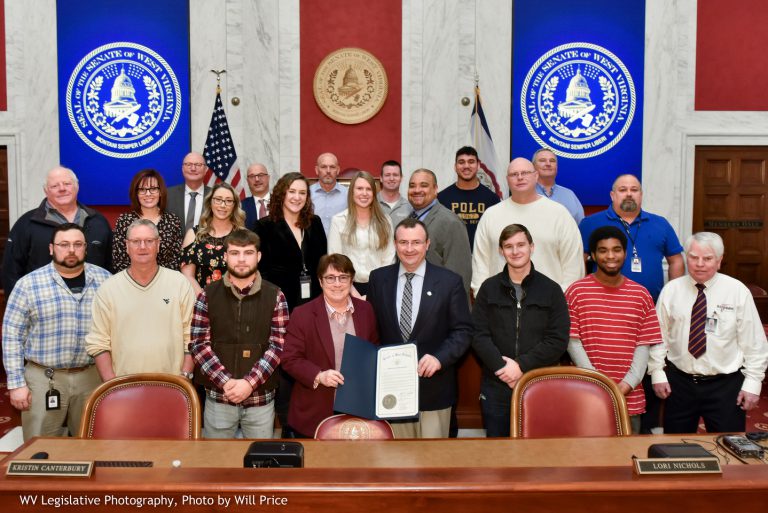
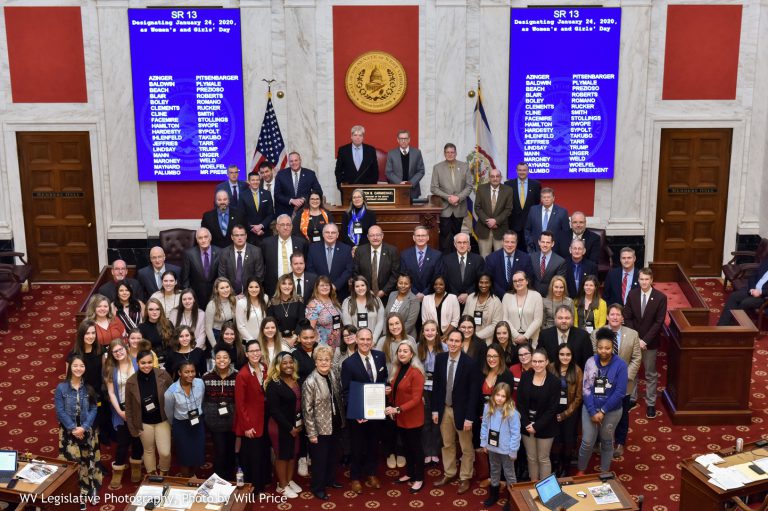
The Senate also adopted Resolution 12 designating January 23rd as Human Resources Day. A brief recess was held for the presentation of this bill by Human Resources student from colleges and universities around the state.

The Senate is adjourned until 11:00 AM tomorrow.

The Senate Health and Human Resources Committee will meet at 1:00 PM in room 451M.

The Senate Committee on Energy, Industry and Mining will meet at 1:00 PM in room 208W.

The Senate Committee on Government Organization will meet at 2:00 PM in room 208W.

The Senate Education Committee will meet at 2:00 PM in room 451M.

The Senate Judiciary Committee will meet at 3:00 PM in room 208W.

The Senate Finance Committee will meet at 3:00 PM in room 451M.

House Passes Changes to Fire Code

The House passed two bills Thursday, including a bill that adds changes to the West Virginia Fire Code.

The House convened at 11 a.m. to pass House Bills 4058 and 4275.

House Bill 4275 is a bill that authorizes the Fire Commission to promulgate a legislative rule relating to State Building code. The Fire Commission is proposing an amendment to the State Fire Code that would update the code to reflect National Fire Protection Association standards. The updates relate to preserving life safety issues.

Senate bill 94, House Bill 4002 and 4393 were advanced to third reading.

House Bills 4011, 4129, 4146, 4149, 4166 and 4411 were advanced to second reading.

Four resolutions were introduced today. House Bills 4481-4522 were also introduced.

The House is adjourned until 11 a.m. Friday.

Senate Health Discusses Insulin Distribution in Nursing Homes

The Senate Committee on Health and Human Resources met at 1:00 PM today to discuss four bills. The first of these bills was House Bill 4103, which relates to office drug control policy. The bill simply clarifies the structure of the Office of Drug Control Policy in the Department of Health and Human Resources. The bill was adopted and will be reported to the full Senate.

The committee also discussed SB 560, which permits nursing homes to use trained individuals to administer medication to residents, provided that they are under the direction of a registered nurse. The authorizing agency of this bill is the Office of Health Facility Licensure and Certification. There was much discussion and debate concerning the authority of certain agencies in the enactment of this bill. A representative form the Board of Registered Nurses expressed concern that the Board was not consulted in the drafting of this bill. The bill has been laid over for further consideration and amendments for this issue.

House Health Committee Advances Insulin Bill

0

A bill seeking to limit co-pays for prescription insulin advanced out of the House Health and Human Resources Committee Thursday.

After advancing several rules bundles, the committee took up the bill in its Thursday afternoon meeting. The bill, which originated in the House Health Committee, caps the cost of a 30-day supply of insulin at $25. However, the cost of supplies are not included in that cap.

Colorado was the first state to cap insulin co-pays, limiting costs to $100 a month, according to the Denver Post. Staff counsel told the committee that Virginia is weighing a similar measure to cap insulin co-pays at $30.

The bill now heads to the House Banking and Insurance Committee.

House Education Adopts Feminine Hygiene Bill

0

The House Education Committee convened on Thursday, January 23 to consider two bills, including a bill that seeks to provide free feminine hygiene products in schools.

Under House Bill 2464, feminine products would be donated to schools and distributed to students free of cost. Although there is nothing currently in legislation that prohibits donations, this bill explicitly allows schools to solicit donations from individuals, private businesses and nonprofits.

Delegate Lisa Zukoff, D-Marshall, voiced her concerns for this issue during the committee meeting.
“[A lack of free feminine products] is a huge absentee issue in our state. If students don’t have access to these products, they won’t go to school,” she said.

Zukoff and a few other delegates wish to further this legislation by offering state or school board provided feminine products for lower-income counties in the state. At this time, the Education Committee decided to leave the fiscal note out of the bill and keep the products provided donation based.

This caused concerns for a few members of the committee. Delegates said they were concerned that lower-income counties, which have the highest need for free products, would receive less donations from individuals due to the higher need and financial status of people in the community.

The original bill was amended to include female students of all grade levels. Initially the bill was exclusive to female students from grades 6-12.

This bill will be examined in finance next before being reported to the full House.

Senate Committee on Children and Families Holds First Meeting

The Senate Select Committee on Children and families met for the first time today at 10:00 AM to discuss two bills and the priorities the committee has for this year’s session.

The first bill presented was SB 230, which discusses suicide prevention in schools. The bill would require the Board of Education to provide instruction to school staff on suicide awareness and prevention. The guidelines would be determined by the state board. The Committee adopted the bill and it is to be referred to the Senate Education Committee before being reported to the full Senate.

The Committee also discussed SB 236, which discusses online privacy for children. The bill would prohibit the online marketing of products or services to minors if they are only legally allowed to pe purchased by a person 18 years of age or older. The bill would also prohibit the personal data collection of minors, restrict the collection of personal data for marketing purposes, and allow minors to remove personal data from the internet. This bill has been moved to a subcommittee composed of senators Rucker, Roberts, and Hardesy for technical cleanup.

The committee also discussed its priorities for this year’s session, and seemed to agree that the main focus for the committee was foster care and the provision of homes and necessities for children born into underprivileged homes or those affected by the current opioid crisis in the state.

State Health Officer: 1 in 3 High School Students Use Vaping Products

0

The number of West Virginia high school and middle school students who report using vaping products has drastically increased in the last two years.

Catherine Slemp, commissioner and state health officer for the Bureau for Public Health, presented updated data on e-cigarette usage during Thursday afternoon’s Prevention and Treatment of Substance Abuse meeting.

Slemp cited newly-released data from the Department of Education, Centers of Disease Control and Prevention, and the Bureau for Public Health. Back in 2017, West Virginia was slightly above the national average for vaping, Slemp said.

“The last two years, that number has skyrocketed,” she told the committee. “It is increasing faster than the national average.”

Slemp said more than one in three West Virginia high school students reported using electronic vaping products and more than 60% of high school students have tried the products, which is up from 44.4% two years ago.

There were similar increases in middle schools, jumping from 5.9% in 2017 to 15.3% of middle schoolers in 2019 reported vaping. Slemp said one in six middle school students currently vape and the frequency of use has increased as well. High schoolers and middle schoolers typically got vaping products from a friend. However, Slemp said a troubling finding was that the third most common place teens get vaping products is from family members who think they are safer than cigarettes.

Vaping has predominantly increased among women; however, men report using vaping products more heavily, she said. Vaping is also more predominant among youth with cigarettes more common with adults.

Slemp told the committee there have been cases of West Virginians hospitalized from vaping-related injuries. However, these cases have been mostly from counterfeit products.

To address vaping and cigarette usage, Slemp said legislators should look at many different angles. She said tobacco products and e-cigarettes are taxed at different rates with cigarettes taxed at $1.20 per pack and e-cigarettes at 7.5 cents per milliliter.

For tobacco cessation, Slemp cited the tobacco settlement fund. Money was previously used from that fund to shore up the teachers retirement fund. However, the fund generates about $20 million a year in interest.

“More than $100 million is spent in industry advertising in West Virginia alone,” Slemp said.

Slemp recommended funding tobacco cessation and prevention funds at a higher level. Currently, efforts are funded at $500,000, she said.

“Tobacco is the single largest preventable cause of death in West Virginia,” she told the committee. “A third of cancers are attributed to tobacco. It drives health costs, insurance, and productivity losses.”

After the presentation, the committee advanced House Bill 4493, which would require mail carriers to check photo IDs when delivering tobacco, nicotine, or vapor products. Some delegates said they supported the bill but had privacy concerns. The bill now heads to the House Health and Human Resources Committee.


Senate Judiciary Approves 4 Bills

The Senate Judiciary Committee met at 3:00 PM today to discuss four bills.

The first of these bills was SB 51, which updates visitation rights for grandparents. The bill allows daytime visitations, overnight visitations, and electronic communication. The bill was adopted and will be reported to the full Senate with recommendation for passage.

The second bill to be considered was SB 191, which makes aggravated cruelty to animals a felony offense. The bill clarifies the different instances of animal abuse and specifies the civil penalties. The bill was adopted and will be reported to the full Senate.

SB 522 was also adopted, which relates to compensation awards to victims of crimes. The bill provides juvenile victims of abuse and neglect cases services not provided by Medicaid or other resources. These services include psychological care and financial compensation. This bill will advance to the Senate Finance Committee for further discussion.

The Committee also discussed SB 529, which establishes a time limit for claimants to fine claims against the state for unjust arrest, wrongful convictions, and wrongful incarceration. It also establishes a 10-year claim limit for claims benefits and limits damages under certain conditions. The bill was adopted and will be reported to the Senate.