

The Legislature is hosting interims in Canaan Valley this week. Today, the Joint Finance Committees met.
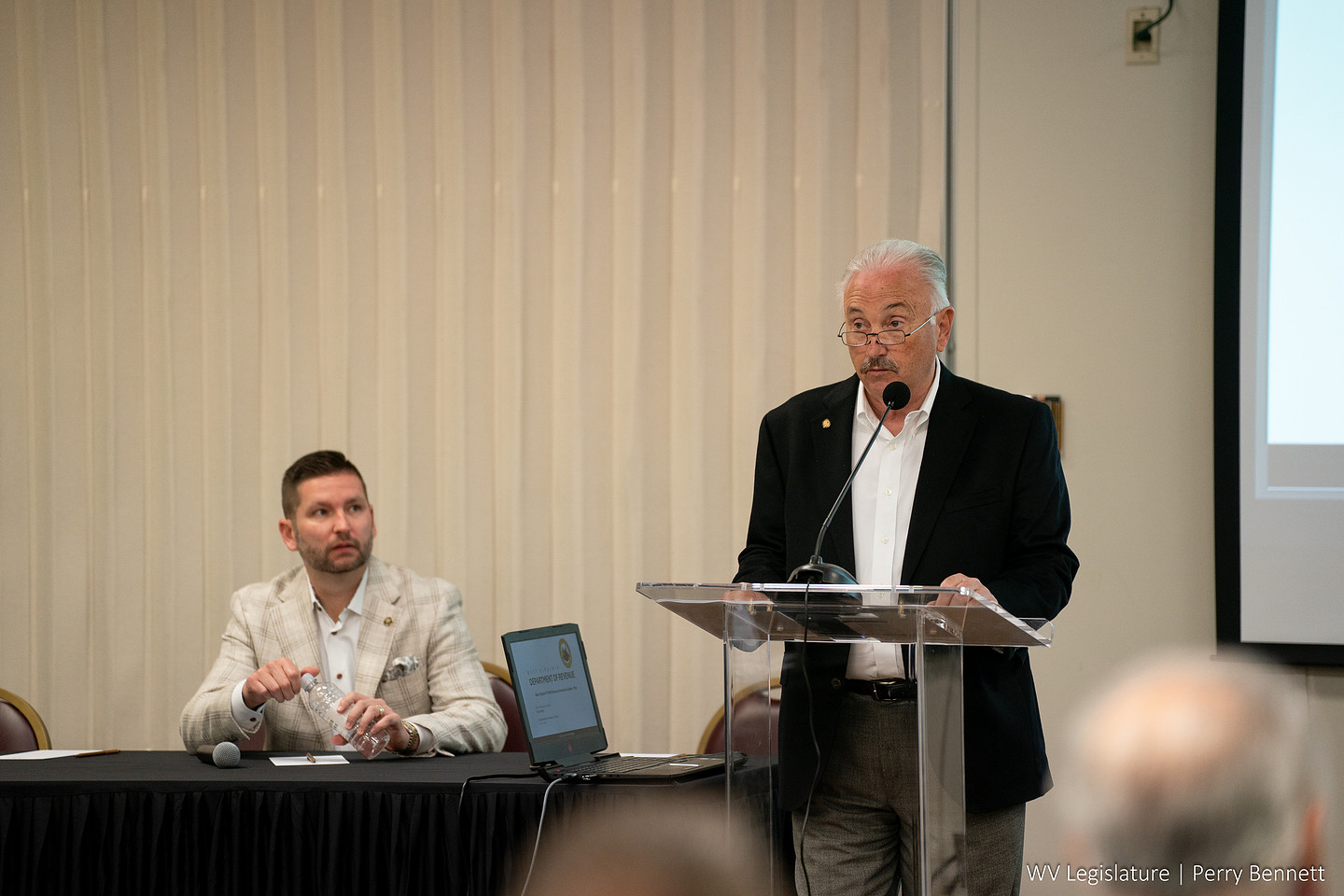
First, the committee heard revenue updates from Deputy Secretary Pete Shirley. May’s total revenue is $381.5 million, exceeding the estimate by 13.2 percent. Personal Income Tax revenue is $121 million, down from last May. However, the timeline for tax returns has been faster than in the past. Additionally, people are over-withholding, leading to larger tax refunds. Sales and Use Tax revenue is $183.8 million. The severance tax is $39.6 million, which is lower than in May of 2025. This can be attributed to a Supreme Court ruling that led to refunds totaling $19 million to natural gas companies. This number is expected to grow and affect future revenue. Corporate Net Taxes are low due to large refunds. Interest income continues to exceed year-end estimates but remains below last May’s level.
Year-to-date for FY26, total revenue is $5,124,100,000, above the estimate and above FY25. The PIT Reserve Fund totals $493.68 million.
The State Road Fund is $137 million, below the estimate and May 2025 levels. The State Road Fund year-to-date total is $1,704,600,000, which is below the estimate but over last year’s total.
After the revenue update, the committee heard about performance audits for three agencies. Commissioner Kelly, of the Division of Corrections, reviewed the BDO Auditing Services (BDO) report and outlined the agency’s three main focuses to reduce litigation costs and enhance safety for both inmates and employees: body cameras, ACA accreditation, and automated security systems. Body cameras will reduce the use of force and claims of force, as every interaction will be recorded. It will protect inmates and identify bad actors. The commissioner noted that the DCR’s mission is public safety and that it is affected by inflationary factors.
Department of Transportation Secretary Rumbaugh presented on the DOT audit. He mentioned that he had already begun an internal performance audit when he was named secretary. Then, BDO was commissioned by the Governor’s office to do an audit. BDO completed the audit more quickly. The potential savings found in this audit are $50.62 million. The audit found five main areas of improvement. First, the contract permitting needs to have a one-stop shop. An online portal will be launched in November 2026, and evaluations of it will begin in January 2027.
The agency needs to simplify its computer systems, as some processes are being duplicated. The Timmons Group has been contracted to conduct an IT and Geospatial Analysis to determine what systems are needed. High-value short-term changes will start in 2027 and be completed by Fall 2029.
The DOT will be identifying contracts with consultants that are no longer necessary. Funds from the Roads to Prosperity program led to overutilization of consultant contracts. The audit recommended the DOT set a market-adjusted salary scale for engineers to address the “mid-level” gap. In Fall 2026, the Department will be deploying a new recruitment plan. The Department is also working with universities to have students complete design studies as capstone projects for engineers to use.
DMV systems need modernization. A proposal evaluation was completed on May 4, 2026. The target date for phase 1 implementation is July 1, 2026. Project completion is scheduled for December 2029. Mobile DMV offices are being explored to assist remote areas without a DMV and to reduce waiting times in areas with high customer volumes.
The BDO audit identified duplicate accounts receivable. Recommended efficiencies will be implemented in the procure-to-pay workstream in July 2026, with full implementation in August 2026. The first evaluation of workstream efficiencies will take place in September 2026.
BDO also recommended restructuring DOT’s executive roles, with completion by August 1, 2026. The divisions should be reimagined after the restructuring. Reporting of the audit and the implementation of recommendations will take place in presentations to the Legislative Oversight Committee on Department of Transportation Accountability and in a report from the agency titled “Moving Citizens Forward Efficiency Plan,” which should be released in Spring 2027.
The Department of Human Services Secretary, Christina Mullins, presented BDO’s findings in the audit of DoHS. The recommendations in this audit could save up to $68.6 million. The findings in fiscal discipline and cost containment include that West Virginia DoHS is overly reliant on out-of-state facilities, has a decentralized grant program, ineffective payment controls and receivables management, high postage costs, and weak oversight of contracted services. The findings relating to the Path Systems include modernization needs, performance and reliability challenges, limited automation of the manual benefits eligibility process, and the administrative burden of case documentation. Medicaid billing and reimbursement need to be addressed, including missing Medicaid reimbursement opportunities and broken Medicaid eligibility oversight. BDO also found overlap and inefficiencies in the agency, including the Bureau for Family Assistance and the Bureau for Senior Services, which could be consolidated into storage and office facilities; broken oversight of human resources; and fragmented financial operations.
Moving forward, the DoHS will continue to assess the implementation of new processes, conduct a budget analysis, and establish stronger oversight measures.
