
Sunday, June 21, 2026
Home Blog Page 141

House Legislation Feb. 1-7

As of Friday, February 7, 2020, there have been 1,314 bills introduced in the House and 89 bills have been passed and now are before the Senate.

House Bill 2164 clarifies that appeals to the Supreme Court are a matter of right and that every party has an opportunity to be heard and to obtain a written decision on the merits of the appeal.

House Bill 2892 relates to searches and seizures of digital property. This bill defines the terms of “digital and virtual information.” This bill includes digital and virtual information in the definition of property that can be searched and seized under a warrant. If a warrant is issued for an electronic device, then the information that the item contains is also permitted to be searched.

House Bill 2967 phases in elimination of state excise tax on privilege of transferring property and replacing it with county excise tax on certain date.

House Bill 4012 transfers the West Virginia Contractor Act from administration and oversight by the Division of Labor to regulation under the provisions of professions and occupations in Chapter 30 of this code.

House Bill 4083 requires the West Virginia Parkways Authority to accept the use of credit and debit cards for paying tolls on the West Virginia Turnpike.

House Bill 4090 creates the Oil and Gas Abandoned Well Plugging Fund. This bill attempts to accomplish two goals. It would reduce the tax on oil and gas produced from low-producing wells to reduce cost of production, to keep these wells in service for longer. The bill will use the reduced amount of taxes to plug and reclaim orphaned oil and gas wells that are polluting the environment.

House Bill 4137 allows county voter registration records to be maintained and stored in a digital format.

House Bill 4161 make it illegal to scleral tattoo (tattoo on an eyeball) a person. The bill defines the term “scleral tattoo.” The bill reorders definitions so they will be in alphabetical order.

House Bill 4356 updates credentials for certified nurse anesthetists who cooperate with a physician or dentist. The administration of anesthesia may be provided by a certified registered nurse anesthetist (CRNA) in cooperation with an anesthesiologist. If no anesthesiologist is readily available, the administration of anesthesia may be provided by a certified registered nurse anesthetist, in cooperation with a physician or dentist.

House Bill 4412 relates to educational benefits for members of the U.S. National Guard. Under current law, West Virginia is responsible for paying tuition and fees for higher education for students who are members of the National Guard. This bill provides that the federal government will pay the tuition and fees first, rather than covering the remainder. This saves money from out-of-pocket costs for students that are members of the National Guard.

House Bill 4434 is to have a statewide study and report on the existing health care workforce, as well as the workforce needs of the next 15 years.

House Bill 4375 facilitates interstate practice of audiology and speech-language pathology with the goal of improving public access to audiology and speech-language pathology services.

House Bill 4378 relates to the revocation of teaching licenses and certificates. This provides minimum consequences for certain offenses and defines terms for grooming a student or minor.

House Bill 4395 removes the requirement that a veterinarian access and report to the controlled substance monitoring database.

House Bill 4410 permits directors and executive officers of a banking institution to borrow from a banking institution with which he or she is connected up to $25,000 or 5 percent of unaffected capital and surplus to a maximum combined amount of $500,000 without the prior approval of a majority of the board of directors or discount committee of the banking institution.

House Bill 4414 aims to develop a resource which families can use to monitor and track deaf and hard of hearing children’s early language acquisition and expression, and developmental stages toward English literacy. This resource is very important, because it will help children develop language skills by the appropriate age or will otherwise offer resources to ensure progress with expressive skills.

House Bill 4415 aims to improve the response to, protection and recovery of missing and endangered children in the state. This bill makes it easier for law enforcement to handle missing children’s cases. One part of this bill states the importance of interagency cooperation. This means that state agencies and schools must cooperate and assist with confidential information that will help law enforcement with each case. This bill also establishes a missing foster child locator unit program, which includes duties such as receiving reports of missing foster children, assisting law enforcement and completing screening once the child has been found.

House Bill 4438 provides a mechanism to allow licensing of advance deposit wagering.

House Bill 4559 extends the time limitation to 10 years for a plaintiff to bring a civil suit or personal action against a defendant who committed sexual assault or sexual abuse on the plaintiff when the plaintiff was a minor.

House Bill 4352 removes barriers to employment for individuals with criminal records who seek licensure or certification in an occupation governed by state laws, with certain exceptions and to reduce the number of hours of necessary experience to qualify for certain licenses.

House Bill 4380 updates the regulatory board review schedule.

House Bill 4444 establishes Medals of Valor for emergency medical service members, firefighters, and law-enforcement officers

House Bill 4453 expands the eligibility requirements for private investigator and security guard licensure, remove the increased application fee for a nonresident of West Virginia or a foreign corporation or entity, and limit the fee charged by the Secretary of State for renewal of licensure
Senate Legislation Feb. 1-7

As of February 7, 2020, 737 bills have been introduced to the Senate. Of those bills, 73 have advanced to the House for further consideration.

SB 190 requires that in order for counties to receive 2% of the terminal income from racetracks, the racetrack must have participated in the WV Thoroughbred Development fund since on or before January 1999.

SB 240 requires restaurants, hotels, and other food services to secure manhole covers for grease traps that are either outdoors or areas accessible to the public. The covers should be able to withstand expected loads and be kept out of the reach of children.

SB 267 creates a new criminal offense for failing to return conversion of leased or rented personal property.

SB 281 eliminates the residency requirement for individuals applying for reappointment to a municipal police department.

SB 300 updates terms in the WV Corporation Net Income Tax Act to match the meaning of the Internal Revenue Code’s definitions.

SB 308 addresses criminal penalties for persons who violate a protective order for financial exploitation.

SB 316 eliminates the requirement that one governor-appointed member of the Oil and Gas Conservation Commission have a degree in petroleum engineering or geology and be a registered professional engineer.

SB 482 removes the requirement that an individual have a permit to store a handgun in their vehicle on school property.

SB 510 makes permanent a land reuse agency or municipal land bank’s right of first refusal on certain tax sale properties. The bill expands the circumstances for when the right of refusal may be used, and clarifies the provisions relating to the right of first refusal.

SB 511 regulates pawnbrokers to prevent the accidental sale of stolen property and to help the police in investigations for tracking down stolen property. The bill provides that pawnbrokers possess proper equipment for surveillance and other measures for tracking inventory.

SB 534 eliminates the Workers’ Compensation exclusion for employees serving the Legislature either temporarily or in support of the legislative session. The purpose of this bill is to bring state law into compliance with federal law.

SB 544 authorizes the Board of Pharmacy, the Board of Osteopathic Medicine, and the Board of Medicine to create rules to be approved by the legislature, allowing pharmacists and pharmacy interns to administer vaccines.

SB 547 corrects a conflict with the Federal Unemployment Compensation and Social Security Administration laws regarding an individual’s opportunity for a hearing for unemployment compensation claims that are denied.

SB 551 creates the Water and Wastewater Investment Facilitation Act. This expands the uses to which a municipality may apply the proceeds of selling or leasing public utilities such as gas, wastewater, or electricity.

SB 552 requires contracts of $25,000 or more to be bid competitively.

SB 560 permits trained individuals under the supervision of a registered nurse to administer medication in nursing homes.

SB 620 authorizes the Division of Corrections and Rehabilitation to approve home plans for inmates. The commissioner is to establish a nonviolent offense parole program, and to create the criteria for eligibility for such a program.

SB 625 creates a one-day annual license to allow for the charitable auctions of rare or antique sealed liquors in private clubs, so long as other code sections regarding the sale of alcohol are not violated.

SB 629 clarifies alcohol volume percentage for certain wines. The bill clarifies that wine can be sold by a wine specialty shop for consumption off-premises only except where tasting and sampling have been permitted. The bill also removes the bonding requirement for suppliers and distributors, and continues the penalties for a distributor or supplier who does not pay taxes.

Completed Legislation Feb. 1-7

HB 4042 states that agencies exempt from state purchasing requirements must adopt rules regarding purchasing procedures. The Senate requests the House to concur before it is sent to the governor.

HB 4091 allows for expedited oil and gas well permitting and permit modifications upon the payment of applicable expeditated fees, the proceeds of such fees, and the daily pro rata refund of the fees if the permit isn’t approved between the 45th and 60th days after submitting a permit application.

HB 4103 specifies the structure of the Office of Drug Control Policy in the Department of Health and Human Resources.

HB 4393 creates criminal penalties for asphyxiation and suffocation, and adds the terms to the definition of strangulation. The Senate requests the House to concur before advancing the bill to the governor.

HB 4496 eliminates the mandate for the Board of Risk and Insurance Management to buy liability insurance for the Division of Corrections.

Legislation Aims to Boost Economy and Tourism

0

Delegates Focus on Changing Some Prohibition Era Laws

Several bills proposed and advanced by House committees this week are focused on changing alcohol laws in the state. The goals of these bills are to promote new industries, attract tourists, and boost the state economy.

House Bill 4524 permits the sale of alcohol for off-site consumption in all areas of the state. The purpose of this bill is to make the state “wet.” There are “dry” areas within the state that do not permit the sale of alcohol. These areas have been dry since the prohibition era in the 1920s.

There are currently 13 counties within the state that are either entirely dry or have dry cities and towns within them.

Delegate Steve Westfall, R-Jackson, is the lead sponsor for House Bill 4524.

Delegate Steve Westfall, R-Jackson, was lead sponsor of the bill.

Westfall believes that this bill will have a positive effect on tourism within the state, specifically in the four-season resort of Snowshoe in Pocahontas county. Pocahontas county is a dry area, excluding the town of Durbin and the city of Marlinton. Tourists visiting Snowshoe mountain have to drive 30 minutes to Marlinton if they wish to purchase alcohol for their visit.

“While this doesn’t completely discourage tourism, it might be a reason people choose not to return,” he said.

Tourists come to Snowshoe from states all across the country.

“We want these tourists to keep coming back,” Westfall said.

This bill states that counties do have the option to stay dry. After reaching out to several dry counties and comparing this legislation to previous successful bills of a similar nature, Westfall does not believe that any of the areas will opt to stay dry. Under current law, counties can opt to sell alcohol, but this new legislation allows for counties to opt not to.

“This bill gets us out of the 1920s prohibition mentality and gets us to where we need to be in 2020,” he said.

House Bill 4524 was read a first time Friday.

Delegate Jason Barrett, D-Berkeley, is the sponsor of many of these bills, including House Bills 4159 and 3149. Barrett believes these bills will benefit the people living in his district in the Eastern Panhandle and across the entire state.

House Bill 4159 reduces the tax rate on alcoholic apple cider by reclassifying it in code.

Currently, hard cider is taxed at the same rate as wine due to the similar fermentation process it goes through. However, alcoholic cider has a similar alcohol content of beer, which is taxed at a significantly lower rate. Once hard cider is reclassified it will be taxed at a rate in between wine and beer.

This bill intends to facilitate the growth of the cider industry in West Virginia. In the United States, national cider sales have grown an average of 73% each year over the past five years. West Virginia has the potential to be a big contender in the industry. The current tax rate is a barrier that prevents people from starting up a business in the industry. This legislation reflects a successful program that our neighboring state, Virginia, passed a few years ago. Their growth reflects the standard of the national average.

The bill also creates an Agriculture and Development Fund using the money from the cider tax to further facilitate growth. The money in the fund will be used to grow apples and other fruits needed to produce cider.

House Bill 4159 was advanced out of the House Government Organization Committee and now goes before the House Judiciary Committee before being reported to the full House.

House Bill 3149 focuses on permitting a wine manufacturer to serve full pours of wine at festivals for which it is properly licensed. The bill also includes that the commissioner may issue special one-day licenses to nonprofit corporations allowing the sale and serving of wine.

Barrett says that this will greatly benefit the Martinsburg Wine Fest, which is held annually and attracts thousands of people each year from across the state and surrounding areas.

“The goal here is not just to expand our alcohol laws – it’s to promote tourism,” he said. Barrett says that this legislation will attract out-of-state wineries, who will be able to purchase these one-day permits to sell at festivals. Under this bill, one-day licenses will cost $100.

“Some people have the mindset that we should build a wall around West Virginia and keep other states out,” he said. “By expanding and letting others into our state, we will see benefits in the economy and tourism industry.”

House Bill 3149 will be examined first by the House Finance Committee to discuss the fiscal implications of the bill.

Committees in the House have also advanced House Bills 4663 and 4158, both relating to alcohol laws.

House Bill 4663 eliminates certain payments to the Alcohol Beverage Control Commissioner from distilleries and mini distilleries that the commissioner distributes to market zone retailers. Currently, all distilleries in the state must pay a 2% fee to the ABCA that is then distributed to market zone liquor retailers, even if the distillery doesn’t sell their product on store shelves. This bill would exempt distilleries from this fee if their products are sold only on-premises.

House Bill 4158 permits people of the legal drinking age to manufacture alcoholic liquor for personal or family use. It’s legal to manufacture wine and beer for home use currently, but this expands this law to include liquor. Federally, current criminal penalties for this are punishable by up to five years in prison and a $10,000 fee. This bill decriminalizes the action under state law.

Senate Passes Bill to Prohibit Deceptive Advertising

The Senate met at 11:00 AM today to discuss the passage of seven bills.

One bill, SB 136, prohibits certain misleading lawsuit advertising practices. The bill establishes a criminal penalty for these deceptive practices. Under this bill, advertisements must disclose that they are paid advertisements for legal purposes, and they cannot present advertisements as public service announcements, medical alerts, or consumer alerts.

The Senate also passed SB 623, which allows a noncitizen of the United States to be eligible for a teaching certificate, provided that the individual possesses an Employment Authorization Document or work permit authorized by the United States Citizenship and Immigration Services.

SB 142 was also passed, which expands the Coyote Control Program. The bill provides for an assessment on breeding cows and provides an option for owners of breeding cows not to participate in the program.

Senate bills 138, 615, 203 and 522 were also passed and will advance to the House for further consideration.

Senate bills 726-737 were introduced and referred to the appropriate committees.

The Senate also adopted Resolution 34, designating February 7, 2020 as Dental Hygienists Day at the Capitol. A brief recess was held for the presentation of this resolution.

The Senate is adjourned until 11:00 AM Monday morning.

The Senate Judiciary Committee will meet at 1:00 PM today in room 208W.

House Passes Toll Road Legislation

On Friday during session, the House passed a bill that would allow toll roads to accept credit card payments. The House also completed legislation on one bill and passed 11 bills.

House Bill 4083 requires the West Virginia Parkways Authority to accept debit and credit card for the payment of tolls. The toll would be slightly increased for debit and credit card users to cover the fees from card companies. These updates must be implemented and completed by July 1, 2022.

The House also concurred with a Senate amendment for House Bill 4042, therefore completing action on the bill. House Bill 4042 requires agencies exempt from state purchasing requirements to adopt procedural rules establishing their purchasing procedures.

Eight bills were advanced to third reading. Senate Bill 364 and House Bill 4069 were advanced to second reading.

Four resolutions were introduced. House Bills 4736-4760 were introduced.

Senate Bills 46, 470, 487, 500 and 501, on third reading, were moved to the House inactive calendar. Senate Bills 321, 532 and House Bill 4524, on second reading, were also moved to the House inactive calendar. Action for House Bill 4455, on first reading, was postponed one day.

The House is adjourned until 11 a.m. Monday.

Senate Judiciary Advances Bill to Add Magistrates to Putnam and Monongalia Counties

The Senate Judiciary Committee met at 3:00 PM today to discuss two House bills and three Senate bills, all of which were advanced.

One bill of particular interest to the Committee was SB 653, which increases the number of magistrates in Putnam County. This bill was discussed and questioned in a previous meeting regarding an amendment made to increase the number of magistrates in Monongalia County as well as Putnam County. This amendment adds one magistrate for Monongalia County and one magistrate for Putnam County. This bill has been referred to the Senate Finance Committee for further consideration.

House bill 2602 includes the possession of known stolen property to the offense of receiving or transferring stolen property. The bill provides an exception for certain purchasers of scrap metal.

House bill 4179 enacts the Recognition of Emergency Medical Services Personnel Licensure Interstate Compact. Counsel stated that 16 other states have already subscribed to this compact, including Virginia. A representative of the EMS Coalition spoke in favor of the bill and answered questions from the committee. The bill will be advanced to the full Senate.

Senate bills 662 and 490 were also advanced and will be reported to the full Senate with recommendation for passage.

Senate Passes 1 House Bill, 4 Senate Bills

The Senate Convened at 11:00 AM today to discuss the passage of five bills, one of which originated in the House.

HB 4042 states that agencies exempt from state purchasing requirements adopt rules regarding purchasing procedures. The Senate requests the House to concur before it is sent to the governor.

SB 482 was passed, which removes the requirement that an individual have a permit to store a handgun in their vehicle on school property.

SB 620 authorizes the Division of Corrections and Rehabilitation to approve home plans for inmates. The commissioner is to establish a nonviolent offense parole program, and to create the criteria for eligibility for such a program.

SB 625 creates a one-day annual license to allow for the charitable auctions of rare or antique sealed liquors in private clubs, so long as other code sections regarding the sale of alcohol are not violated.

SB 629 clarifies alcohol volume percentage for certain wines. The bill clarifies that wine can be sold by a wine specialty shop for consumption off-premises only except where tasting and sampling have been permitted. The bill also removes the bonding requirement for suppliers and distributors, and continues the penalties for a distributor or supplier who does not pay taxes.

Senate bills 716-725 were introduced and referred to the appropriate committees.

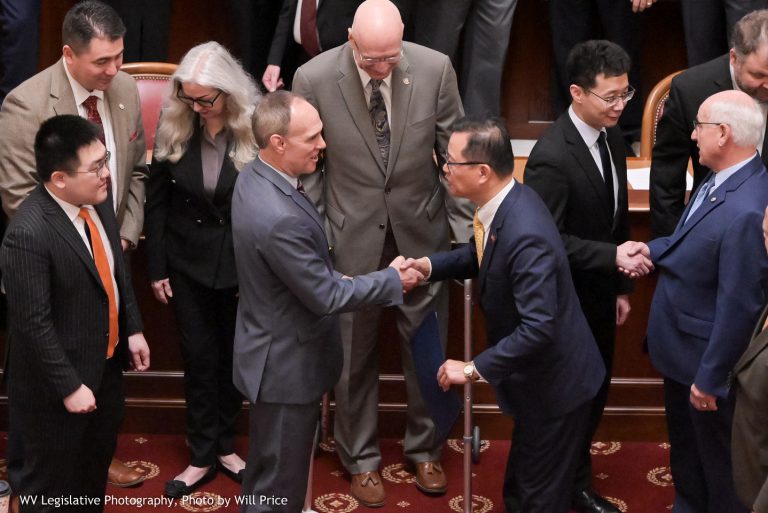
The Senate also adopted Resolution 32, designating February 6, 2020 as Veterans’ Visibility Day at the Legislature. Resolution 33 was adopted as well, reaffirming the sister-state relationship between West Virginia and Taiwan. Two recesses were held for the presentation of these resolutions.

The Senate is adjourned until 11:00 Am tomorrow.

The Senate Health and Human Resources Committee will meet at 1:00 PM in room 451M.

The Senate Committee on Energy, Industry and Mining will meet at 1:00 PM today on room 208W.

The Senate Education Committee will meet at 2:00 PM in room 451M.

The Senate Committee on Government Organization will meet at 2:00 PM in room 208W.

The Senate Judiciary Committee will meet at 3:00 PM in room 208W.

The Senate Finance Committee will meet at 3:00 PM in room 451M.

House Finance Postpones Action on Tax Bill

0

Legislators postponed action on a bill that would provide a credit for West Virginians earning income in another country, following concerns about needing more information.

In a Thursday morning Finance Committee meeting, members took up Senate Bill 170. Counsel explained that residents earning income from another state earn credits against the taxes paid if West Virginia has a memorandum of understanding with that state. This bill would expand the credit to people earning income in any foreign country, regardless of whether there is a memorandum of understanding.

This bill would apply to income more than $100,000. Income that is not reflected in federally adjusted gross income, under $100,000, would not be subject to the credit. The tax credit under this bill would be for the full amount. The bill would also apply to companies as well, counsel explained.

Twenty other states have adopted similar legislation.

Delegates expressed some concerns about the bill including not knowing the full fiscal effect it would have on the state’s revenue. Delegate Paul Espinosa, R-Jefferson, moved to lay the bill over to the next Finance Committee meeting to get more information. The committee adopted this motion.

House Completes Action on Suffocation Bill

A bill creating a felony offense for suffocation and asphyxiation completed legislative action Thursday.

House Bill 4393 defines the terms “bodily injury,” “strangle,” “suffocate,” and “asphyxiation.” Those convicted of this felony will be fined up to $2,500 and serve a sentence in a correctional facility for one to five years. Before this legislation was completed, any crimes relating to asphyxiation were classified as assault crimes.

The House passed three bills. House Bill 4352 removes barriers to employment for those with previous criminal records that seek licensure or certification in an occupation governed by state law. This bill also reduces the number of hours necessary to qualify for certain licenses, such as electrical work or sprinkler-fitting.

House Bills 4380 and 4509 were also passed.

Sixteen bills were advanced to third reading. Eleven bills were advanced to second reading.

Action for one bill, House Bill 4455, was postponed for one day.

Four resolutions were introduced. House Bills 4712-4734 were introduced.

The House is adjourned until 10:30 a.m. Friday.